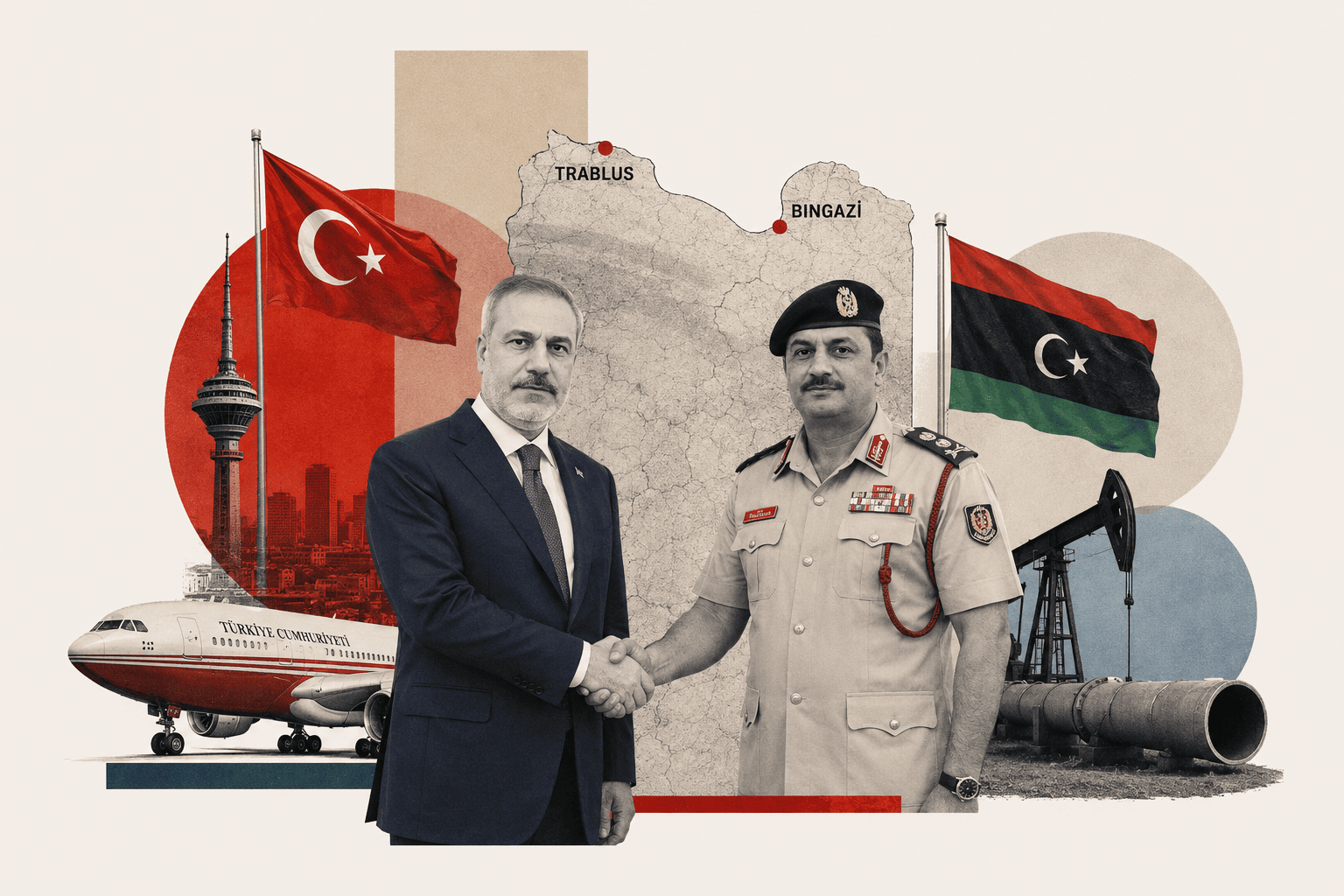

Foreign Minister Hakan Fidan’s visit to Libya on 11–12 August offers one of the clearest indications yet of a shift in Ankara’s approach to the country. By holding talks first in Tripoli and then in Benghazi, Fidan demonstrated Türkiye’s intention to preserve its longstanding relationship with the Tripoli-based authorities while opening a new chapter with the Haftar camp, with which Ankara was once directly at odds. Rather than tying its interests exclusively to western Libya, Türkiye now appears to be pursuing a more balanced approach that allows it to engage with both sides of the country. Turkish diplomatic sources have framed the visit within Ankara’s “One Libya” policy, which seeks a politically and militarily unified Libya.
During the first leg of his visit, Fidan met Prime Minister Abdulhamid Dbeibah and other political figures in Tripoli. Their discussions covered Libya’s political process, the unification of state institutions, and cooperation in energy, trade and defence. Ankara’s emphasis on the “One Libya” approach conveyed a clear message: Türkiye does not want the country’s current divisions to become permanent and is seeking to broaden its engagement across Libya as a whole.
The most notable aspect of this policy, however, is the developing relationship with Benghazi. Fidan’s visit there is the latest step in a diplomatic process that has been gathering momentum for some time. Saddam Haftar, Deputy Commander-in-Chief of the Libyan National Army, met Fidan in Ankara on 24 July. Fidan’s subsequent trip to Benghazi and his second meeting with Saddam Haftar suggest that contacts between Ankara and the Haftar camp are becoming increasingly regular and structured.
The shift is particularly striking when viewed against the backdrop of events just a few years ago. In 2019–2020, Türkiye was one of the principal supporters of the Tripoli-based Government of National Accord. Turkish military and political support was among the decisive factors that prevented Khalifa Haftar’s forces from capturing the capital. Today, Ankara is engaging directly with the very forces it confronted during that period.
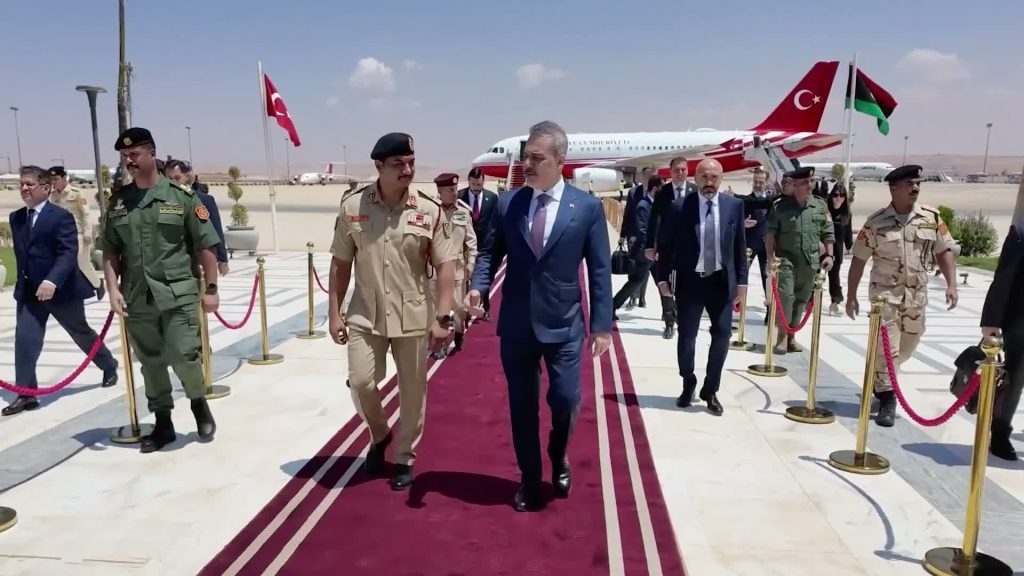
This change reflects Libya’s political realities. The country remains divided between rival administrations and centres of power in the east and west. Eastern Libya, with its energy resources, ports and military capabilities, cannot be excluded from any viable political settlement concerning the country’s future. Türkiye’s rapprochement with Benghazi therefore does not signify a retreat from Tripoli. Rather, Ankara is seeking to preserve its established influence in the west while creating greater room for manoeuvre in the east.
The Broader Equation Is Taking Shape in the Eastern Mediterranean
One of the most consequential dimensions of Fidan’s visit for Türkiye may ultimately emerge beyond Libya itself, in the Eastern Mediterranean. A key issue underlying the Ankara–Benghazi rapprochement is the maritime delimitation memorandum signed between Türkiye and Libya in 2019.
The agreement, which has become a cornerstone of Türkiye’s Eastern Mediterranean strategy, was signed by the Tripoli-based government but was not approved by the House of Representatives in eastern Libya. In December 2025, House Speaker Aguila Saleh maintained that the agreement was not binding. Libya’s institutional divisions have therefore prevented a memorandum of considerable strategic importance to Ankara from acquiring a common political foundation across the country.
Türkiye’s normalisation of relations with eastern Libya could gradually alter this equation. The establishment of a durable relationship of trust between Ankara and the Haftar camp could, over time, help reduce opposition in eastern Libya to the 2019 maritime agreement.
This possibility also helps explain why Athens is closely following the evolving relationship between Ankara and Benghazi. Greece opposes the Türkiye–Libya maritime agreement while pursuing its own negotiations with Libya over the delimitation of maritime jurisdictions. In 2026, Athens stepped up these efforts, seeking to advance discussions on the continental shelf and exclusive economic zone through technical committees. Libya has thus become one of the arenas in which a broader strategic competition between Ankara and Athens over the future balance of power in the Eastern Mediterranean is playing out.
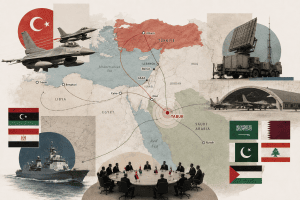
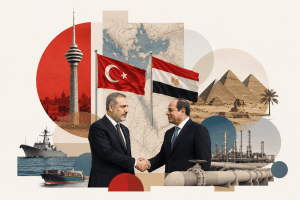
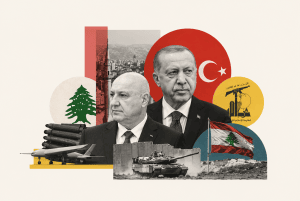
Türkiye’s moves in Libya, however, should not be viewed in isolation from its broader diplomatic outreach across the Eastern Mediterranean. While rebuilding relations with eastern Libya, Ankara has also intensified its engagement with Lebanon and rapidly deepened ties with Egypt following years of tension. Lebanese President Joseph Aoun’s visit to Ankara on 30 July—the first presidential visit from Lebanon to Türkiye in 17 years—was particularly significant. The rapprochement with Egypt adds another dimension to this broader picture. Türkiye is opening new channels with Eastern Mediterranean actors with which its relations were previously strained or limited, thereby expanding its diplomatic room for manoeuvre.
Energy is another important component of this equation. Home to Africa’s largest proven oil reserves, Libya is of considerable importance to Türkiye both in terms of energy security and the opportunities it could offer Turkish companies. The hydrocarbons memorandum signed by Türkiye and Libya in 2022 also extended the strategic logic of the 2019 maritime agreement into the energy sphere. The fact that energy, trade, military ties and defence cooperation featured on the agenda of Fidan’s latest visit suggests that Ankara increasingly views its Libya policy through the lens of a broader strategic partnership.
For Ankara, however, the central challenge will be to maintain this new balance. An overly rapid rapprochement with the Haftar camp could raise concerns among Türkiye’s partners in Tripoli, while keeping relations with Benghazi too limited could constrain Ankara’s ambition to exert influence across Libya as a whole. Türkiye’s diplomatic challenge is therefore not to choose between the two sides, but to ensure that its relationships with them are no longer mutually exclusive.
This is what makes Fidan’s journey from Tripoli to Benghazi particularly significant. Türkiye was one of the actors that helped alter the course of the Libyan conflict in 2019; today, it is seeking to convert the leverage it accumulated through its role on the ground into broader diplomatic influence. If Ankara can preserve its strategic partnership with Tripoli while establishing a durable relationship with the Haftar camp, it could emerge as one of the most influential external actors capable of engaging simultaneously with Libya’s rival centres of power.
The implications of such a shift would extend well beyond Libya. Relations with both east and west could strengthen Türkiye’s position across a range of issues, from energy agreements and security cooperation to the presence of Turkish companies and the future of the 2019 maritime delimitation memorandum. In this sense, Hakan Fidan’s visit may mark the beginning of a new phase in Ankara’s Libya policy: Türkiye appears to be seeking to transform its position from that of an influential actor aligned with one side of Libya’s conflict into that of a power broker capable of engaging with both sides and shaping the diplomatic process.