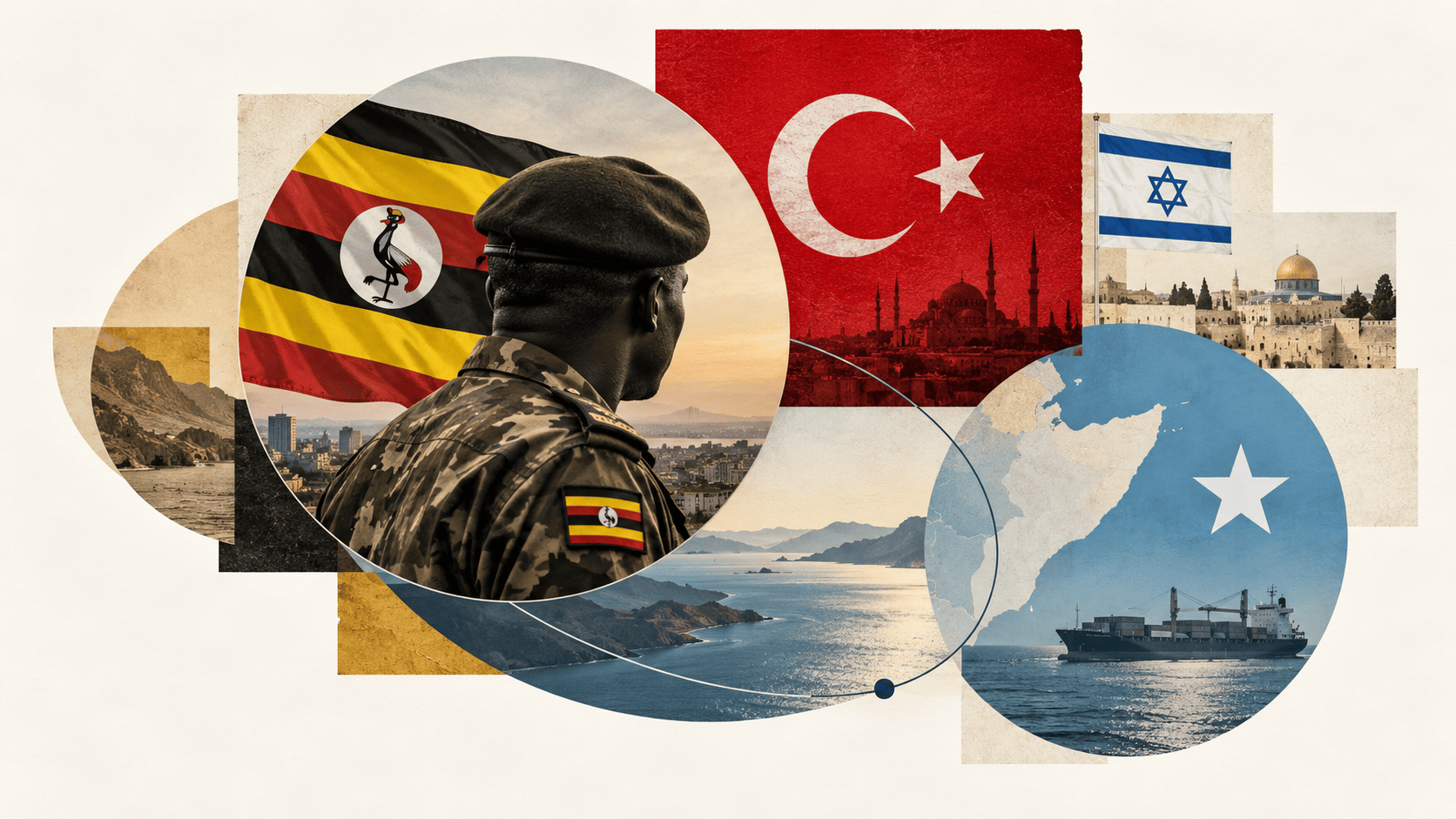
The Ugandan military’s decision on 19 September to suspend defence and military cooperation with Türkiye marked a new stage in months of tensions. The day before, demonstrators outside the Turkish embassy had demanded the extradition of Fred Lumbuye, a Ugandan opposition figure living in Türkiye. The military’s statement, however, referred only to unresolved issues, without specifying what they were.
At the centre of the dispute is army chief Muhoozi Kainerugaba, the son of Ugandan President Yoweri Museveni. In April, Muhoozi demanded one billion dollars from Ankara, arguing that Uganda had paid the price for Somalia’s security while Türkiye reaped the economic benefits. His rhetoric points to a disagreement that goes beyond extradition: who will retain the influence that comes with providing security in Somalia?
Türkiye’s Growing Influence in Somalia Unsettles Uganda
Uganda is landlocked and shares no border with Somalia. Yet its participation in African Union missions there since 2007 has given Kampala considerable regional influence. Around 4,500 Ugandan soldiers currently serve in the mission, alongside additional troops deployed under a bilateral agreement. This presence gives Uganda a significant say in Somalia’s security affairs.
Türkiye’s approach centres on helping Somalia build its own security capabilities. Military training in Mogadishu, defence agreements and maritime security cooperation aim to enable Somali forces to take on greater responsibility. Energy projects add a long-term economic dimension to the relationship.
The competing interests are clear: as Somalia becomes less dependent on foreign troops, the countries supplying them may lose bargaining power. What strengthens Somali sovereignty could therefore mean a loss of influence for some in Kampala.
There is also a financial dimension. According to a Middle East Eye report citing sources familiar with the matter, Uganda receives at least $1,000 a month for each soldier serving in the mission. The same sources suggest that a complete withdrawal could cost Uganda between $60 million and $72 million in annual payments.
Uganda’s pressure on Ankara thus suggests that it sees Türkiye as a key player in shaping the emerging order.
Uganda’s close relationship with Israel adds another dimension to this competition. A defence memorandum signed in September 2022 strengthened ties spanning training, equipment, technology transfers and intelligence. The Ugandan military also openly acknowledges Israel’s contribution to its air force and air defence capabilities. Muhoozi’s pledges of military support for Israel reflect the political commitment behind this institutional partnership.
A partner with troops in Somalia and concerns about Türkiye’s growing influence could hold strategic value for Israel.
In Somaliland, the rivalry takes a more concrete form. Israel’s recognition of the breakaway region as an independent state on 26 December 2025 directly conflicts with Türkiye’s support for Somalia’s territorial integrity. While Ankara backs a stronger central government, Israel’s decision bolsters the international standing of a separate political entity outside Mogadishu’s authority.
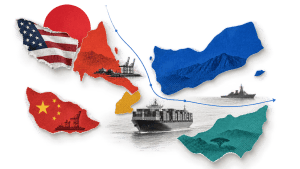
Across the water from Yemen, Somaliland’s ports and airfields attract powers seeking access to the Red Sea. Its leader’s September visit to the United States was also part of an effort to turn this strategic position into diplomatic recognition. Uganda and Somaliland offer different advantages: one matters because of its military presence in Somalia, the other because of the access its coastline can provide.
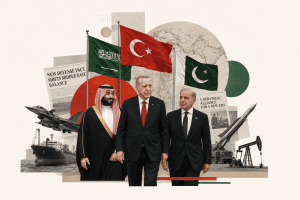
Houthi attacks on Saudi Arabia and preparations for urgent military talks between Türkiye, Pakistan and Saudi Arabia show how closely security in the Horn of Africa and the Gulf is becoming intertwined. The US decision to lift sanctions on certain Eritrean individuals and entities also opens up new possibilities for regional engagement.
The Uganda dispute therefore raises a broader question: how far will security partnerships around the Red Sea shape national sovereignty and decisions on diplomatic recognition?
Washington’s stance on Somaliland could be the next critical turning point. If the United States pursues diplomatic recognition as part of its efforts to secure military access, the implications will extend well beyond the use of a port or a base. Trading strategic access for recognition as a state could set a precedent for other separatist regions in Africa. Beyond the threats coming from Uganda, the key issue to watch is how these negotiations could reshape the continent’s political map and Türkiye’s presence in the region.