For people in Türkiye, Yemen has long meant more than a place on the map. It evokes soldiers who never returned, distant battlefields and the losses remembered across generations. Özgür Özel’s warning against “reckless adventurism that would send Turkish soldiers into the deserts of Yemen a century later” draws on that painful legacy. Yet a foreign policy decision cannot be judged solely by the historical fears it stirs. A debate that fails to distinguish between helping Saudi Arabia defend itself and joining a war on Yemeni soil serves to manipulate public opinion.
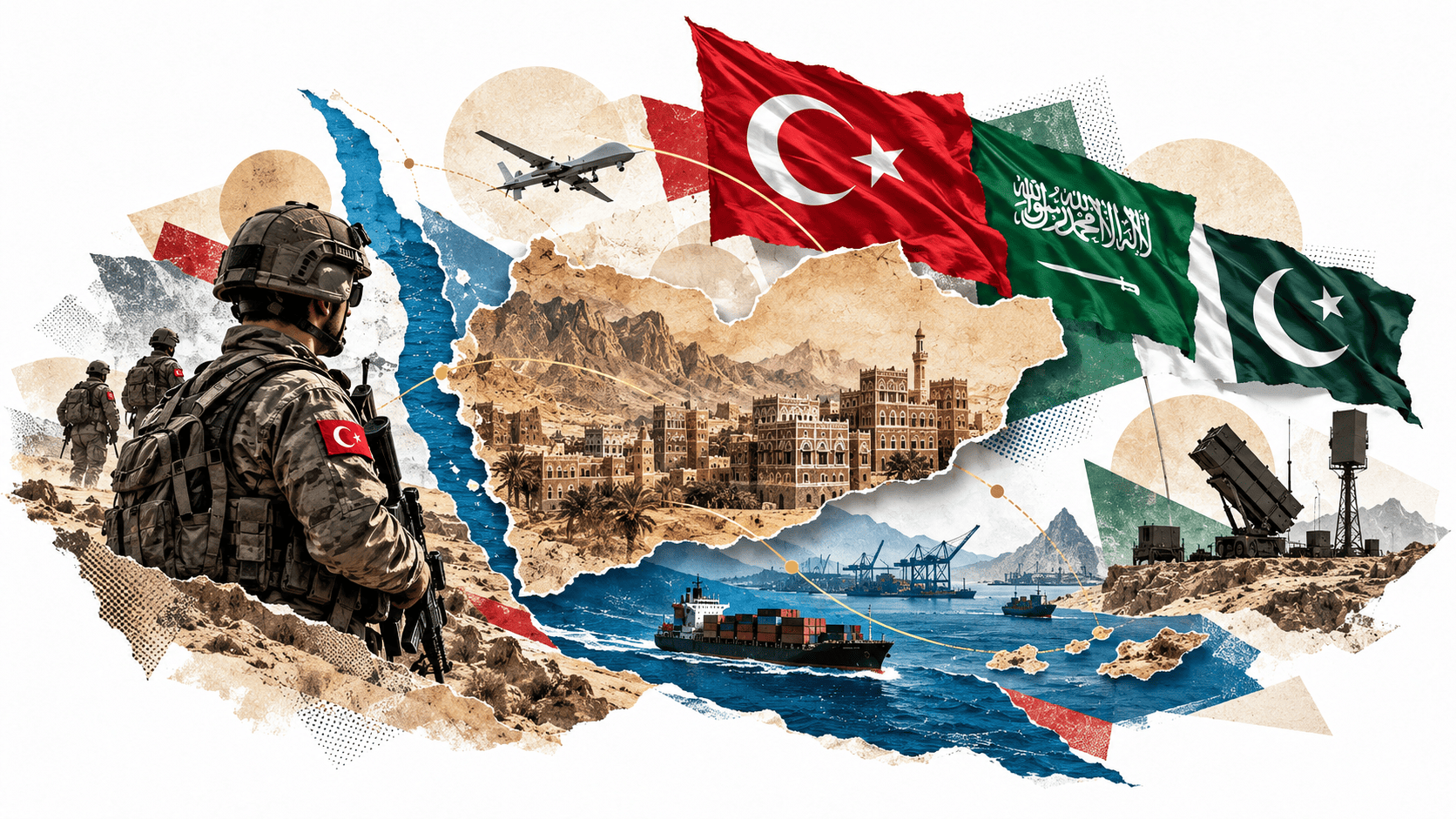
The Ottoman presence in Yemen was closely tied to the security of the Red Sea, trade routes and the protection of Islam’s holy sites. The region remains strategically important today. The Bab el-Mandeb Strait connects the Gulf of Aden to the Red Sea, forming the southern gateway to the shipping route that runs through Suez to Europe. Insecurity there forces vessels onto longer routes, disrupting energy shipments and raising trade costs. Türkiye’s interest in developments around Yemen therefore cannot be explained by historical ties alone.
The war in Yemen is also far more complex than a straightforward confrontation between two states. The political upheaval that began in 2011 was followed by a failed transition. The Houthis’ capture of Sanaa in 2014 and the Saudi-led coalition’s intervention in 2015 turned the domestic conflict into an arena of regional rivalry. Riyadh backed the internationally recognised government, while Iran supported the Houthis. The UAE’s ties with various forces in the south revealed that even the anti-Houthi camp had no shared vision for the country’s future. Civilians paid the highest price, driven from their homes and deprived of basic necessities.
Although the UN-brokered truce of 2022 formally expired, the relative lull in fighting continued for some time. In 2026, however, renewed hostilities, attacks on Saudi Arabia and the struggle around Bab el-Mandeb brought Yemen back to the forefront of regional security concerns. The offensive announced by the Yemeni government on 4 October to recapture Houthi-held territory marked a new stage in that escalation.
Defending Saudi Arabia is not the same as going to war in Yemen
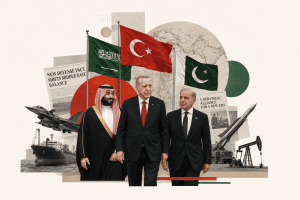
The Mecca Joint Defence Agreement, signed by Türkiye, Saudi Arabia and Pakistan in August, rests on the principle that an armed attack on one member is to be regarded as an attack on all. Under that framework, the decision taken in Riyadh on 5 October provides for agreed military forces and capabilities to be made available to Saudi Arabia. The statement specifies both the destination of any deployment and the requirement to comply with national legislation. It does not say that Turkish ground forces will take part in offensive operations in Yemen.
Officials quoted by Reuters on 7 October also emphasised equipment, intelligence, weapons systems and technical assistance. A US official additionally referred to drone operators, planning and logistical support.
Foreign Minister Hakan Fidan made the distinction explicit on 8 October: “Türkiye will not send troops to another country to carry out an attack on its territory.” According to Fidan, Ankara is assessing how it can contribute to Saudi Arabia’s defence while also working to resolve the crisis through dialogue.
Whether personnel are sent abroad cannot be the sole measure of what a mission entails. What matters is where they operate, under what authority and for what purpose. Helping operate an air defence system is a different military undertaking from fighting to capture another country’s cities. Collapsing every form of assistance into the phrase “sending Turkish soldiers into the deserts of Yemen” misrepresents the scope of the decision that has been announced.
Parliamentary oversight, however, is no minor consideration. Article 90 of the Constitution governs the ratification of international agreements, while Article 92 sets out the rules—and exceptions—for deploying armed forces abroad. The joint statement’s requirement to comply with national legislation does not mean those procedures have been completed. Indeed, Fidan said preparations to submit the agreement to parliament were nearing completion. The opposition is entitled to question the legal basis and limits of any mission. Presenting an unannounced decision to go to war as a fait accompli is another matter.
Why, then, would Ankara want to take on such a commitment? The first potential gain is the credibility of mutual defence. An alliance that fails to act in a crisis has limited deterrent value. Türkiye’s support could reinforce its expectation of solidarity should its own security come under attack.
A second benefit could be a broader range of security partnerships. Greater responsibility on the part of regional countries could expand Ankara’s diplomatic and military options. Türkiye’s official position describes the Mecca Agreement as a mechanism that complements existing alliances such as NATO. Pakistani Foreign Minister Ishaq Dar’s announcement that more than six countries have expressed an interest in joining points to its potential for expansion. Its success, however, will depend on the institutions it builds and its ability to act effectively in a crisis.
Defence industry cooperation is another tangible part of the relationship. Baykar’s 2023 AKINCI agreement with Saudi Arabia is an example of existing ties. Political discussions about possible joint investment in the KAAN fighter programme suggest there is room to go further. Training, maintenance, joint production and technology development could all create opportunities for Türkiye.
The security of Bab el-Mandeb also has an economic dimension. Fewer disruptions to maritime transport could benefit Turkish trade and manufacturing.
The available information therefore does not support the conclusion that Türkiye has decided to send soldiers to fight in Yemen. The policy announced so far is to contribute to Saudi Arabia’s defence.
The challenges facing the Mecca Alliance may extend well beyond Yemen. How would closer defence cooperation among regional countries affect US and Israeli calculations? Might Washington and Tel Aviv seek to prevent the alliance from growing stronger? Its future will also depend on how firmly its members stand together in the face of external pressure.