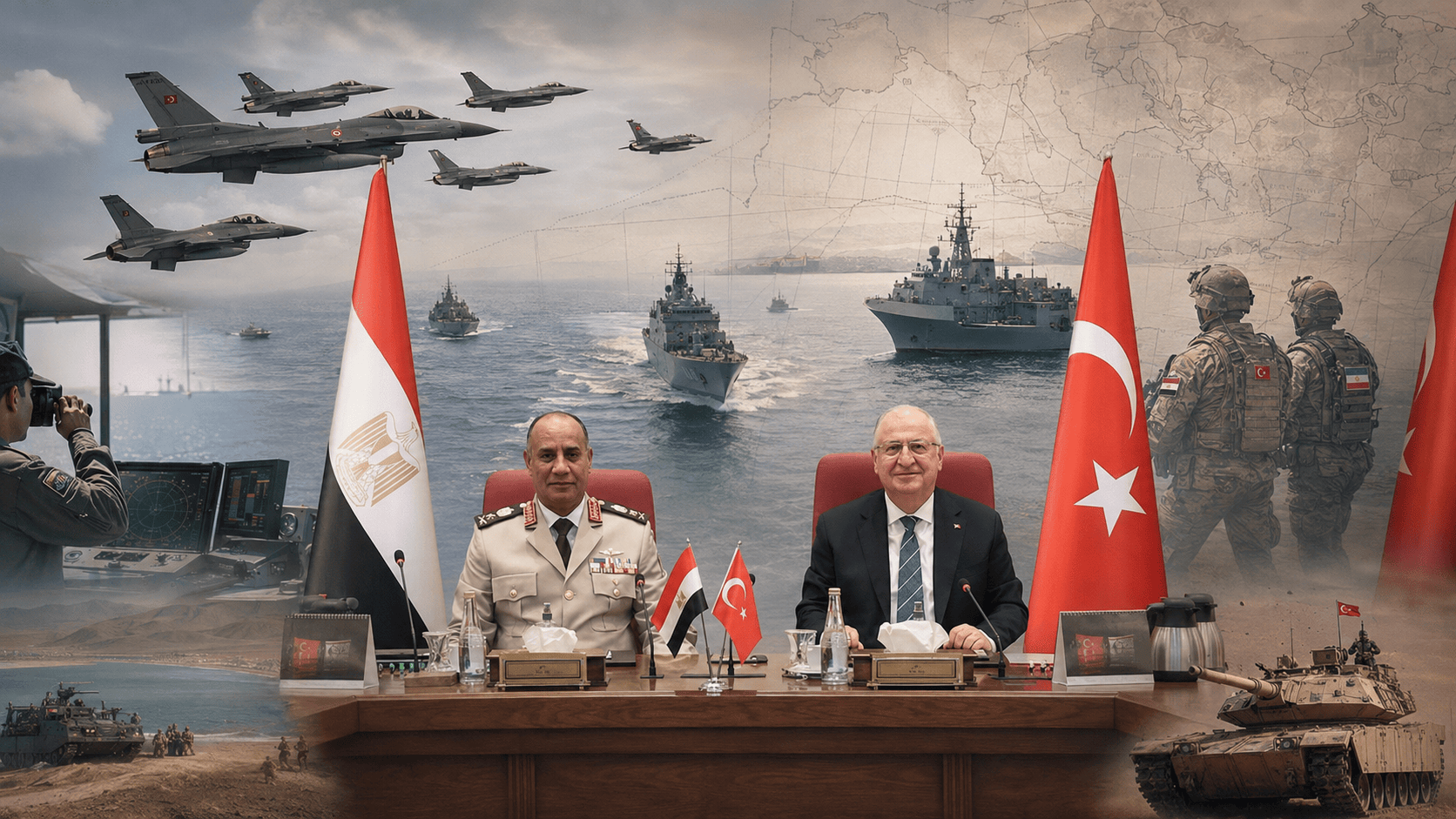

The visit to Ankara by Egypt’s Defense Minister, Lieutenant General Ashraf Salem Zaher, shows that the normalization process between Türkiye and Egypt has entered a new phase. Zaher held both a one-on-one meeting and delegation-level talks with Turkish Minister of National Defense Yaşar Güler. Following the discussions, the two ministers signed a Letter of Intent on Defense Cooperation. The document suggests that, after years of confrontation, Ankara and Cairo now want to make not only their political dialogue but also their military and technological cooperation more permanent.
It would, however, be a mistake to assume that the Egyptian defense minister travelled to Türkiye merely to sign a document. The visit reflects the two countries’ continuing determination to place their defense relations on a more systematic and institutional footing. In June, following the Türkiye-Egypt High-Level Military Dialogue Meeting held in Cairo, the two sides adopted a cooperation protocol covering joint activities and the exchange of military expertise. The defense ministers’ meeting in Ankara therefore represents the highest-level political endorsement of military contacts that have intensified significantly within just a few weeks.
The first reason for this rapprochement is the defense industry. With its expanding production capabilities ranging from unmanned aerial vehicles and electronic warfare systems to ammunition and armored vehicles, Türkiye could become an important partner for Egypt. Cairo, in turn, offers new opportunities for Turkish companies through its large armed forces, developed military infrastructure and extensive market. Egypt’s desire to reduce its dependence on Western suppliers, diversify its sources of procurement and strengthen domestic production also makes technology- and manufacturing-based cooperation with Türkiye increasingly attractive.
The second major issue is the rebuilding of trust between the two countries’ armed forces. In 2025, Türkiye and Egypt held the “Sea of Friendship” joint naval exercise for the first time in 13 years. A bilateral air exercise was conducted in Egypt in June 2026, while Egyptian units participated in the “Anatolian Eagle” exercise in Türkiye in July. During the same period, a joint training activity named “Golden Eagle” was also launched in Egypt. The intensity of these activities shows that cooperation is moving beyond protocol documents and becoming a reality on the ground.
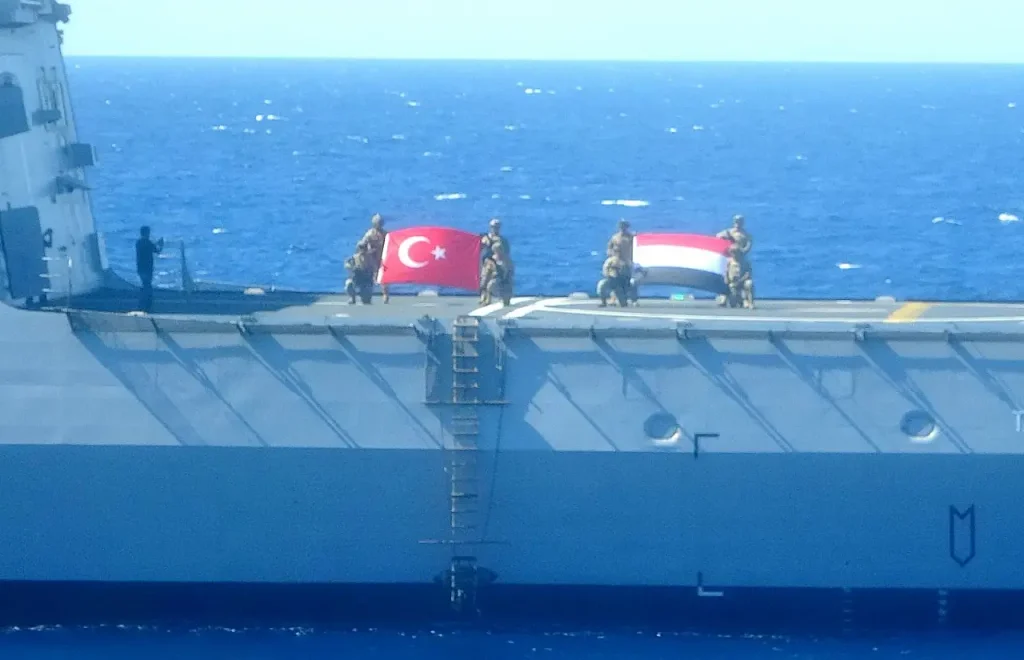
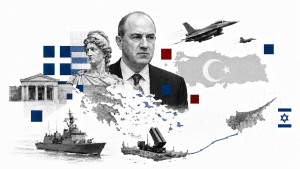
The Eastern Mediterranean dimension of the visit should not be overlooked either. The trilateral structure developed by Greece, the Greek Cypriot administration and Israel in the fields of energy and defense has increasingly evolved into an alignment aimed at limiting Türkiye’s influence in the region. Although Egypt continues to maintain relations with these countries, its decision to strengthen military cooperation with Ankara shows that Cairo does not want to remain tied to a one-dimensional, anti-Türkiye axis.
It is still too early to claim that Egypt has changed sides or is forming a new military alliance with Türkiye. Cairo is seeking to establish a new balance with Ankara while preserving its relations with Greece and the Greek Cypriot administration. Egypt’s objective is to expand its room for maneuver by cooperating with as many actors as possible. For Türkiye, the most important development is the gradual weakening of the rigid bloc that has sought to exclude it from the Eastern Mediterranean.
It cannot yet be said that Ankara and Cairo have resolved all their differences over issues such as Libya and maritime jurisdiction zones. The two countries, however, are no longer allowing these disagreements to hold their entire relationship hostage. The institutionalization now taking shape in the defense sector shows that shared interests are beginning to outweigh the political tensions of the past.