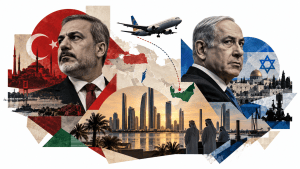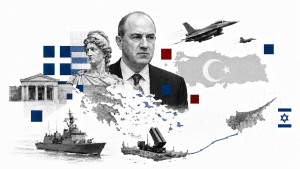
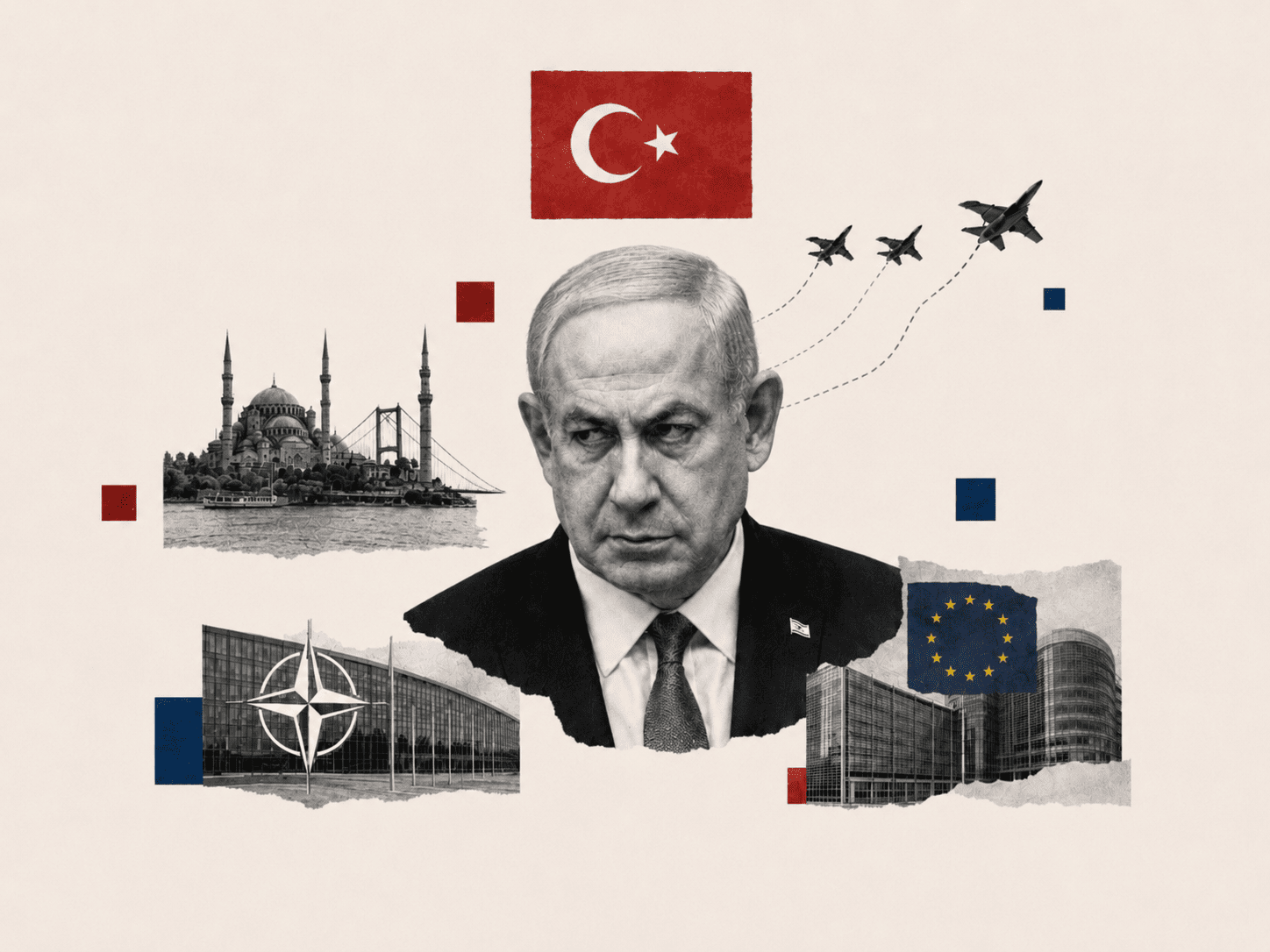

“From Idlib to Istanbul, Israel will attack if necessary.”
This sentence did not appear on a fringe website, an extremist social media account, or an anonymous online forum. It was the line used by The Jerusalem Post, one of Israel’s best-known mainstream newspapers, to promote an opinion piece published on 22 August.
The target was Türkiye.
Of course, it would be wrong to present a newspaper column as the official policy of the Israeli government. But it would be equally misleading to read those words in isolation from the political and military context in which they were published.
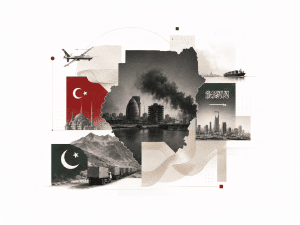
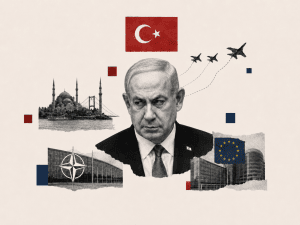
Israel recently struck the Abu al-Duhur airbase in northern Syria, citing claims that Türkiye might establish a military presence there. Ankara rejected those claims. Yet Benjamin Netanyahu subsequently said that the attack had sent a “message” to Türkiye. As Israel’s election campaign gathers pace, President Recep Tayyip Erdoğan is also being portrayed in Netanyahu’s political messaging alongside Iranian and Hezbollah leaders as part of a broader threat to Israel.
Now, an Israeli mainstream newspaper is openly entertaining the prospect of military action extending all the way to Istanbul.
At this point, one question needs to be put directly to NATO and the European Union: Where are you?
Because this is no longer simply about the increasingly confrontational relationship between Türkiye and Israel. The deeper issue is why the international law and “rules-based order” that the West has spent decades defending appear to lose their force when Israel is involved.
Criticism of Israel’s conduct in recent years is not merely a matter of political opinion. There are findings by international courts, arrest warrants and reports by United Nations investigative bodies.
The UN Independent International Commission of Inquiry has documented acts in Gaza including the killing of civilians, attacks on civilian infrastructure, mass forced displacement, the use of starvation as a method of warfare, torture and inhuman treatment, and has found evidence of war crimes and crimes against humanity.
The International Criminal Court issued arrest warrants for Benjamin Netanyahu and former Defence Minister Yoav Gallant. The Court found reasonable grounds to believe that they bore criminal responsibility for acts including starvation as a method of warfare, murder, persecution and other inhumane acts.
In 2025, the same UN investigative mechanism reached an even more serious conclusion. It found that Israeli authorities had committed four of the five acts defined in the Genocide Convention and concluded that there was specific intent to destroy Palestinians in Gaza, at least in part.
The International Court of Justice has not yet issued a final judgment on whether genocide has been committed in Gaza. But it has ordered binding provisional measures against Israel, requiring it to prevent acts falling within the scope of the Genocide Convention and to facilitate the delivery of humanitarian assistance. It also issued additional measures concerning Israel’s military operation in Rafah.
In a separate advisory opinion in July 2024, the Court found Israel’s continued presence in the occupied Palestinian territories unlawful and called for an end to new settlement activity and to the unlawful situation itself.
In Lebanon, positions held by the UN peacekeeping mission, UNIFIL, have come under Israeli fire. The United Nations has reported that peacekeepers were injured and that some surveillance equipment was deliberately damaged.
Syria, meanwhile, has been subjected to Israeli air strikes for years. More recently, the prospect of a Turkish military presence in the country has itself become one of the justifications invoked for such attacks.
Following military operations against Iran, the UN Secretary-General also condemned the use of force and recalled one of the most fundamental principles of the UN Charter: the prohibition on the threat or use of force against the territorial integrity of states.
This is where the West’s credibility problem begins.
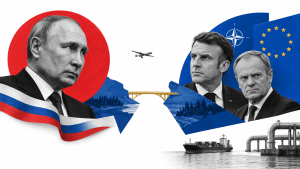
When Russia invaded Ukraine, Western capitals rightly placed sovereignty, territorial integrity, war crimes and international law at the centre of their foreign policy. Sweeping sanctions were imposed on Moscow. International judicial mechanisms were supported. The principle that one state cannot alter another country’s borders by force was repeated again and again.
Why, then, are the same principles not defended with the same determination when Gaza, the West Bank, Lebanon or Syria are involved?
Why does the legitimacy of an international court suddenly become a matter of controversy when that court issues an arrest warrant for Netanyahu?
Why do grave findings by UN bodies concerning Israeli conduct so often produce little more than statements of concern?
And now, when the largest city of a NATO member is explicitly placed within the language of a potential military attack in Israel’s mainstream media, why is there no forceful political response from Europe?
It would be unfair to say that Western governments never criticise Israel. Several European governments have strongly condemned aspects of Israel’s policy in Gaza. A number of countries have recognised Palestine. Calls for sanctions against Israel have also grown louder.
But the problem is not a shortage of words.
The problem is that those words so rarely have consequences.
The Israeli government sees this.
Condemnations are issued. Meetings are convened. “Deep concern” is expressed. Then Israel continues its policy on the ground.
This is where international law is truly tested. Rules derive their value not from how often they are invoked, but from whether they are actually enforced when they are violated. A breach of international law must carry political and legal consequences.
Impunity, by contrast, expands the boundaries of what becomes possible.
That is why the extension of this debate to Türkiye matters.
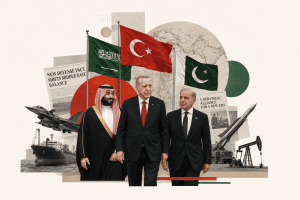
Türkiye is not an ordinary third country. It is a NATO ally with one of the Alliance’s largest armed forces. It is a candidate for European Union membership. From the Black Sea to the Middle East, from migration to energy corridors, it remains central to Europe’s security architecture.
Israel is already striking targets in Syria that it associates with Turkish strategic interests. Netanyahu describes such attacks as messages to Ankara. Türkiye is increasingly presented as a threat in Israeli domestic politics. And now the possibility of military action extending as far as Istanbul can be openly discussed in the Israeli public sphere.
NATO’s deterrence cannot be measured solely by whether Article 5 would be invoked after one of its members comes under attack. Genuine deterrence means making clear, before an attack ever occurs, that threats of force against an ally are unacceptable.
For the European Union, the test is even more fundamental.
For decades, the EU has built its foreign-policy identity around international law, state sovereignty and a rules-based international order. If those principles are remembered only when Europe’s adversaries violate them, what remains is not a universal legal order but a system in which rules bend according to political convenience.
And the rest of the world can see it.
There cannot be one international law for Ukraine and another for Gaza.
There cannot be one concept of sovereignty for Russia and another for Israel.
The territorial integrity of a state cannot become more or less valuable depending on the political alliances involved.
This is where the West’s deepest contradiction lies. When it applies its own principles selectively, it does more than expose the inconsistency of its policy toward Israel. It also undermines the moral and legal legitimacy on which it has built much of its foreign policy for decades.
And today, that contradiction has reached Türkiye’s doorstep.
A NATO ally now finds its name in a sentence that speaks of military action “from Idlib to Istanbul.”
Such an attack will most likely never happen. Israel may never move beyond threats and rhetoric.
But that is not the real question.
The real question is what, exactly, the West is still waiting for before it draws a line.
NATO, European Union: what more are you waiting for?
If you will not speak when a NATO ally is openly threatened, then when, exactly, will you?