Foreign Minister Hakan Fidan’s visit to Ukraine immediately after the NATO Summit held in Ankara cannot be seen as an ordinary diplomatic visit. Fidan’s contacts in Kyiv form the latest link in Türkiye’s intensive diplomacy between Moscow, NATO and Ukraine in recent weeks.
The timing of the visit is also noteworthy. The Ukrainian Parliament approved the Free Trade Agreement signed with Türkiye in 2022. Thus, one of the most important political obstacles to implementing the agreement, which had long been delayed because of the war, has been removed. Fidan’s trip to Kyiv immediately after this development shows that Ankara does not view its relations with Ukraine solely through the lens of war, military aid and security.
Türkiye wants to play a role in Ukraine’s reconstruction, revive Black Sea trade, secure energy and transport routes, and place economic relations between the two countries on a lasting foundation. But for all this to happen, the fighting must first stop. In an environment where ports, energy infrastructure and trade routes are being targeted, it is impossible for the free trade agreement to reach its real potential.
For Ankara, therefore, economics and diplomacy are not separate from each other. Türkiye sees the end of the war not only as a humanitarian and political necessity, but also as a prerequisite for trade, transport and energy links in the Black Sea to become functional again.
Kyiv Points to Türkiye as the Venue for the Peace Table
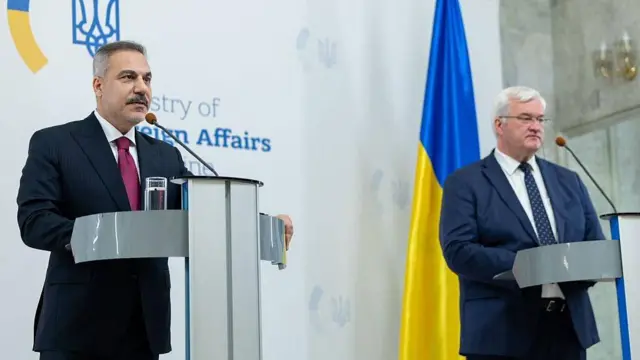
The messages delivered at Hakan Fidan’s joint press conference with his Ukrainian counterpart Andriy Sibiha made Türkiye’s position in a possible peace process more visible. Fidan said that despite the stagnation in diplomatic efforts, the fighting had intensified and attacks on civilian settlements and infrastructure had increased, stressing that the parties must swiftly return to the negotiating table.
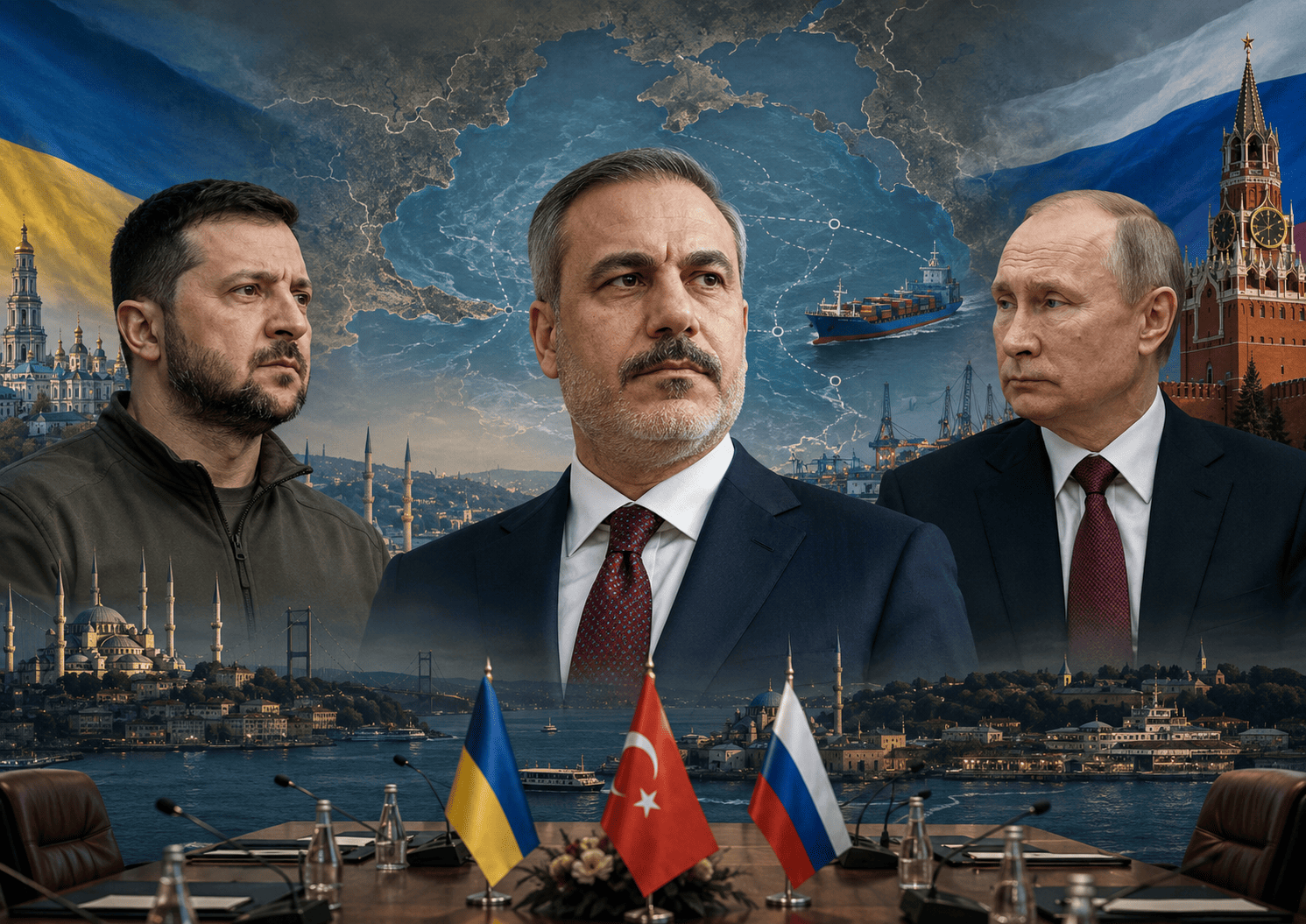
The statements by Ukrainian Foreign Minister Sibiha constituted the most important part of the visit. While saying that Ukraine was ready for a ceasefire, Sibiha stated that a possible meeting between Volodimir Zelensky and Vladimir Putin could take place in Türkiye. Thus Kyiv not only expressed its openness to negotiations, but also directly pointed to Türkiye as the venue for a possible leaders’ summit.
This statement shows that Ankara’s long-standing mediation policy is also accepted by Kyiv. Türkiye had previously brought Russian and Ukrainian delegations together in Antalya and Istanbul, played a decisive role in establishing the grain corridor, and contributed to prisoner exchanges. Now, Ukraine’s announcement that it is ready for a ceasefire and its pointing to Türkiye for a leaders’ meeting show that this diplomatic experience could be mobilized again.
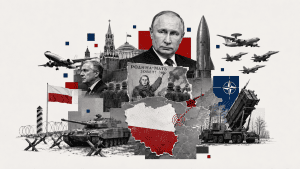
But Ankara is not speaking only with Kyiv. Before the NATO Summit, Hakan Fidan went to Moscow and met with Russian officials, conveying that the war should be ended through peaceful means as soon as possible. In his statement in Kyiv, Fidan also recalled his Moscow visit and said they had the opportunity to listen directly to the Russian side’s views.
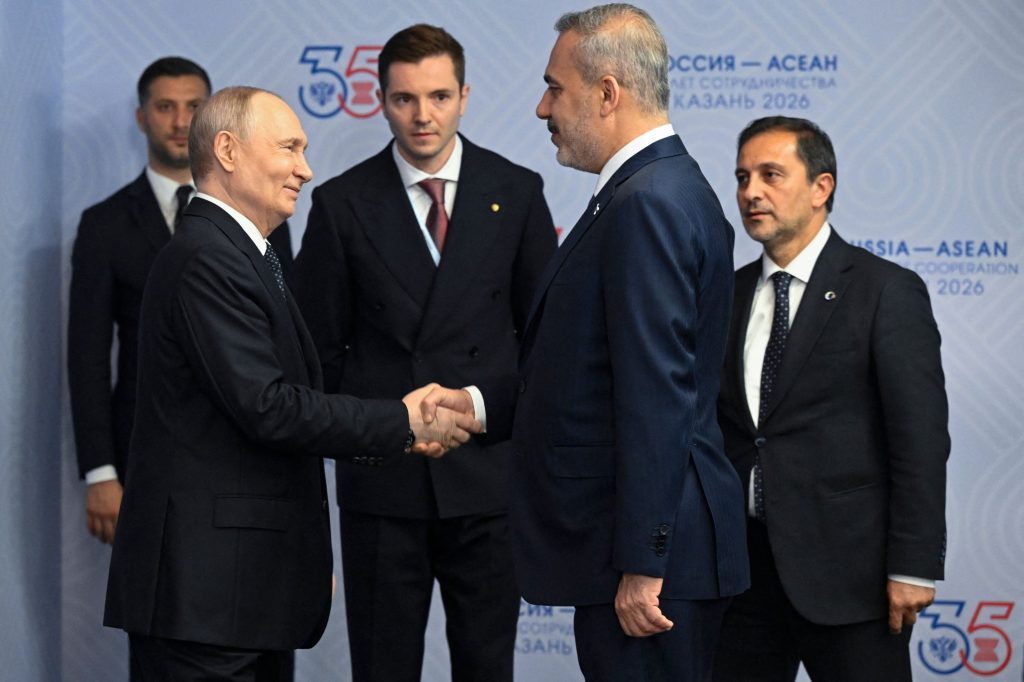
Türkiye’s diplomatic line, therefore, is not one-sided. While Ankara continues its military and political support for Ukraine, it preserves its direct dialogue with Russia. Although this policy may at times appear contradictory, it constitutes Türkiye’s most important advantage in a real negotiation process. Because to mediate, it is not enough to win the trust of only one side; one must also be accepted as an interlocutor in both capitals.
Kyiv Calls for a Ceasefire, Moscow Thanks Türkiye
Kremlin Spokesman Dmitriy Peskov’s thanks to Türkiye after Hakan Fidan’s statements are important in this respect. Although Peskov said there was no expectation that the negotiation process would resume in the near term, he stated that Russia was open to peace talks. He then said that Russia was grateful for Türkiye’s willingness to help with peace efforts in the Ukraine crisis.
The emerging picture is striking. On one side, Ukraine says it is ready for a ceasefire and that a Zelensky-Putin meeting could be held in Türkiye. On the other, Russia says it is not optimistic about negotiations in the short term, yet states that it values Ankara’s efforts. The parties are not yet at the same point, but both accept Türkiye’s diplomatic role.
Türkiye’s strength comes precisely from this. Unlike its Western allies, Ankara has not closed all its channels with Russia. At the same time, while maintaining relations with Moscow, it has not given up defending Ukraine’s independence and territorial integrity. It has thus become one of the few capitals trusted by Kyiv and able to speak directly with the Kremlin.
Türkiye’s aim is not for Russia and Ukraine to resolve all their problems quickly and re-establish close relations. Ankara is seeking a more realistic outcome: for the guns to fall silent, for the two sides to start talking again, for maritime security in the Black Sea to be ensured, for ports and energy infrastructure to stop being targets, and for commercial relations to function again.
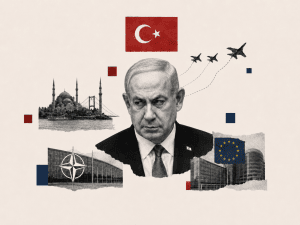
Hakan Fidan’s statement, “We do not want the war to spread to the Black Sea,” also reveals the fundamental security concern behind Türkiye’s mediation efforts. The Black Sea turning into a broader area of conflict could directly affect Turkish ports, passage through the straits, maritime trade, energy transport and Türkiye-Russia relations. An uncontrolled escalation between NATO and Russia could confront Türkiye with a much more difficult strategic equation.
For this reason, Ankara does not only want to end the war in Ukraine; it is also trying to prevent the conflict from spreading to the Black Sea, neighboring countries and the NATO-Russia line. The entry into force of the Free Trade Agreement with Ukraine, the role Turkish companies could assume in the reconstruction process, and the preservation of economic dialogue with Russia should be read as parts of Türkiye’s broader postwar plan.
It is still too early to say that the Ukraine war will end in Türkiye; while Kyiv says it is open to a ceasefire and to a leaders’ meeting in Türkiye, Moscow is thanking Ankara, but as Hakan Fidan has also warned, the risk of the war spreading remains a serious threat before us. Türkiye is now trying both to set up the peace table and to prevent the conflict from moving into the Black Sea. If it succeeds, it may become not only the country where the war ended, but also the center where the postwar regional order is established.