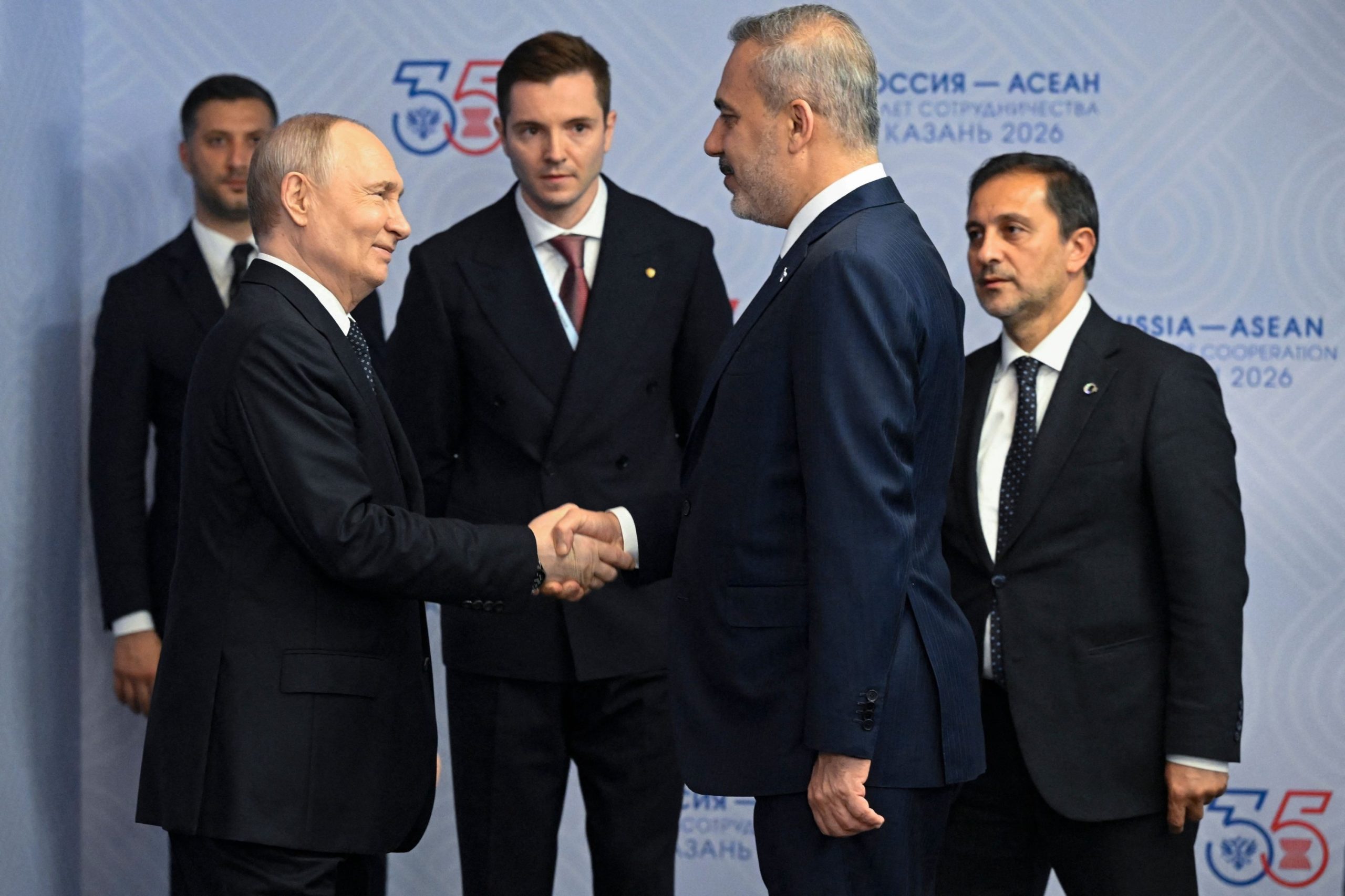

Turkish Foreign Minister Hakan Fidan paid a visit to Russia on June 16–17, shortly before the NATO Summit scheduled to take place in Ankara in July. Whenever Russian President Vladimir Putin receives Hakan Fidan, he welcomes him with a level of protocol usually reserved for heads of state.
Under normal circumstances, Putin does not receive a foreign minister so readily. The fact that he hosted Hakan Fidan in Kazan, met with him personally, and that Fidan then held separate talks with Russian Foreign Minister Sergey Lavrov and Security Council Secretary Sergey Shoigu shows that this visit was not an ordinary diplomatic engagement.
The message being sent here is directed not only at Türkiye, but also at the West: Russia attaches greater importance than ever to its relations with Ankara.
One does not need to look too far back to understand this. Years ago, it was Putin who deliberately violated diplomatic protocol by keeping President Erdoğan waiting for a long time. What may have seemed like a small gesture was, in fact, part of the Kremlin’s display of power. Erdoğan later responded in the same language by making Putin wait in return. Both leaders know very well what symbols and protocol mean in international politics.
Today, however, we are seeing a different picture. Putin’s deliberate emphasis, while receiving Hakan Fidan, that relations between the two countries have a “friendly character,” as well as the importance he attached to the meeting, carries symbolic weight in itself. In international politics, when protocol changes, it often means that the balance of power is changing as well.
There is also a personal dimension to this rapprochement. Lavrov’s remarks about Fidan were striking: “He is someone who headed Türkiye’s intelligence organization, has many contacts and possesses great experience.” Putin and Fidan, both figures with intelligence backgrounds, share a similar diplomatic culture: saying little while conveying a great deal, and reading between the lines without needing a translator.
Such personal relationships of trust become even more important when official channels are under strain. And today, we are passing through precisely such a period.
So why does Russia need Türkiye so much?
Because Moscow is facing an extremely complex geopolitical landscape. G7 countries are discussing ways to increase economic pressure on Russia; the European Union is preparing new sanctions packages; and the cost of the war continues to rise. In such an environment, the number of reliable actors capable of speaking with the West has sharply declined for the Kremlin.
This is precisely where Türkiye occupies a unique position. Ankara is both a NATO member and one of the few capitals able to keep direct communication channels with Moscow open. Although the interests of the two sides diverge in Syria, Libya, the Caucasus and, at times, Central Asia, they have managed to avoid breaking ties. Both sides understand the importance of mutual dependence.
From Russia’s perspective, Türkiye is not merely an economic partner; it is also a diplomatic lifeline. From energy trade to tourism, from the grain corridor to the management of regional crises, cooperation with Ankara carries strategic importance for Moscow across a wide range of issues.
It was precisely during this period that Ukraine carried out one of the most remarkable attacks of the war. In strikes involving hundreds of drones directed toward the heart of Russia, critical infrastructure around Moscow was targeted, airports experienced disruptions, and the security alert level was raised to its highest point.
What was particularly striking was that these developments occurred only hours after Hakan Fidan’s meeting with Putin in Kazan.
Of course, it is impossible to say with certainty that this was a deliberate choice of timing. But in international politics, symbols sometimes matter as much as the events themselves — especially in times of war.
The Kremlin no longer sees only Ukraine on the other side. From Moscow’s perspective, the war has moved far beyond Ukraine’s borders. Russian decision-makers believe they are facing broad Western support for Kyiv, ranging from military assistance to intelligence sharing.
At a time when the possibility of the war expanding into a wider front through possible Russian retaliation is increasing, Türkiye’s importance is becoming even more evident.
Washington has recently failed to produce a decisive outcome on the Ukraine file. Europe, meanwhile, as one of the parties to the war, cannot assume the role of mediator in Moscow’s eyes. By contrast, Türkiye remains one of the rare countries able to speak to both Kyiv and Moscow, maintaining communication with Russia while remaining inside NATO.
Lavrov’s statement after the meeting, in which he emphasized Türkiye’s willingness to play a constructive role in talks on Ukraine, is also a clear indication of the importance Moscow attaches to Ankara.
Today, Türkiye has an important diplomatic opportunity before it. If Ankara manages this balancing policy correctly, it could become not only a regional power, but also one of the most important diplomatic centers between Europe and Eurasia.
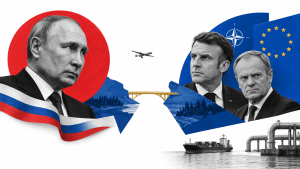
Perhaps this was the real message sent from Kazan: as the bridges between Russia and the West collapse one by one, one of the most important diplomatic channels still standing is Türkiye.