Israelis are expected to go to the polls no later than October 27, 2026. This election will represent the country’s first major political test since the October 7 attacks and the prolonged war in Gaza. Voters will not only be choosing between political parties; they will also be delivering their verdict on Benjamin Netanyahu’s leadership, his security doctrine, and his management of national crises.
The main threat facing Netanyahu is not the weakening of Likud. Likud remains one of the strongest political forces in Israel. However, winning an election in Israel is not enough to form a government; a coalition must secure at least 61 seats in the 120-member Knesset. This is precisely where Netanyahu’s greatest risk lies: even if Likud emerges as the largest party, he may still fail to assemble a governing majority.
The Shadow of October 7 Over Netanyahu
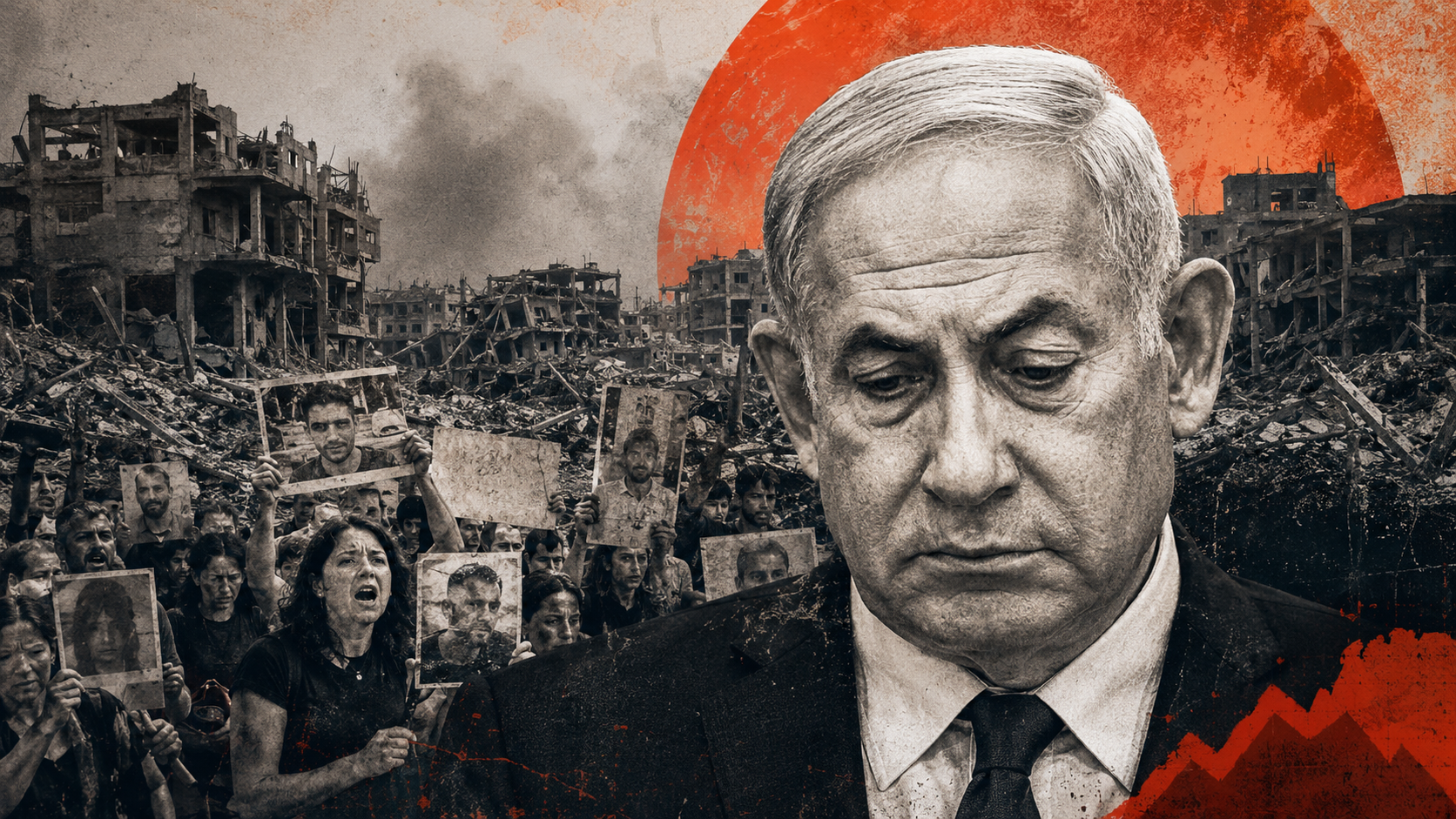
For years, Netanyahu portrayed himself as Israel’s ultimate security guarantor. However, the October 7 attacks severely damaged that image. The subsequent war in Gaza also failed to deliver the political victory he had anticipated. Hamas was not completely eliminated, the hostage issue remained unresolved for a prolonged period, and the human, diplomatic, and political costs of the war continued to grow.
Reuters notes that Israeli voters will head to the polls for the first time since the trauma of October 7 and after what it describes as “devastating but inconclusive” wars in Gaza, Lebanon, and against Iran. The central question in Israeli public debate has now become clear: did Netanyahu make Israel safer, or did he lead the country into an even deeper security crisis?
The families of hostages and victims of October 7 have become central actors in this debate. As Israel marked the 1,000th day since the attacks, organizations established by victims’ and hostages’ families called for the creation of a state commission of inquiry and demanded an investigation into political responsibility. This poses a particularly serious challenge for Netanyahu: he is no longer facing only political opposition parties, but also families who have personally borne the cost of war.
Another domestic challenge confronting Netanyahu is his dependence on far-right and ultra-Orthodox coalition partners. The Gaza war, the hostage crisis, debates over military conscription, and the judicial crisis have further exposed the deep divisions within Israeli society. On one side, calls for “unity for security” continue to grow; on the other, the government’s fragile coalition, built upon ideological and religious alliances, continues to constrain Netanyahu’s room for maneuver.
Intense Competition at Home, Growing Isolation Abroad
Netanyahu’s most notable challenger is Gadi Eisenkot. The former Chief of Staff possesses strong security credentials, advocates tough policies, and has not suffered the same degree of political erosion as Netanyahu. Moreover, having lost his son in Gaza, he embodies a leader who has personally experienced the cost of war. Reuters and the Associated Press report that his new party, Yashar, is rising in the polls and has emerged as one of Netanyahu’s most serious challengers.
Recent polls show Eisenkot’s Yashar party running neck and neck with Netanyahu’s Likud. According to a Maariv poll, both parties would secure 21 seats, while Netanyahu’s current governing bloc would remain below the majority threshold. This points to a critical reality for Netanyahu: Likud does not need to collapse for him to lose power; it is enough for the right-wing bloc to fail to reach 61 seats.
The “Together” alliance formed by Naftali Bennett and Yair Lapid is also an important force within the anti-Netanyahu camp. Bennett comes from the political right, while Lapid appeals more to centrist voters. The two were previously part of the coalition that temporarily removed Netanyahu from office. However, the opposition’s main problem today is not a lack of candidates but the risk of fragmentation. Even if Eisenkot, Bennett, Lapid, and Lieberman unite in their opposition to Netanyahu, will they be able to form a stable government after the election? That remains the key question.
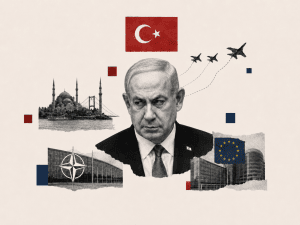
On the international stage, Netanyahu’s room for maneuver is also narrowing. The arrest warrant issued against him by the International Criminal Court in November 2024 further deepened his international legitimacy crisis. This has been compounded by increasingly explicit accusations in United Nations reports and statements alleging war crimes, crimes against humanity, ethnic cleansing, and genocide related to Israel’s actions in Gaza and the Palestinian territories. This situation demonstrates that Netanyahu is facing growing pressure not only domestically but also internationally.
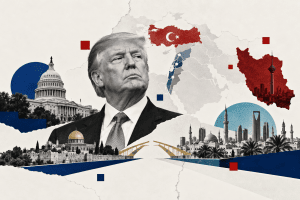
Adding to this pressure are the growing tensions with Donald Trump. While Netanyahu has favored a harder line on Iran, Trump’s preference for limiting military escalation and pursuing a negotiated agreement has created friction between the two leaders.
This development weakens one of Netanyahu’s strongest political arguments over the years: “I am the leader who knows best how to manage Washington.” If the distance between Netanyahu and Trump continues to grow, Netanyahu’s foreign policy advantage may also come under question.
However, Netanyahu’s departure would not automatically mean that Israel would adopt a more moderate course. Both Eisenkot and Bennett maintain hardline positions on security matters. Although Lapid embraces a more centrist discourse, a bold vision for peace with the Palestinians is not currently at the center of Israeli politics.
For this reason, the fundamental question surrounding the October 2026 elections will not simply be whether Netanyahu will leave office. The more important question will be whether Israel will truly change after Netanyahu, or whether the same security-oriented policies will continue under new faces. The answer to this question will shape not only Israel’s future, but also the future of the entire region.