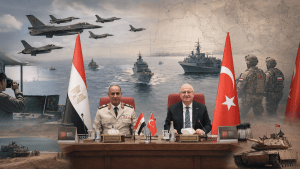
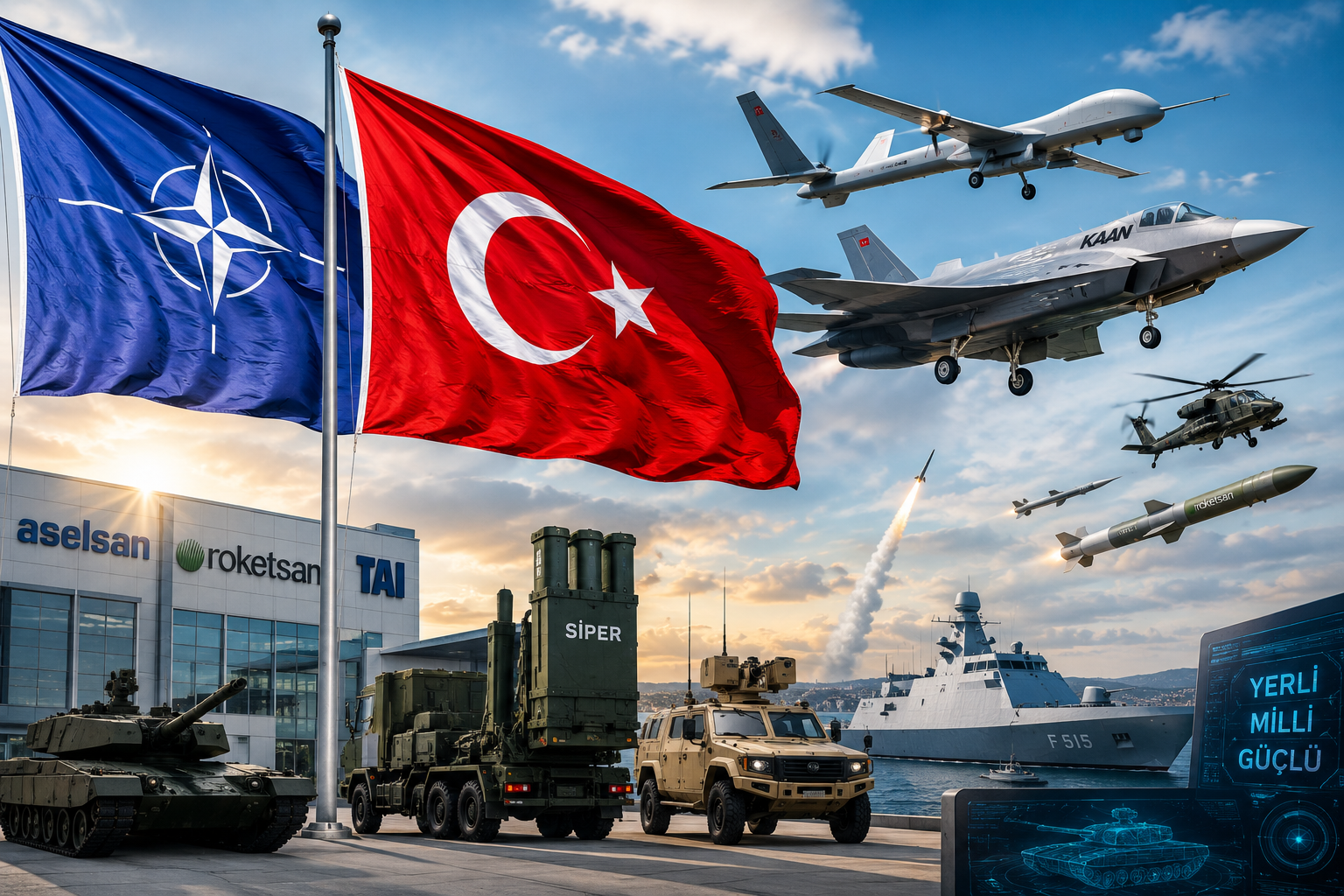
Having joined NATO in 1952, Türkiye now possesses the Alliance’s second-largest military. Yet its importance extends far beyond military strength alone. Situated at the crossroads of Europe and the Middle East, between the Black Sea and the Mediterranean, Türkiye remains one of the pillars of NATO’s security architecture thanks to its strategic geography, control of the Turkish Straits, military bases, and role as an energy corridor.
The NATO Leaders’ Summit scheduled to take place in Ankara in July 2026 will serve as a new illustration of Türkiye’s special position within the Alliance. Twenty-two years after hosting NATO leaders in Istanbul, Türkiye will once again welcome the Alliance’s heads of state and government. This time, however, it will not simply be seen as a frontline state, but as a regional power with growing diplomatic influence and a rapidly expanding defense industry.
With U.S. President Donald Trump expected to attend, the summit will be held at a time when divisions between the United States and the European Union are deepening, conflicts continue across a vast geography stretching from Ukraine to Lebanon, and Europe is seeking a more independent path in defense policy. For these reasons, the Ankara Summit is widely expected to be one of the most consequential gatherings in NATO’s history.
Türkiye’s Rise Within NATO from the Cold War to the Present
To understand Türkiye’s accession to NATO, it is necessary to return to the aftermath of the Second World War. In the postwar years, the Soviet Union began exerting significant pressure on Ankara, demanding joint control of the Turkish Straits and raising territorial claims. For Türkiye, the issue was not merely one of foreign policy preference, it was fundamentally a matter of national security and sovereignty.
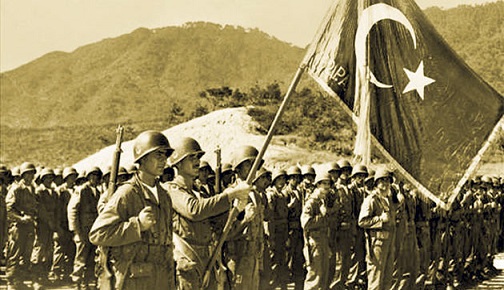
Against this backdrop, Ankara chose to align itself more closely with the West. The performance of Turkish troops during the Korean War helped earn the confidence of Western allies and paved the way for Türkiye’s admission into NATO in 1952.
Over the following decades, Türkiye became one of the most important pillars of NATO’s defense posture against the Soviet Union. The establishment of Incirlik Air Base and Türkiye’s control over the maritime gateway to the Black Sea made it indispensable to the Alliance’s southern flank. More recently, the Russia-Ukraine war has once again highlighted the strategic significance of the Montreux Convention and Türkiye’s role as a balancing power in the Black Sea region.
Yet Türkiye’s journey within NATO has never been without friction. The arms embargo imposed after the 1974 Cyprus intervention, disputes in the Aegean Sea, disagreements over counterterrorism policies, and more recently the S-400 crisis have all generated tensions between Ankara and some of its allies.
While Türkiye has often been described in Western capitals as a “difficult” or “unpredictable” ally, Ankara has consistently argued that its actions were driven by legitimate security concerns and the defense of its sovereign rights. In many cases, these disputes reflected differing threat perceptions rather than a fundamental divergence of strategic interests.
Today, Türkiye is no longer merely a frontline state guarding NATO’s borders. It has emerged as a regional power projecting diplomatic, military, and economic influence across a broad geography stretching from the Black Sea and the Caucasus to the Middle East and Africa.
Growing Influence Through Defense Industry Success
One of the key factors behind Türkiye’s growing weight within NATO over the past decade has been the remarkable transformation of its defense industry. The S-400 crisis and Türkiye’s removal from the F-35 program accelerated Ankara’s determination to reduce dependence on foreign suppliers.
Whereas Türkiye once relied heavily on imports for its defense needs, it has now achieved a domestic production rate exceeding 80 percent. From unmanned aerial vehicles and missile systems to naval platforms and electronic warfare technologies, the country has built a comprehensive and increasingly sophisticated defense ecosystem.
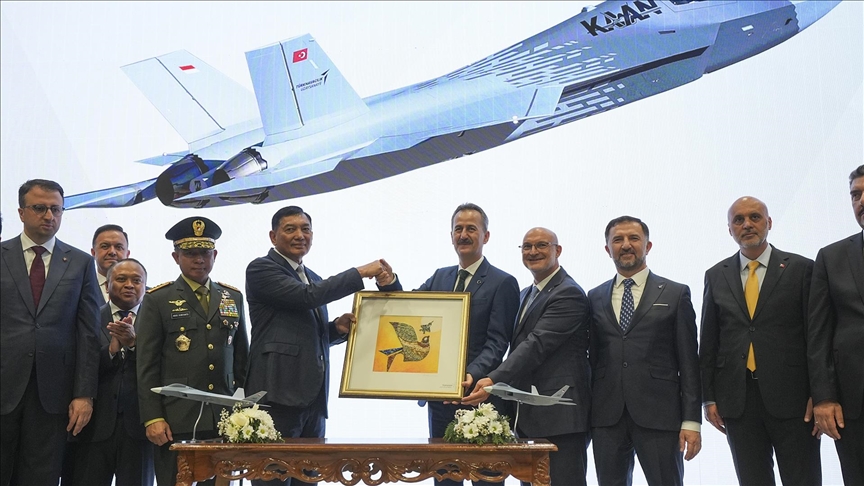
Systems such as the Bayraktar TB2 and AKINCI drones have attracted worldwide attention. Their performance in Ukraine and the Nagorno-Karabakh conflict significantly increased the international visibility of Türkiye’s defense sector. Meanwhile, the fifth-generation fighter jet KAAN secured a landmark export agreement with Indonesia for 48 aircraft even before entering serial production, underscoring Türkiye’s emergence as a producer and exporter of advanced military technology.
This transformation also carries important implications for NATO. At a time when the Alliance is calling on its members to increase defense spending, Türkiye stands out as one of the few countries capable of meeting a substantial share of its own military requirements while simultaneously providing defense technologies to its allies. As a result, the defense industry has become a new strategic lever that strengthens Ankara’s influence and bargaining power within NATO.
The NATO Summit in Ankara should therefore be seen as more than a diplomatic event. It symbolizes Türkiye’s evolving place within the Alliance. A country that once sought security guarantees against the Soviet threat is now increasingly helping shape NATO’s approach to regional and global security challenges.