The analysis, written by IRIS researcher Patrice Moyeuvre, shows that perceptions of Türkiye in Europe have begun to change in recent years. For a long time, European capitals discussed Türkiye mainly through the lens of political crises, the EU accession process, migration, or tensions in the Eastern Mediterranean. But with the war in Ukraine, Europe’s priorities have shifted. Today, the continent’s most urgent priority is no longer to keep Türkiye at arm’s length, but to uphold European security.
The European Union is not in a position, in the short and medium term, to meet all of its defense needs using only its own resources. Europe needs ammunition, unmanned aerial vehicles, air defense systems, armored vehicles, naval platforms, and rapid production capacity. Türkiye, meanwhile, has developed significant capabilities in many of these areas in recent years.
This is why the question of whether Türkiye can become a strategic partner for Europe is no longer a purely theoretical debate. When the war in Ukraine, the Russian threat, uncertainty over the U.S. role in European security, and the structural weaknesses of the EU’s defense industry are taken into account, Türkiye is increasingly becoming an indispensable part of Europe’s security architecture.
Europe Has No Time: Türkiye Is One of the Few Actors Capable of Quickly Filling the Defense Gap
One of the most striking conclusions of the IRIS analysis is that the security threat facing Europe requires concrete short-term solutions rather than long-term theoretical planning. The European Union’s defense industry processes are slow, bureaucratic, and struggle to respond to urgent needs. Added to this are divergent interests among European allies, industrial competition, and differences in strategic priorities.
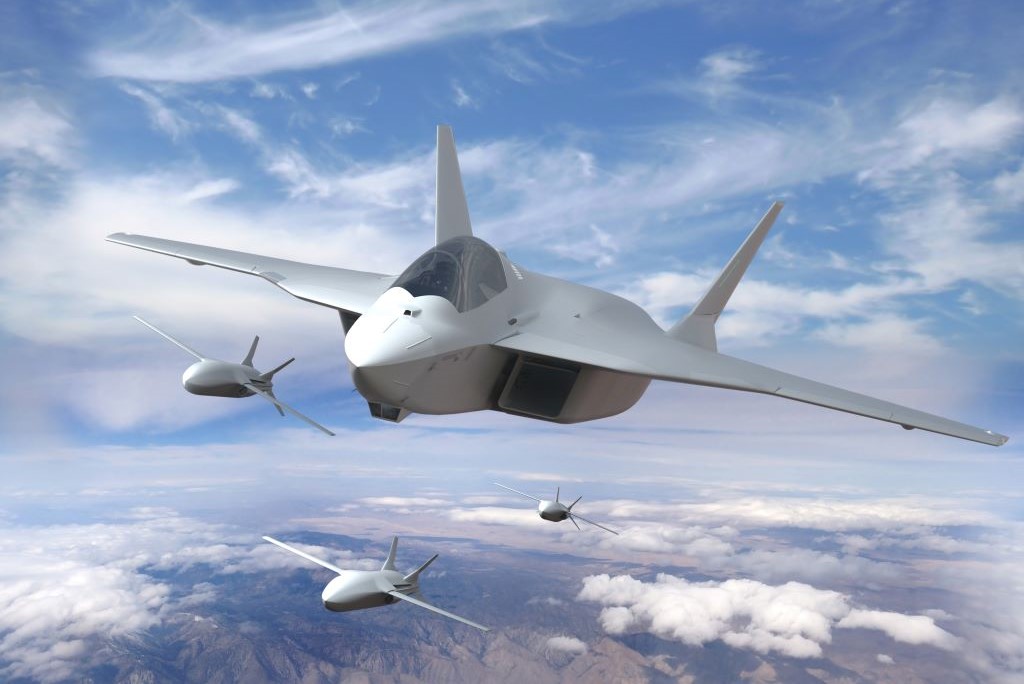
The FCAS/SCAF fighter aircraft program, considered one of Europe’s most ambitious defense projects, is one of the clearest examples of this structural problem. Due to disagreements between France, Germany, and Spain over leadership and industrial workshare, the program has effectively reached an impasse. Europe may speak of common defense, but major projects often run into conflicts of national interest.
Türkiye, by contrast, can offer faster, more flexible, and lower-cost solutions in many areas. Ankara’s importance for Europe therefore stems not only from its defense capabilities, but also from its agility in decision-making and production processes.
Türkiye, by contrast, can offer faster, more flexible, and lower-cost solutions in many areas. Ankara’s importance for Europe therefore stems not only from its defense capabilities, but also from its agility in decision-making and production processes.
At a time when the war in Ukraine has entered its fourth year, Europe’s biggest challenge is not only developing advanced technology, but also producing at sufficient scale and speed. In a speech in June 2025, NATO Secretary General Mark Rutte drew attention to the scale of this production gap, saying that “Russia produces in three months what the whole of NATO produces in a year” in terms of ammunition. Production capacity in ammunition, artillery systems, unmanned aerial vehicles, tactical armored vehicles, air defense elements, and conventional systems has now become a strategic power in its own right.
“In terms of ammunition, Russia produces in three months what the whole of NATO produces in a year.”
— Mark Rutte, NATO Secretary General
Türkiye’s defense industry ecosystem offers Europe an important option in this respect. Today, the Turkish defense industry has developed broad production capacity ranging from UAVs and armed drones to electronic warfare systems, from armored vehicles to naval platforms, and from ammunition to air defense solutions. Moreover, this capacity does not exist merely on paper; it has demonstrated itself through systems tested in the field.
Europe is turning toward Türkiye not only because Türkiye has grown stronger. The main reason is that Europe’s own capability gaps have become increasingly visible. For years, Europe largely framed its security under the U.S. umbrella. But the war in Ukraine, Donald Trump’s remarks about NATO, and Russia’s strategy of prolonged attritional warfare have shown Europe that it must strengthen its own defense capacity.
Yet such capacity cannot be built quickly. The defense industry is not merely a matter of budget; it requires production lines, human resources, technological know-how, supply chains, and political will. Europe will find it difficult to advance quickly in all these areas. Türkiye is emerging precisely in this gap as one of the few regional powers capable of helping Europe close its urgent defense deficit.
Türkiye Is Not Outside the European Defense System; It Is Already Inside It
The second important thesis highlighted in the IRIS analysis is that Türkiye is not an outsider to Europe’s security architecture. As a long-standing NATO member, Türkiye is already part of European defense. Beyond that, it has also been involved with numerous European mechanisms, from the Western European Armaments Organisation to OCCAR projects, Horizon Europe programs, and European air and naval platforms.
Recent developments also show that this de facto integration is continuing. Germany’s inclusion of Türkiye in the European Sky Shield Initiative, the United Kingdom’s deepening defense industry cooperation with Ankara, Italy’s development of a new partnership model along the Baykar-Leonardo axis, and Poland’s growing interest in the Turkish defense industry are no coincidence.
This picture reveals an important reality: even if political distance toward Türkiye persists at the European level, Türkiye’s integration into the European security system is already advancing at the level of security bureaucracies and defense industries.
Therefore, the issue today is not whether Türkiye will be included in Europe’s security architecture. Türkiye is already part of that architecture. The real question is whether this de facto integration will acquire a political and institutional framework.
From Europe’s perspective, Türkiye can no longer be treated as an actor to be kept outside when it comes to Black Sea security, containing Russia, supporting Ukraine, managing crises stemming from the Middle East, migration management, energy security, and defense industry supply chains.
Yet this is where a fundamental contradiction emerges. Europe needs Türkiye’s security capabilities, but still hesitates politically to include Türkiye fully in decision-making mechanisms. This contradiction will be one of the most critical areas of tension in Türkiye-Europe relations in the period ahead.
SAFE Will Remain Incomplete Without Türkiye
The SAFE program, created by the European Union to rapidly strengthen its defense capacity, is one of the most important mechanisms that gives concrete form to this contradiction in Türkiye-Europe defense relations.
Security Action for Europe, or SAFE, is a €150 billion loan mechanism designed to meet the EU’s urgent defense needs, accelerate joint procurement, and strengthen the European defense industry. The program focuses on areas such as ammunition, missile systems, air and missile defense, unmanned aerial vehicles, naval capabilities, cybersecurity, artificial intelligence, and electronic warfare.
A large share of these areas directly overlaps with the defense sectors in which Türkiye has made significant progress in recent years. The Turkish defense industry today has production, export, and operational experience in many fields that Europe urgently needs. For this reason, implementing the SAFE program through a narrow understanding of European defense that excludes Türkiye would limit the program’s strategic impact.
“As one of the countries that has a say in the development of the European pillar, we have the will to be included in all defense and security initiatives on the continent. We expect your close attention and support, as parliamentarians, for Türkiye’s inclusion in the defense and security initiatives announced by the European Union. Excluding Türkiye’s defense capabilities for narrow political interests benefits no one. At this point, we must build, across the Alliance, an unambiguous and unconditional security and defense network stretching from Texas to Ankara.”
— Recep Tayyip Erdoğan, President of the Republic of Türkiye
If SAFE is viewed merely as an internal EU financial instrument, its capacity to close Europe’s defense gap will remain limited. Europe’s problem is not only a lack of money. Its real problem is the need for defense solutions that can be produced quickly, are field-tested, cost-effective, and scalable. Türkiye is precisely the kind of actor that can step in at this point.
For this reason, SAFE is not merely a matter of Türkiye’s participation in a program. It is also a strategic test of how Europe positions Türkiye. If Europe sees Türkiye only as an external supplier from which to purchase equipment, the relationship will remain limited. But if Türkiye’s defense industry capacity is integrated more institutionally into Europe’s security architecture through mechanisms such as SAFE, this could open a new chapter in Türkiye-EU relations.
From Ankara’s perspective, the issue is not merely participation in European projects. What will be decisive is the status, rights, and strategic returns with which Türkiye is included in these mechanisms. Türkiye cannot be reduced to a secondary actor that fills Europe’s defense gaps while remaining excluded from decision-making processes.
Türkiye’s potential contribution to European security is clear. But from Ankara’s perspective, it would be unacceptable for this contribution to turn into a one-sided relationship of need. If Türkiye is to contribute to European security, that contribution must be handled within a more balanced, institutional, and equal partnership framework.
This is precisely where SAFE’s importance for Türkiye lies. The program will reveal Europe’s true approach toward Türkiye. Will Europe see Türkiye only as a defense producer it turns to in times of crisis, or will it accept Türkiye as one of the indispensable strategic partners of European security?
The answer to this question will also determine the future trajectory of Türkiye-EU relations.