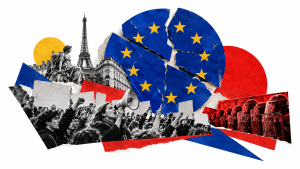
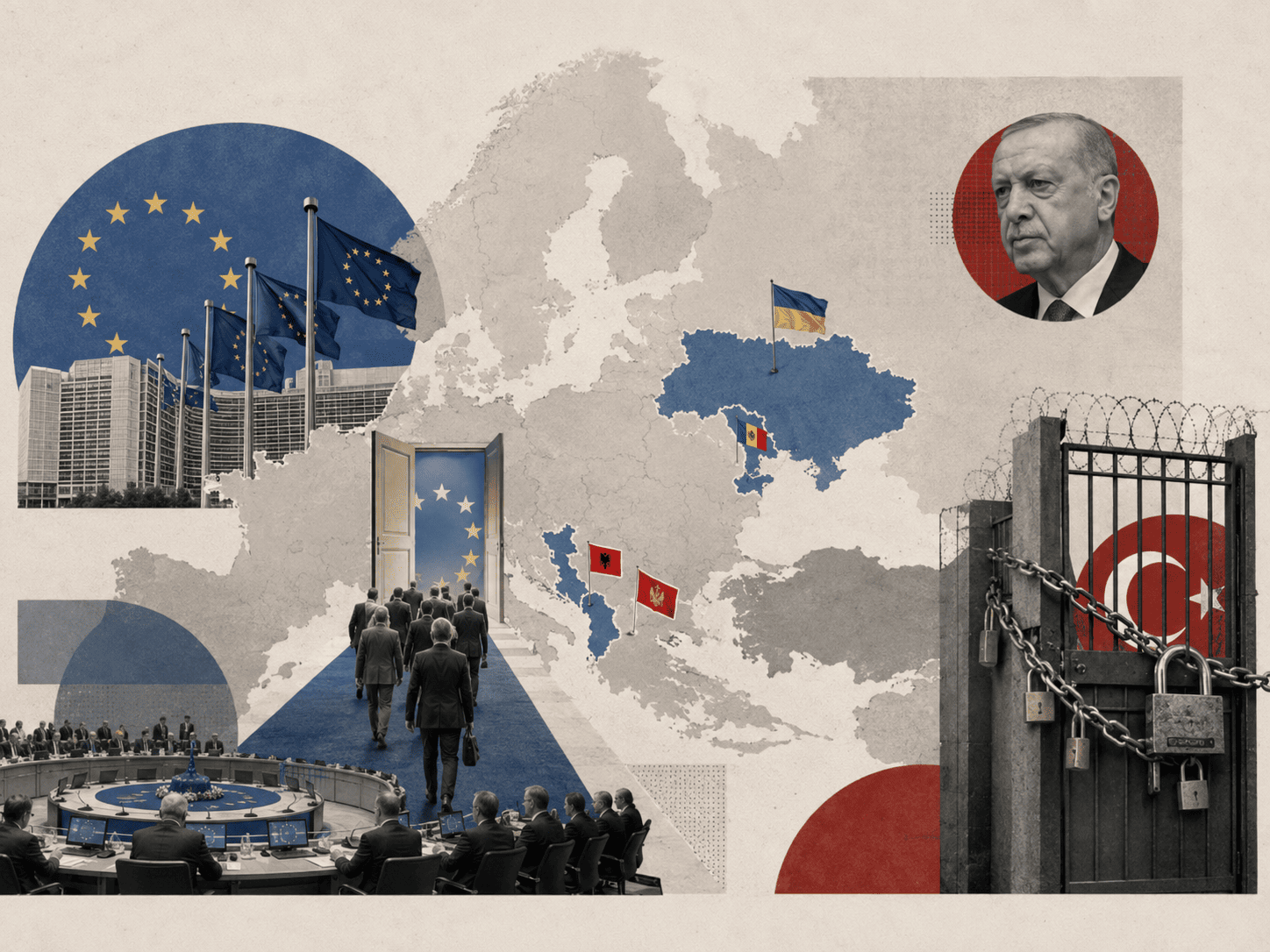

The European Union declared July 14 a “Super Tuesday” for its enlargement policy. Four accession conferences were held on the same day with Ukraine, Moldova, Albania, and Montenegro. Albania closed its first negotiating chapters, while Montenegro moved a step closer to the final stage of its accession process. Brussels also presented Ukraine’s and Moldova’s progress toward European Union membership as a historic development.
From the perspective of those four countries, this was undoubtedly an important day. From Türkiye’s perspective, however, it once again exposed the double standard at the heart of the European Union’s enlargement policy.
The real question is therefore this: Is the European Union’s “Super Tuesday” truly super for everyone?
Türkiye’s European journey is older than that of every country currently engaged in accession negotiations. Ankara applied to the European Economic Community in 1959. The Ankara Agreement was signed in 1963. Türkiye submitted its application for full membership in 1987, was recognized as a candidate country in 1999, and began accession negotiations in 2005.
Despite the decades that have passed, Türkiye is still waiting at the European Union’s door. This delay can no longer be described as the result of a purely technical process. A significant number of negotiating chapters have been blocked for political reasons, accession talks have effectively come to a standstill, and Türkiye has been offered no clear membership perspective.
Ukraine is being rapidly advanced toward EU membership despite being at war and facing major uncertainties over its borders and economic future. This acceleration is not driven by reforms alone. Brussels also sees Ukraine’s accession as part of its broader geopolitical struggle against Russia.
In other words, the European Union is demonstrating that when the political will exists, technical and economic obstacles can be overcome.
When it comes to Türkiye, however, that same political will disappears.
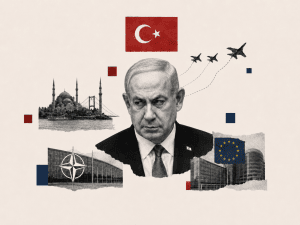
Türkiye is not an ordinary candidate country standing outside Europe’s security framework. It has one of the largest armies in NATO and is located at the center of crises that directly affect Europe, from the Black Sea and the Caucasus to the Middle East and the Eastern Mediterranean. In areas such as migration, energy, trade, defense, and counterterrorism, Europe cannot develop an effective policy without cooperating with Ankara.
Whenever the European Union needs Türkiye, it describes the country as a strategic partner. When migration routes need to be controlled, Brussels turns to Ankara. When European security is threatened, it remembers Türkiye’s military strength. When energy corridors return to the agenda, it emphasizes Türkiye’s geographic position.
Yet when membership is discussed, Türkiye is once again sent back to the waiting room.
This is not genuine partnership. It is selective cooperation. Türkiye is expected to share Europe’s security and political burdens, but it is not allowed to participate in Europe’s decision-making mechanisms.
“Super Tuesday” therefore reveals more than progress in the European Union’s enlargement policy. It also shows how political and selective that policy has become. While new paths are being opened for Ukraine and Moldova, Türkiye continues to face new obstacles. This unequal treatment makes clear that the accession process cannot be explained by technical criteria alone.
The European Union is, of course, entitled to decide which countries it wishes to admit and when. But it also has a responsibility to act fairly, consistently, and predictably toward candidate countries. Offering Türkiye a membership perspective for decades and then leaving the process in political uncertainty damages the European Union’s credibility.
Brussels may have good reason to celebrate July 14 as a “Super Tuesday” for four candidate countries. For Türkiye, however, the day merely serves as another reminder of an old reality:
The European Union’s enlargement door is not closed. But whenever Türkiye approaches it, new locks are added.