French business channel BFM Business has drawn attention to Türkiye’s growing appeal to international investors by describing the country as a potential “new Singapore.” The report highlighted not only Türkiye’s manufacturing strength, but also its capacity to attract artificial intelligence start-ups, technology companies and high-value-added investments.
The choice of Singapore as a point of comparison is no coincidence. Despite being a small island state, Singapore combined its strategic location with sound policies and became one of Asia’s leading hubs for trade, finance and technology. Türkiye now has a similar opportunity to turn its geographical advantages into global economic influence.
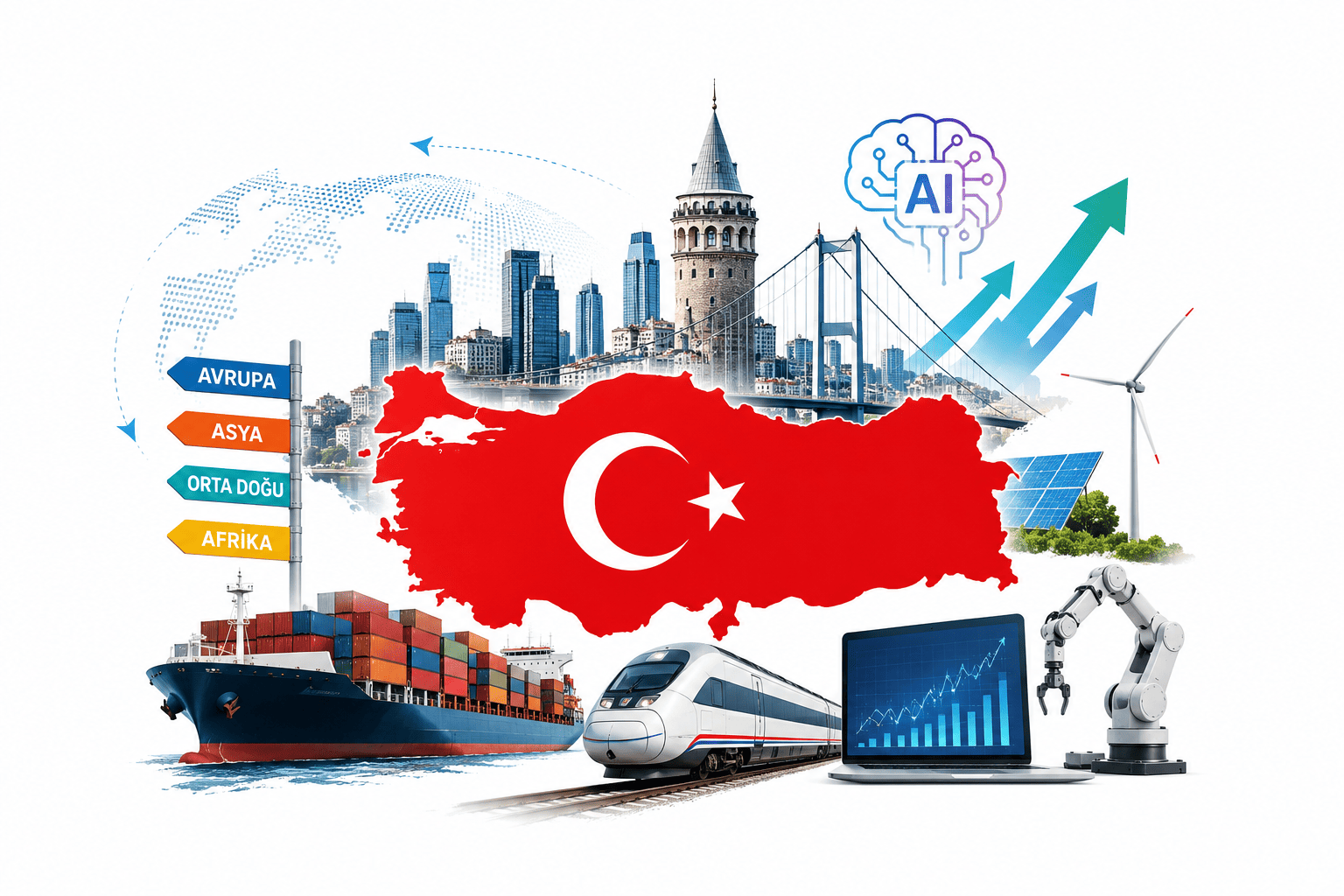
There is, however, one important difference: Türkiye has a far broader range of assets at its disposal. Located at the crossroads of Europe, Asia, the Middle East, the Caucasus and Africa, the country can reach billions of people and numerous markets within approximately four hours by air. Its extensive road network, ports, air transport capacity and expanding railway connections make it a natural centre for trade and logistics.
Türkiye’s advantages are not limited to its position at the intersection of global trade routes. It also has a strong manufacturing base across a wide range of sectors, from automotive and household appliances to textiles, machinery, defence technologies and unmanned aerial vehicles. Its proximity to Europe enables companies to benefit from both shorter delivery times and greater supply-chain security. At a time when global businesses are diversifying their production bases and seeking to reduce their dependence on distant markets, these advantages are making Türkiye increasingly attractive.
BFM’s emphasis on artificial intelligence start-ups is also significant. Türkiye now aims not only to attract manufacturing investment, but also to become a major player in the technologies of the future. Its young population, strong engineering expertise, expanding entrepreneurial ecosystem and technological experience gained through the defence industry provide a solid foundation for this ambition. Istanbul’s potential as a financial and start-up hub, Ankara’s growing role in defence and public-sector technologies, and the development of technology parks across the country all strengthen Türkiye’s position.
The most important difference between Türkiye and Singapore lies in Türkiye’s large domestic market and extensive production capacity. Singapore owes much of its economic success to its strength in trade, finance and logistics. Türkiye, by contrast, has the potential to bring manufacturing, energy, tourism, agriculture, defence, logistics and technology together within a single economic model.
Türkiye therefore does not need to imitate Singapore. It can instead draw inspiration from Singapore’s success in transforming a strategic location into a global advantage and develop a model of its own.
Türkiye’s decision to take its relations with ASEAN to a more advanced level, its growing investment partnerships with Gulf countries and its strong economic ties with Europe also support this transformation. While Ankara continues to maintain close links with Western markets, it is simultaneously expanding its engagement with Asia’s rising economies. Türkiye is therefore moving beyond its traditional role as a bridge between two continents and becoming a meeting point for different economic regions.
For this reason, BFM Business’s reference to a “new Singapore” represents more than a simple compliment. International observers are increasingly recognising not only Türkiye’s geopolitical position, but also its economic and technological potential. If Türkiye succeeds in combining its manufacturing capacity with technology and its logistical advantages with global investment, it could become one of the world’s leading centres for trade and innovation.
Ultimately, the goal should not be to become a new Singapore, but to build a distinctive Turkish success model capable of gaining recognition around the world.