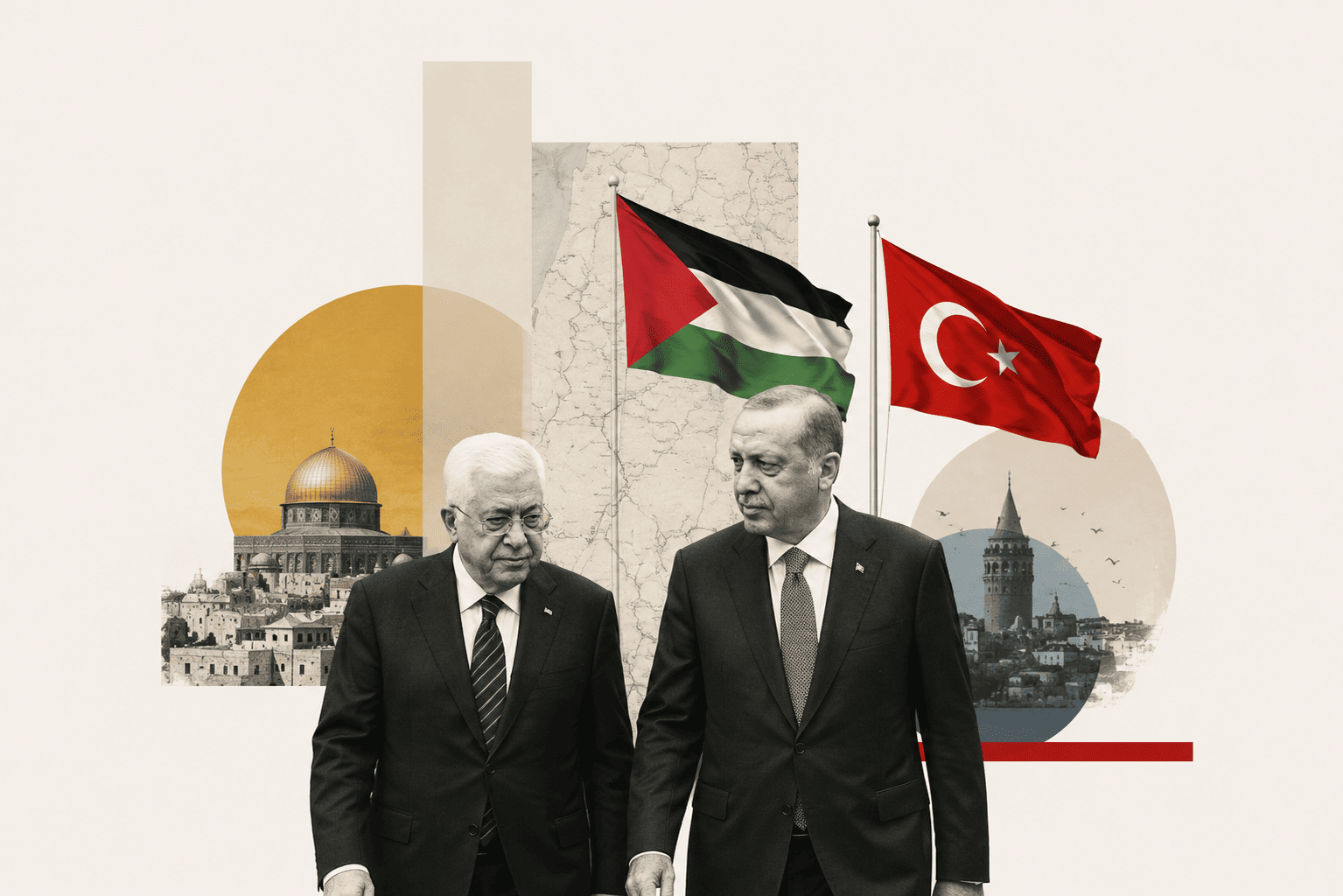

Palestinian President Mahmoud Abbas’s visit to Türkiye on August 11–13, at the invitation of President Recep Tayyip Erdoğan, comes at a critical moment as the future of Gaza is being debated. According to a statement by Türkiye’s Head of Communications Burhanettin Duran, the Erdoğan-Abbas meeting on August 12 will focus on the latest developments in Palestine, bilateral relations and regional issues. Yet the timing of the visit suggests that Gaza’s post-war political and security architecture will also feature prominently on the agenda in Ankara.
One of the most critical issues in Gaza today is the disarmament of Hamas. Israel has objected to several key elements of the Gaza peace plan, insisting in particular that the withdrawal of Israeli forces be conditional on Hamas’s complete disarmament. Nikolay Mladenov, High Representative of the Gaza Board of Peace, told Israel’s Channel 12 that under the 15-point roadmap for the second phase, Israel would gradually withdraw from the areas it occupies in Gaza if Hamas fully disarms. Mladenov also stressed that the plan’s primary objective is to ensure that the Gaza Strip never again poses a threat to Israel’s security.
His remarks underscore that Hamas’s disarmament is not merely one component of the plan, but has become a central condition for moving forward with its second phase. Significantly, Mladenov made these comments after Israeli Prime Minister Benjamin Netanyahu announced that he had rejected the plan presented by the Gaza Board of Peace. The debate therefore extends well beyond securing a ceasefire: what happens to Hamas’s weapons, when and under what conditions Israeli forces withdraw, and who ultimately guarantees security in Gaza have moved to the heart of the process.
For Mahmoud Abbas, this debate carries particular significance. If Hamas’s military control over Gaza comes to an end, the question of who fills the resulting political vacuum, whether the Palestinian Authority can re-establish a role in Gaza, and whether Gaza and the West Bank can be reunited under a common political framework will directly concern Abbas and his administration.
Another significant development took place in Istanbul ahead of Abbas’s visit. Türkiye’s National Intelligence Organization (MİT) chief İbrahim Kalın met with the Hamas leadership to discuss the roadmap for the second phase of the Gaza peace plan. The meeting shows that Türkiye is engaged in direct talks with Hamas over the emerging post-war framework in Gaza. Abbas’s arrival immediately afterward, meanwhile, suggests that Ankara is pursuing parallel diplomatic channels with both Hamas and the Palestinian Authority.
From Lebanon to Gaza: Could a Turkish Formula Come into Play?
What makes Abbas’s visit even more noteworthy is Türkiye’s growing prominence in regional disarmament and security discussions. Lebanese newspaper An-Nahar recently claimed that a formula under which Hezbollah’s heavy weapons would be transferred to Iran under Turkish and Iranian supervision had been discussed during a meeting between Erdoğan and Lebanese President Joseph Aoun. Türkiye’s potential role in the future security arrangements of southern Lebanon was also raised in the same context.
Mahmoud Abbas’s visit to Ankara now raises the question of whether a similar role could be discussed for Gaza. Türkiye is one of the regional actors able to maintain channels of communication with Hamas while also enjoying close relations with the Palestinian Authority. This gives Ankara a distinctive diplomatic position from which it could potentially play a role in Hamas’s disarmament, Gaza’s future governance and the establishment of a post-war security mechanism.
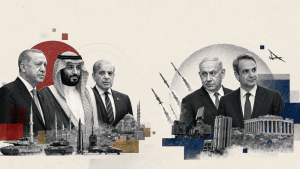
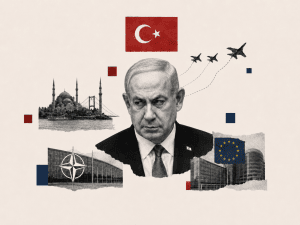
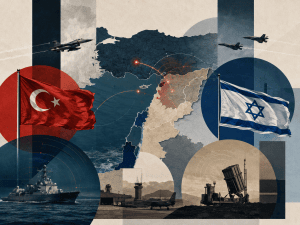
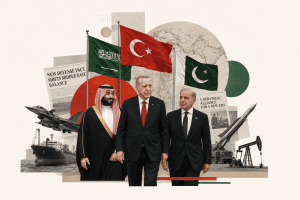
At the same time, increasingly explicit warnings about Türkiye are emerging in the Israeli media. In a report published on August 11, i24NEWS cited former Israeli National Security Council chief Meir Ben-Shabbat as warning that the “risk of conflict” between Türkiye and Israel had increased, urging the Israeli government to exercise caution in the face of Ankara’s expanding influence, particularly in Syria and across the region. The fact that Türkiye’s growing regional weight is being discussed more openly within Israeli security circles coincides with Ankara’s emergence as a potential actor in two critical arenas: Lebanon and Gaza. It is also worth recalling that Türkiye has begun reshaping the regional security architecture through the Mecca Agreement, the mutual defense pact it signed with Saudi Arabia and Pakistan.
For this reason, Abbas’s visit to Türkiye could carry significance well beyond a routine diplomatic meeting. Ankara faces an exceptionally delicate equation: helping resolve the question of Hamas’s disarmament without triggering a new intra-Palestinian conflict, contributing to a security mechanism that would enable Israel’s withdrawal from Gaza, and reintegrating the Palestinian Authority into Gaza’s political future.
If reports that a Turkish-supervised formula for Hezbollah’s disarmament has been discussed are accurate, Abbas’s visit to Ankara becomes even more significant. After Syria and Lebanon, Türkiye may now be preparing to play a role in shaping Gaza’s future security architecture as well.