
Foreign Minister Hakan Fidan’s latest remarks in Cairo suggest that Türkiye’s policy towards Israel may be entering a new phase. Fidan said that although the Palestinian side had fulfilled its commitments regarding the transition to the second phase of the Gaza ceasefire, Israel’s failure to take the necessary steps could lead Türkiye, Qatar and Egypt to consider “radical measures”. He also stressed that Ankara expected Washington to exert the necessary pressure on Israel.
So what might these “radical measures” entail?
The immediate assumption may be some form of direct military action. Yet Ankara’s recent policy points towards a different—and potentially more consequential—approach. Rather than confronting Israel on its own, Türkiye may be seeking to bring the region’s major powers into a common diplomatic and security framework, creating a collective mechanism of pressure and deterrence vis-à-vis Israel.
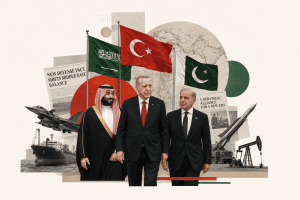
In this context, the Mecca Joint Defence Agreement signed by Türkiye, Saudi Arabia and Pakistan on 7 August is particularly significant. The agreement stipulates that an attack on one of the three countries would be considered an attack on all of them. More importantly, the framework is intended to go beyond political solidarity, encompassing joint military exercises, air defence, electronic warfare, unmanned systems, defence industry cooperation and logistical coordination.
Ankara has also made clear that this architecture may not remain limited to the three founding members. Hakan Fidan has explicitly referred to Egypt as a natural potential partner. Egyptian accession is by no means certain, but if it were to happen, the strategic implications would be considerable—not only in terms of military capabilities, but also geography. Türkiye’s military power, Pakistan’s deterrent capacity, Saudi Arabia’s economic weight and Egypt’s strategic position across Gaza, Sinai, the Suez Canal, the Red Sea and the Eastern Mediterranean could all become part of the same security architecture.
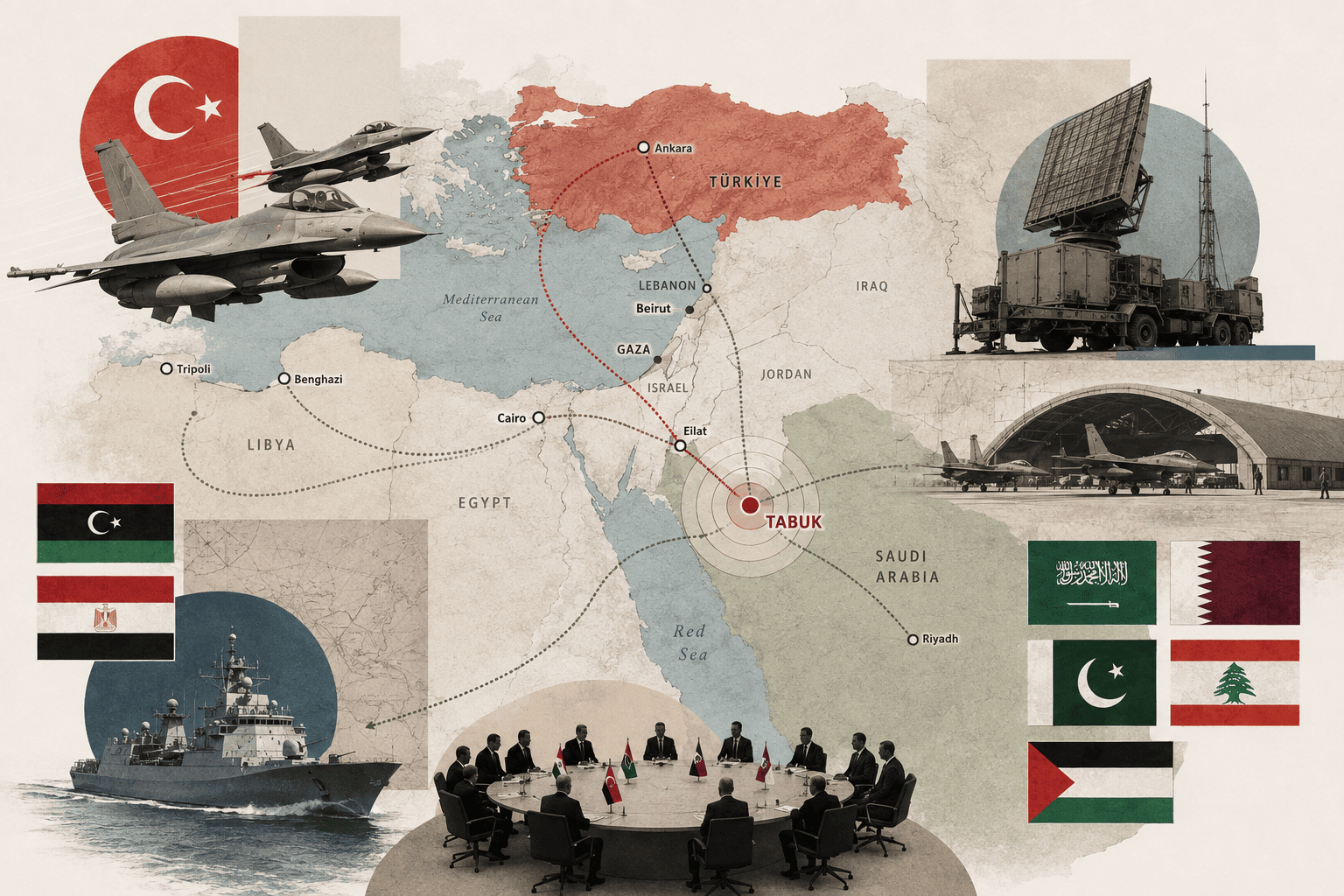
It is against this backdrop that reports concerning Tabuk deserve particular attention.
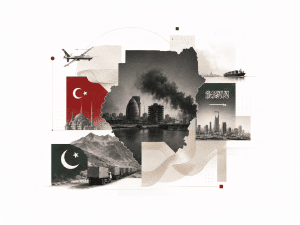
Türkiye is reportedly considering deploying F-16 fighter jets and air-defence assets to King Faisal Air Base in north-western Saudi Arabia. Neither Ankara nor Riyadh has confirmed the claim. But if it proves accurate, it could represent one of the first significant military manifestations of the Mecca Agreement on the ground.
The issue is not simply that Turkish F-16s could be deployed to Saudi Arabia. The issue is that they could be deployed to Tabuk.
Tabuk lies roughly 200 kilometres from the Gulf of Aqaba and the Eilat area in southern Israel. Its strategic sensitivity for Israel is hardly new. When the United States was considering the sale of F-15 fighter aircraft to Saudi Arabia in 1978, one of Israel’s principal concerns was the possibility that those aircraft might be stationed at Tabuk. Washington ultimately felt compelled to provide assurances that Saudi F-15s would not be deployed there—an indication of how important the location has long been in Israeli strategic calculations.
The deployment of Turkish F-16s to Tabuk would, of course, not amount to preparations for an attack on Israel. But military strategy is shaped not only by intentions; geography and capabilities matter as well. The presence of Turkish combat aircraft and air-defence assets at a Saudi base close to Israel’s southern flank could introduce a new element of deterrence that Israel would have to factor into any future regional crisis.
The “radical step” may be to bring the region around the same table
What gives Fidan’s remarks their broader significance is not simply the Mecca Agreement or the Tabuk claim, but the intense diplomatic activity unfolding alongside them.
In recent weeks, Lebanese Prime Minister Nawaf Salam and subsequently President Joseph Aoun have visited Türkiye. Ankara has made clear that it is prepared to play a more active role in safeguarding Lebanon’s sovereignty and shaping the country’s future security architecture.
Hakan Fidan then travelled to Libya. His visit was notable because it extended beyond Tripoli, where Ankara has traditionally maintained close ties, to Benghazi. Fidan met both the western authorities and Khalifa Haftar and other political actors in the east. Türkiye thus appears to be seeking a transition from being seen primarily as the backer of one side in Libya to becoming a more central actor capable of engaging both camps.
Fidan travelled to Egypt immediately afterwards. Only a few years ago, Ankara and Cairo were on opposing sides in Libya and the Eastern Mediterranean. Today they are two of the principal mediators on Gaza, while Egypt is increasingly being discussed as a possible future participant in the Mecca framework.
At almost the same time, Palestinian President Mahmoud Abbas was also in Türkiye. Ankara is therefore pursuing parallel diplomacy over Gaza’s future not only with Hamas, but also with the Palestinian Authority.
It is increasingly difficult to view all these developments as entirely disconnected.
The emerging picture suggests that Türkiye may not be seeking direct military confrontation with Israel, but rather attempting to build a political and security network capable of narrowing Israel’s room for manoeuvre by bringing regional powers closer together.
The first pillar of such a strategy could be diplomatic. Türkiye, Egypt and Qatar could coordinate more closely within the Gaza mediation process and increase collective political pressure on Israel. Fidan’s deliberate reference to “Türkiye, Qatar and Egypt” is noteworthy in this respect.
The second pillar could be the expansion of the security architecture being developed with Saudi Arabia and Pakistan. If Egypt were eventually to join, a significant number of the region’s most consequential powers surrounding Israel would, for the first time, be connected through an institutionalised security framework.
The third pillar could be deterrence. Joint exercises, integrated air defence, cooperation in Red Sea security and, if confirmed, a Turkish military presence at strategically sensitive locations such as Tabuk could give greater substance to the diplomatic pressure being applied.
The significance of this would be clear: rather than facing a series of disconnected capitals, Israel could increasingly find itself dealing with regional actors that are coordinating their positions on specific strategic issues.
One of Israel’s longstanding advantages in the region has been precisely this fragmentation. Ankara, Riyadh, Cairo, Doha and Islamabad have historically operated according to different threat perceptions and strategic priorities. The Palestinian question, Lebanon, Syria and Red Sea security have likewise often been treated as separate files.
Türkiye may now be attempting to build bridges between these previously fragmented arenas.
The Mecca Agreement provides the security pillar; the Türkiye-Egypt-Qatar axis underpins Gaza diplomacy; Ankara’s contacts with Lebanon add the Levant dimension; and its Libya policy extends the picture into North Africa and the Eastern Mediterranean. If the Tabuk reports are confirmed, this architecture would acquire a visible military deterrent as well.
There are natural limits to the pressure Türkiye can exert on Israel acting alone. But the equation could change if Türkiye’s military capabilities, Saudi Arabia’s economic weight, Pakistan’s deterrent power, Egypt’s strategic geography and Qatar’s diplomatic channels begin moving in the same direction.
In that sense, the “radical steps” Fidan referred to may ultimately mean taking the Israeli question beyond the confines of bilateral Türkiye-Israel tensions and transforming it into a regional issue—one in which a new balance capable of acting collectively begins to emerge.
Whether Turkish F-16s will actually be stationed at Tabuk remains to be seen. Nor is it yet clear whether Egypt will join the Mecca Agreement. But Ankara’s recent diplomatic activity points in one direction: Türkiye may increasingly be looking beyond tougher rhetoric and seeking instead to transform the region’s fragmented power into collective political weight.
And perhaps the next major question will no longer be what Israel does, but how the United States responds to this emerging regional balance. Because the security architecture now beginning to take shape in the Middle East could ultimately reshape not only Israel’s freedom of action, but also the regional order on which Washington has relied for decades.