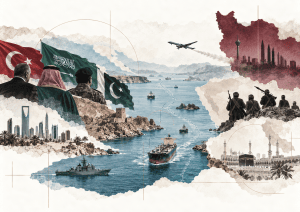
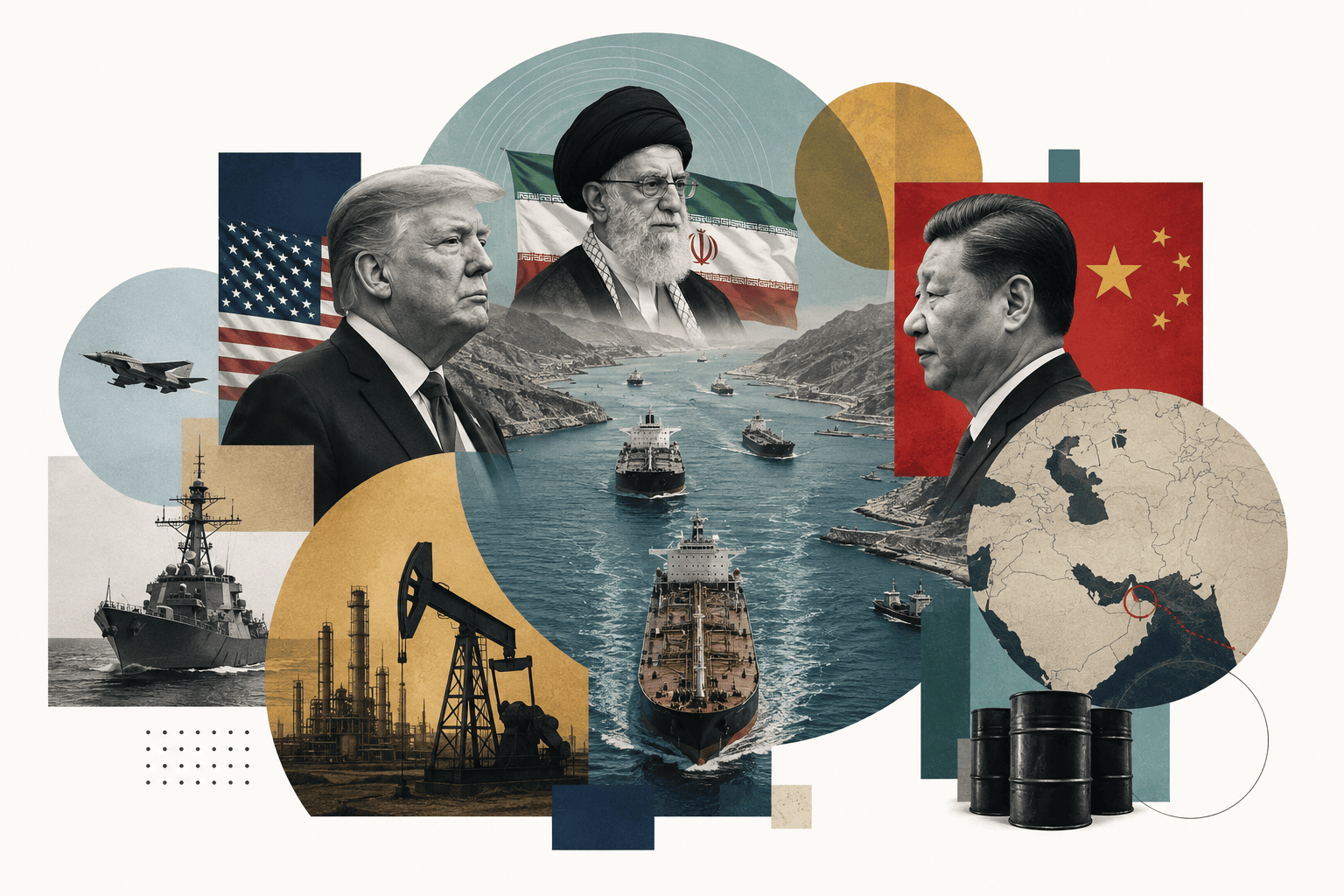

When the Iran war began and the United States openly backed Israel, many struggled to understand why Washington was becoming so deeply involved in the conflict. In its early stages, the focus was largely on Iran’s regime, its nuclear program, its missile capabilities, and Israel’s security. As the conflict evolved, however, it became increasingly clear that one of the decisive factors would be the Strait of Hormuz. Today, this narrow waterway has emerged as a strategic crossroads with the potential to shape not only the future of the Middle East but also the global economy.
The reason lies in Hormuz’s unique role within the global energy system. Roughly one-quarter of the world’s seaborne oil trade and nearly one-fifth of global liquefied natural gas (LNG) shipments pass through this narrow passage. Iran’s ability to threaten maritime traffic means that a regional conflict can quickly escalate into a global energy crisis. As a result, the war has evolved beyond a military confrontation between Iran and Israel. Energy security and international trade have become integral parts of the broader geopolitical equation.
Against this backdrop, U.S. Treasury Secretary Scott Bessent’s announcement that an agreement to reopen the Strait of Hormuz could be reached within a day or two is particularly significant. Although Tehran insists that it is not negotiating directly with Washington, the indirect talks facilitated by Oman suggest that both sides are seeking a diplomatic way out.
The question, then, is straightforward: Why is the Strait of Hormuz so important to the United States?
Hormuz: A New Front in the U.S.-China Strategic Competition
The strategic value of the Strait of Hormuz cannot be measured solely by the volume of energy that flows through it. Its true significance lies in the destination of that energy. Most of the crude oil transported through the strait is shipped to Asia. According to the U.S. Energy Information Administration, 89 percent of crude oil and condensate passing through Hormuz during the first half of 2025 was destined for Asian markets, with China and India among the largest importers.
This reality makes Hormuz critically important for China. As the world’s largest crude oil importer, China remains heavily dependent on external energy supplies to sustain its economic growth. An estimated 40 percent of its oil imports transit through the Strait of Hormuz.
To reduce this vulnerability, Beijing has expanded oil imports from Russia, invested in pipeline networks across Central Asia, and increased its strategic petroleum reserves. Nevertheless, these measures have not eliminated China’s dependence on Gulf energy. For Beijing, the security of the Strait of Hormuz remains one of its most significant strategic vulnerabilities.
This is precisely where Washington’s strategy comes into focus. The United States is not simply seeking to guarantee freedom of navigation through the strait. It also aims to preserve its position as the principal architect of the global energy security order. In doing so, Washington hopes both to reinforce its strategic influence in the Gulf and to maintain leverage over one of China’s most critical energy supply routes.
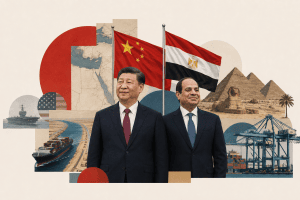
Another important factor behind this strategy is China’s expanding influence across the Middle East. Even before the Iran war, Beijing had evolved beyond being merely an economic partner to become an increasingly influential diplomatic actor. Its successful mediation between Iran and Saudi Arabia in 2023, which led to the restoration of diplomatic relations between the two regional rivals, demonstrated that China was capable of reshaping political dynamics in a region traditionally regarded as part of America’s sphere of influence. Beyond energy agreements and infrastructure investments, Beijing proved it could also act as a diplomatic broker in regional conflicts.
From Washington’s perspective, a new security framework centered on the Strait of Hormuz could therefore serve two strategic objectives: limiting Iran’s ability to use the strait as a geopolitical pressure point while simultaneously constraining China’s expanding influence through energy, infrastructure, and diplomacy. In this sense, Hormuz is no longer merely a maritime chokepoint; it has become one of the principal arenas of strategic competition between the United States and China in the Middle East.
The Gulf states are arguably the most vulnerable actors in this emerging rivalry. A substantial share of the oil and natural gas exports of Saudi Arabia, the United Arab Emirates, Qatar, Kuwait, and Iraq passes through the Strait of Hormuz. Any prolonged disruption would directly threaten their fiscal revenues, economic diversification strategies, and long-term investment plans. This explains why Saudi Arabia, despite viewing Iran as its principal regional rival, has little interest in seeing the conflict spiral out of control. For Riyadh, weakening Iran is important, but preserving the uninterrupted flow of its own energy exports is equally critical.
Iran, meanwhile, views Hormuz as one of its most powerful strategic assets. Even the prospect of disrupting maritime traffic through the strait is enough to drive up oil prices, increase shipping insurance costs, and fuel uncertainty across global markets. In this way, Tehran is able not only to pressure the Gulf monarchies but also to impose indirect economic costs on the United States and Europe through higher energy prices.
Looking ahead, the more consequential question is how China will respond to this evolving strategic environment. Beijing is likely to accelerate efforts to diversify its energy supply routes by expanding pipelines through Russia and Central Asia, enhancing the role of Pakistan’s Gwadar Port, deepening long-term energy partnerships with Gulf producers, and further institutionalizing its relationship with Iran.
An agreement on the Strait of Hormuz would therefore do more than restore secure maritime transit. It would also encourage China to diversify its energy strategy even further while pushing U.S.-China strategic competition toward new ports, pipelines, and trade corridors.