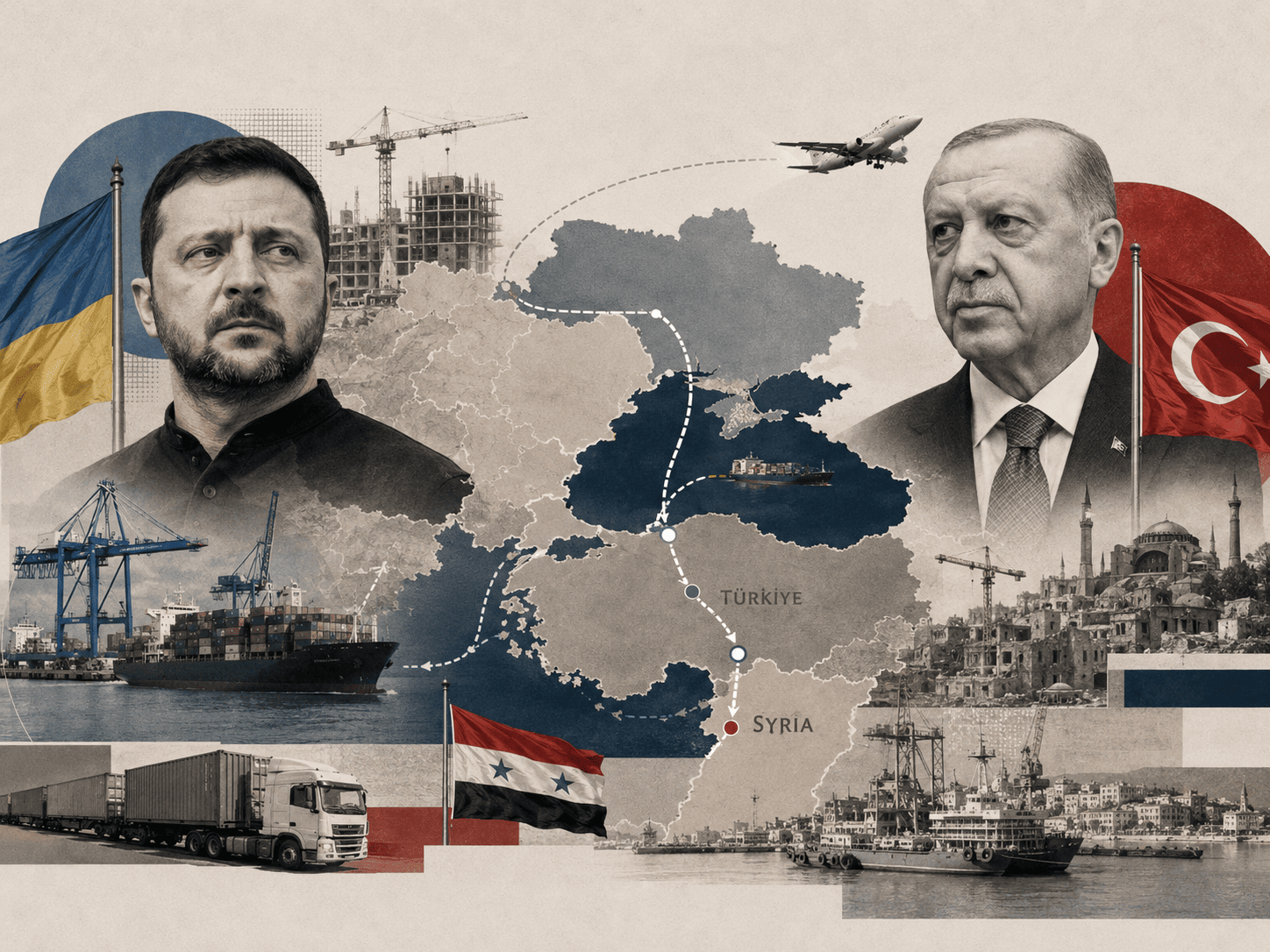

The Ukrainian Parliament’s ratification of the Free Trade Agreement with Türkiye opens the door to a new phase in economic relations between the two countries. Signed on February 3, 2022, the agreement remained on hold for a long period because of the war. Türkiye had already completed its own approval process, and Kyiv’s decision to give the agreement the green light now shows that the commercial partnership is being placed on a more permanent and institutional foundation.
It would be incomplete to view this development merely as a reduction in customs duties. The Free Trade Agreement also shows that Türkiye is already beginning to secure its place in Ukraine’s post-war economy. Once the conflict ends, Ukraine will become one of Europe’s largest reconstruction zones. Rebuilding destroyed roads, bridges, ports, housing, energy facilities, and industrial infrastructure will require a vast economic mobilisation lasting many years.
Türkiye will not be entering this process as a newcomer. Turkish construction companies had already undertaken major projects in Ukraine before the war. The reconstruction agreement signed by Türkiye and Ukraine in 2024 also paved the way for Turkish firms to play a more active role in rebuilding the country’s infrastructure.
The Free Trade Agreement could place this accumulated experience within a stronger economic framework. Easier access to the Ukrainian market for Turkish companies could create new opportunities in construction materials, machinery, transport, energy, logistics, textiles, the defense industry, and technology.
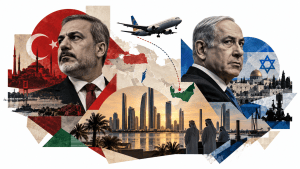
However, the agreement may not remain limited to direct trade between Türkiye and Ukraine. One particularly striking detail followed Ukrainian President Volodymyr Zelenskyy’s visit to Türkiye in April 2026, when he travelled to Damascus aboard a Turkish state aircraft. Foreign Minister Hakan Fidan accompanied him on the journey. This can be interpreted as a symbolic indication that Ukraine’s outreach to Syria was being conducted in close coordination with Ankara.
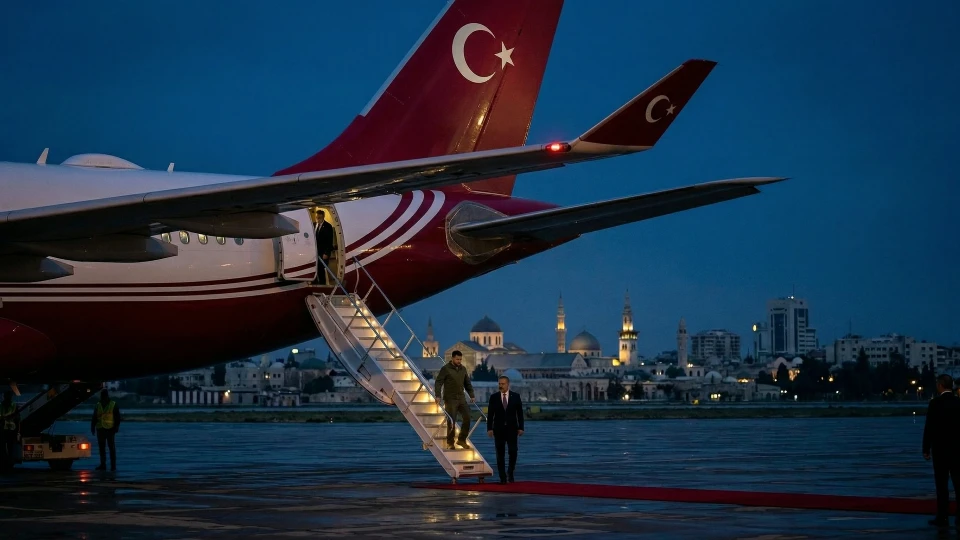
During Zelenskyy’s visit to Damascus, potential cooperation between Ukraine and Syria in food, energy, and logistics came onto the agenda. Among the projects discussed was the possible establishment of a logistics hub that could enable Ukrainian products to reach Middle Eastern and surrounding markets through Syrian ports.
At this point, the Türkiye–Ukraine Free Trade Agreement takes on a broader meaning. It may do more than facilitate the movement of Turkish goods into Ukraine or Ukrainian products into Türkiye. Türkiye could also become the central link in a new trade network connecting Ukraine and Syria.
A new commercial corridor could emerge from the Black Sea to Türkiye, and from there to Syrian ports and Middle Eastern markets. Ukraine’s grain, food products, metals, and industrial goods could be combined with Türkiye’s ports, road networks, manufacturing capacity, and logistics infrastructure. Syria, with its Mediterranean ports and overland links to the Arab world, could form the southern pillar of this route.
Plans to transform Syria into a future logistics and energy hub further strengthen this possibility. A new regional network connecting Türkiye and Syria through energy pipelines, electricity interconnections, roads, and railways is already being discussed. Türkiye has also begun transporting Azerbaijani gas to Syria through its own territory.
Zelenskyy’s journey to Damascus via Türkiye should therefore not necessarily be seen as a purely diplomatic visit. There is currently no officially declared direct link between the Türkiye–Ukraine Free Trade Agreement and the logistics and energy projects under consideration in Syria. Yet when these developments are assessed together, it is possible to argue that Ankara may be seeking to integrate Ukraine into a broader economic network stretching from the Black Sea to the Eastern Mediterranean and the Middle East.
Under such a model, Türkiye would not merely be a country participating in Ukraine’s reconstruction. It could become the central state in a trade network through which Ukrainian products move southward, while goods from Syria and the Middle East travel northward.
This is where the agreement’s true strategic value becomes clear. Without waiting for the war to end, Türkiye is building economic ties with the Ukraine of the future. At the same time, it may also be laying the foundations of a new commercial geography linking the Black Sea, Anatolia, Syria, and the Eastern Mediterranean.