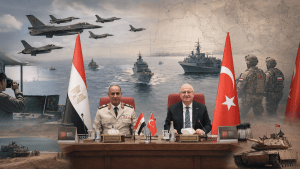
The visit by Naval Forces Commander Admiral Ercüment Tatlıoğlu to the Port of Latakia aboard TCG İstanbul cannot be viewed as an ordinary military contact. The return of Turkish warships to the Syrian coast after 18 years shows that cooperation between Ankara and Damascus is moving from land to sea.
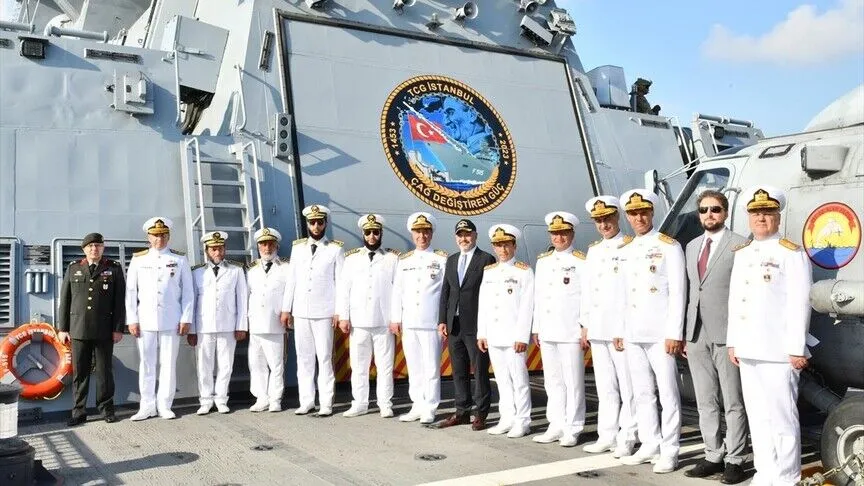
The restructuring of the Syrian navy, port security, coastal surveillance systems, and joint training programs may become the main areas of cooperation in the coming period. Yet the significance of the Latakia visit is not limited to military capacity alone. Energy investments along the Syrian coast, the opening of ports to regional trade, and the legal status of maritime areas are also part of the same process.
Following this visit, the possibility of signing an Exclusive Economic Zone agreement between Türkiye and Syria has returned to the agenda. No negotiation timetable or agreed maritime boundary has yet been announced to the public. However, when military, economic, and diplomatic developments are assessed together, it is clear that the groundwork leading toward such an agreement is being built step by step.
Türkiye’s idea of delimiting maritime jurisdiction areas with Syria is not new. Transport and Infrastructure Minister Abdulkadir Uraloğlu stated in December 2024 that a maritime jurisdiction agreement could be concluded between the two countries, and that such a step could also determine the boundaries of oil and natural gas exploration zones.
The maritime cooperation that began in Latakia indicates that this option is no longer seen merely as a theoretical possibility.
An EEZ Agreement Could Open Syria’s Maritime Gateway
Syria’s reconstruction does not depend only on repairing cities and highways. The reactivation of the ports of Latakia and Tartus, the country’s opening to energy investments, and its connection to regional trade networks are also of major importance.
For this to happen, maritime security must first be ensured. Years of war have severely weakened Syria’s navy, coastal surveillance capacity, and port infrastructure. With its maritime experience and defense industry, Türkiye is one of the strongest regional partners capable of filling this gap.
After security comes legal certainty. If energy exploration is to be carried out off Syria’s coast, license areas, maritime boundaries, and authority over the use of resources must be clearly defined.
A maritime jurisdiction agreement between Türkiye and Syria could provide this foundation. Such a step would not only draw the maritime boundary between the two countries; it would also facilitate energy investments, port projects, and maritime trade.
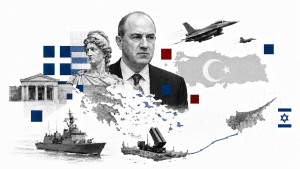
The agreement could also make it more difficult for energy and security projects centered on Israel, the Greek Cypriot Administration of Southern Cyprus, and Greece to be shaped as if Türkiye and Syria did not exist. Just as the Türkiye–Libya memorandum drew a new line in the western Eastern Mediterranean, a Türkiye–Syria agreement could produce a similar result in the east of the region.
A New Türkiye-Centered Network from Ukraine to Northern Cyprus
The Free Trade Agreement signed between Türkiye and Ukraine on February 3, 2022, was recently approved by the Ukrainian Parliament. The agreement does not merely mean a reduction in customs duties; it could open a broad market for Turkish companies in construction, transport, energy, agriculture, and logistics during Ukraine’s post-war reconstruction.
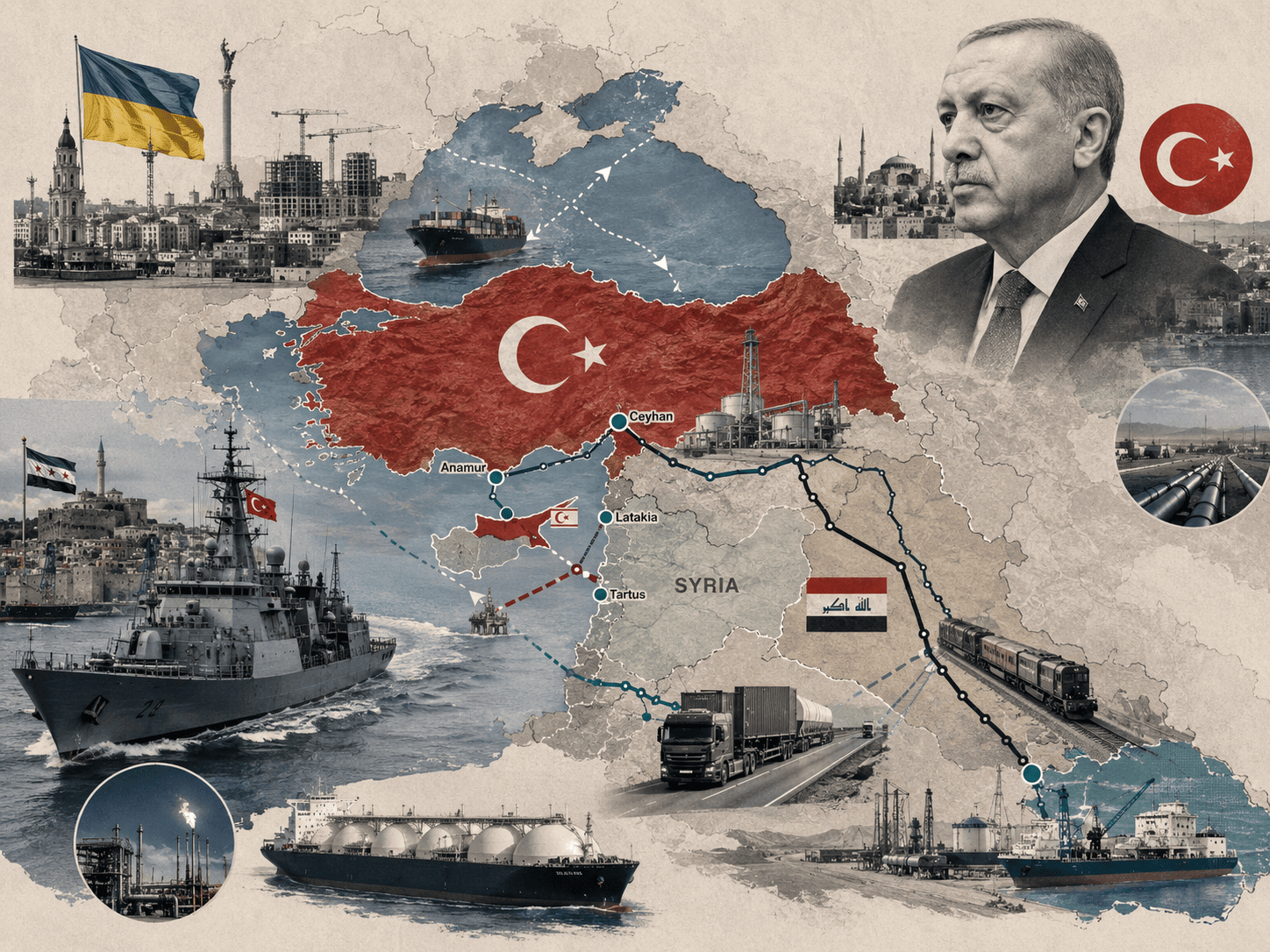
The trade network starting from Ukraine could extend across the Black Sea to Türkiye, and from there to Syrian ports and Middle Eastern markets. In this picture, Türkiye could become not merely a transit country, but one of the centers of the economic flow between north and south.
The Eastern Mediterranean leg of this network is strengthened by the planned natural gas pipeline to Northern Cyprus. Following the memorandum signed between Türkiye and the Turkish Republic of Northern Cyprus on July 10, 2026, work began on an approximately 101-kilometer bidirectional line between Anamur and Teknecik. The pipeline is intended to reduce Northern Cyprus’s electricity generation costs and, in the future, connect the island to energy trade.
Türkiye’s strengthening of its energy integration with Northern Cyprus and its launch of maritime cooperation on the Syrian coast in the same period should not be seen as separate developments. One strengthens Türkiye’s physical presence in the center of the Eastern Mediterranean, the other in its east.
The Iraq Development Road Could Become the Southern Backbone of the Four Seas
One of the most important links in this picture is the Iraq Development Road.
The project aims to connect the Grand Faw Port on the coast of the Persian Gulf to the Turkish border through an approximately 1,200-kilometer rail and highway network. The plan is thus to transport goods arriving from the Gulf and Asia to Europe via Iraq and Türkiye. Türkiye, Iraq, Qatar, and the United Arab Emirates signed a quadrilateral memorandum for the project in 2024.
The Development Road could turn the Persian Gulf leg of the Four Seas Initiative into concrete infrastructure. The road and rail line that will reach Türkiye from Faw Port could connect northward to Europe and the Black Sea, and westward to the Mediterranean via Syrian ports.
The new energy process between Iraq and Türkiye is also strengthening this corridor. Ankara and Baghdad are preparing to extend by 12 months the Iraq–Türkiye Crude Oil Pipeline agreement, which expires on July 27. The permanent reoperation of the line carrying oil from Kirkuk and northern Iraq to Ceyhan Port could strengthen Türkiye’s role not only as a transit country, but also as a regional energy distribution hub. The two countries are also discussing broader energy cooperation options.
Ceyhan’s energy gateway to the Mediterranean, Faw Port’s Gulf connection, and the Development Road’s land transport network could merge within the same system. When Syria’s Latakia and Tartus ports are added to this, a more flexible structure emerges between Türkiy eand Iraq, one that is not dependent on a single route and has alternative exit points.
This flexibility is one of Türkiye’s most important advantages. While Iraqi oil can reach Ceyhan, the Kirkuk–Baniyas line, whose revival between Iraq and Syria is being discussed, could also bring Syria’s Mediterranean coast back into the energy equation.
Statements indicating that the United States supports the revival of this line show that Syria’s place in energy corridors is valued not only by Ankara, but also by Washington.
The Four Seas Initiative Provides the Broader Framework
The Four Seas Initiative, which envisions connecting the Black Sea, the Caspian Sea, the Mediterranean, and the Persian Gulf through energy, trade, and transport routes, provides the broader framework for all these developments.
Although the idea’s roots go back to 2009, the project fell off the agenda for a long time because of the Syrian war and regional conflicts. In the new period, the Türkiye–Syria rapprochement, the Iraq Development Road, and the Gulf countries’ search for alternative routes are making this vision meaningful again.
Latakia and Tartus could become ports linking Iraq and the Gulf to the Mediterranean. Ceyhan could expand its role as an energy distribution hub. The Development Road could carry the Persian Gulf to Europe via Türkiye. Free trade with Ukraine could strengthen the system’s Black Sea leg.
A possible maritime jurisdiction agreement with Syria could also establish the legal and security foundation of this network in the Eastern Mediterranean. For this reason, reading the potential agreement merely as a move developed against the Israel–Greece–GKRY line would be incomplete.
The real issue is Türkiye’s effort to bring together the seas, ports, and land routes around it within a single geoeconomic system.
While Türkiye is making these strategic moves, its rivals are of course not standing idle. Yet Türkiye’s greatest advantage is its unique geostrategic position and the fact that it is not dependent on a single project. Trade with Ukraine, the Iraq Development Road, the Ceyhan energy line, the Northern Cyprus natural gas pipeline, and the Latakia connection can each advance separately and later merge within the same network. For this reason, the Türkiye-centered model appears more flexible and feasible than IMEC or the Israel–GKRY–Greece line.
The Four Seas Initiative may not be fully implemented in the short term. But if the energy flow from Iraq to Ceyhan is strengthened, the Development Road reaches Türkiye, and Syrian ports reopen, Ankara will no longer be merely a transit country; it will become one of the main centers shaping the direction of trade and energy routes in the region.