
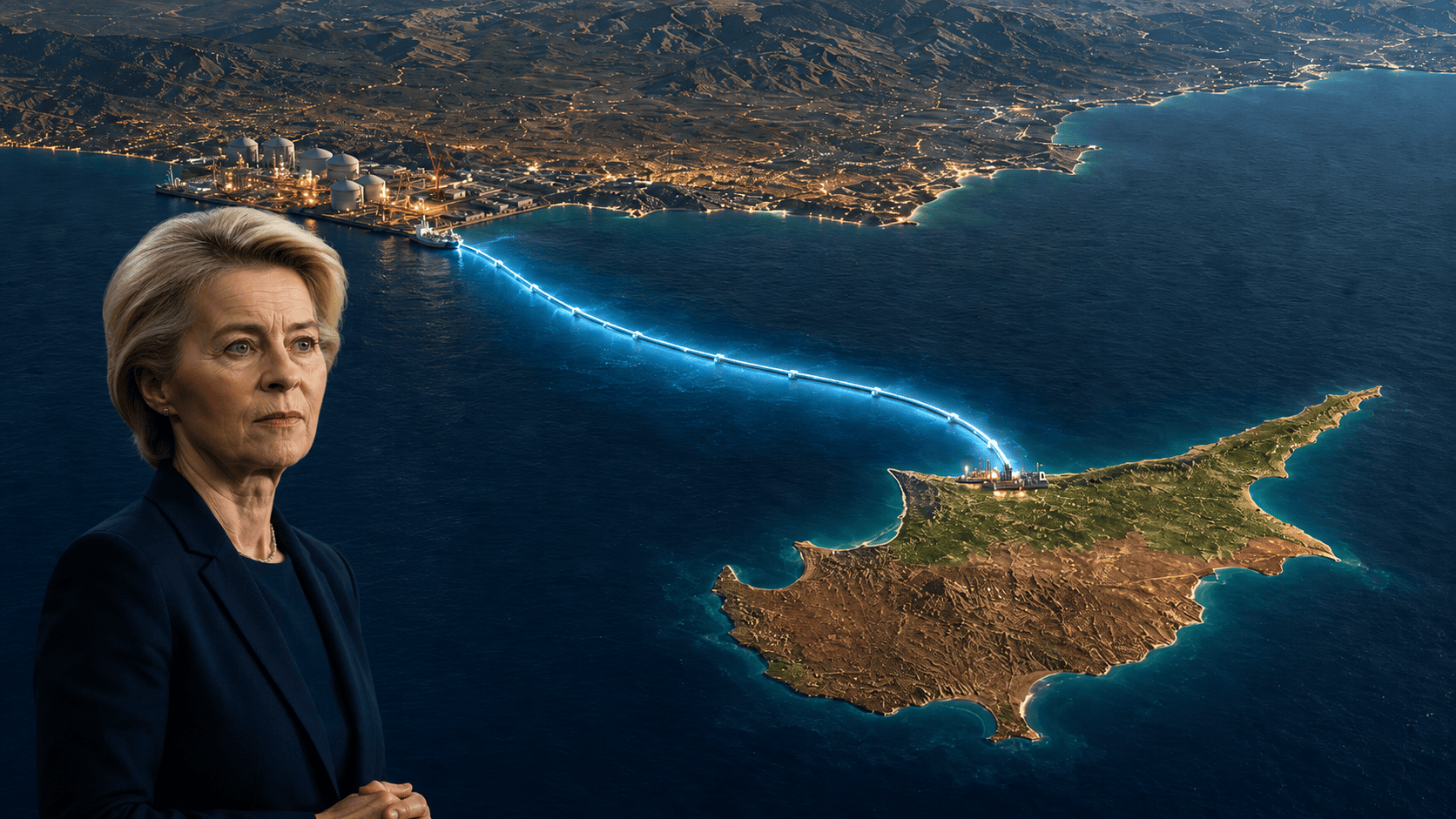
The first official agreements concerning the construction of a natural gas pipeline between Türkiye and the Turkish Republic of Northern Cyprus were signed in Nicosia on July 10, 2026. Türkiye’s Minister of Energy and Natural Resources, Alparslan Bayraktar, announced that the approximately 101-kilometer subsea pipeline would run from Anamur to Teknecik. Once the engineering studies are completed, the project is expected to become operational in 2028.
At first glance, the natural gas pipeline connecting Türkiye to Northern Cyprus may appear to be primarily an economic and technical investment. Yet its true significance extends far beyond energy supply.
The pipeline is intended to carry natural gas from Türkiye to the island, while plans are also being considered to make it suitable for reverse flow in the future. This means that if commercially viable natural gas reserves are discovered in the Eastern Mediterranean, they could be transported to Türkiye through the Turkish Republic of Northern Cyprus and then delivered to Europe through Türkiye’s existing energy infrastructure.
Such a prospect would enhance not only the energy security of the Turkish Republic of Northern Cyprus, but also its broader strategic importance in the region.
The Strategic Link Between Türkiye and the Turkish Republic of Northern Cyprus Is Growing Stronger
Türkiye had already begun directly meeting one of Northern Cyprus’s most essential needs through the subsea water pipeline. Once the natural gas pipeline and the planned electricity interconnection are completed, relations between the two sides will acquire a more permanent character, built around three critical forms of infrastructure: water, electricity and energy.
This would deepen the economic and strategic integration of the Turkish Republic of Northern Cyprus with Türkiye, while also reducing the island’s external energy dependence. Replacing the expensive and environmentally damaging liquid fuels currently used for electricity generation with natural gas could lower production costs and strengthen energy supply security.
For Türkiye, however, the project’s most important feature lies in its potential to turn the Turkish Republic of Northern Cyprus into an active component of Ankara’s Eastern Mediterranean energy policy.
Türkiye would no longer be merely the country supplying energy to the northern part of the island. Through the Turkish Republic of Northern Cyprus, it would establish permanent energy infrastructure opening onto the Eastern Mediterranean. This infrastructure could strengthen Ankara’s position in the event of future natural gas discoveries in the region.
The Turkish Republic of Northern Cyprus Could Gain Greater Importance for Europe
The timing of the project is also highly significant.
In July 2026, the European Parliament adopted a resolution on Cyprus that addressed the events of 1974 almost entirely through the narrative of the Greek Cypriot side and levelled serious accusations against Türkiye. Ankara declared the resolution “null and void” and accused the European Union of adopting a biased position on the Cyprus issue.
Against the backdrop of this political tension, the signing of the memorandum on the natural gas pipeline between Türkiye and the Turkish Republic of Northern Cyprus carries strong symbolic significance.
While the European Parliament is bringing the conflicts of the past back onto the agenda as a means of political pressure, Ankara is preparing to build the energy infrastructure of the future. In other words, while Brussels continues to view Cyprus primarily as a historical and legal dispute, Türkiye is seeking to transform the northern part of the island into an economic and strategic asset.
Could Europe’s energy needs eventually change the European Union’s attitude toward the Turkish Republic of Northern Cyprus?
The European Union recognizes the Greek Cypriot administration as the “Republic of Cyprus,” which it considers to represent the entire island. The Turkish Republic of Northern Cyprus, by contrast, is officially recognized only by Türkiye. This legal and political reality will not disappear overnight because of a single energy project.
Moreover, as an EU member state, the Greek Cypriot administration has both veto power and political leverage within the Union to oppose any energy arrangement involving Türkiye or the Turkish Republic of Northern Cyprus.
Yet in international relations, energy often creates the conditions for practical engagement before formal recognition takes place.
Since the energy crisis began in 2022, the European Union has been rapidly reducing its dependence on Russian gas. Russia’s share of total EU gas imports fell from around 45 percent in 2021 to 12 percent in 2025. Over the same period, the share of liquefied natural gas rose from 20 percent to 45 percent. The European Commission is now seeking not only new suppliers, but also alternative pipeline routes.
The Commission openly supports the creation of a Mediterranean gas hub to strengthen the energy security of Southern and Central Europe. It also considers new resources in North Africa and the Eastern Mediterranean strategically important.
This creates an opportunity for Türkiye and the Turkish Republic of Northern Cyprus.
Türkiye already possesses a major energy network where pipelines from Russia, Azerbaijan and Iran converge alongside Black Sea gas and LNG imported from various countries. Existing interconnections from Türkiye to Bulgaria, Greece and the Balkans provide a major infrastructure advantage for transporting any gas discovered in the Eastern Mediterranean to European markets.
Türkiye is also working on a new natural gas pipeline that could extend to Italy through Greece. Gas reaching Türkiye through the Turkish Republic of Northern Cyprus could therefore, in theory, be integrated into Türkiye’s existing and planned European connections.
The Greek Cypriot administration, by contrast, is pursuing a different model. Significant natural gas discoveries have been made around the island in the Aphrodite, Cronos, Zeus, Glaucus and Pegasus fields. Aphrodite is estimated to hold around 5.6 trillion cubic feet of gas, Cronos around 3.1 trillion cubic feet and Zeus around 2.5 trillion cubic feet.
But the discovery of reserves does not automatically mean that the gas can be brought to market. The deep waters of the Eastern Mediterranean, high investment costs and the distance between the individual fields remain major obstacles to export projects.
For this reason, Egypt’s existing liquefaction facilities are widely seen as the most realistic export option for the gas discovered by ExxonMobil and QatarEnergy in the Glaucus and Pegasus fields off the coast of southern Cyprus. The Greek Cypriot administration and Egypt have also signed agreements to transport gas from the Cronos and Aphrodite fields to Egypt, where it would be liquefied and then exported to Europe.
This highlights a crucial reality: the winner of the energy competition in the Eastern Mediterranean will not necessarily be the actor with the largest reserves, but the one capable of delivering gas to market at the lowest cost.
This is where the Türkiye–Turkish Republic of Northern Cyprus pipeline becomes especially important. The Türkiye route is one of the shortest options for reaching Europe and one of the easiest to connect to existing networks. By contrast, the EastMed pipeline, previously promoted by Israel, the Greek Cypriot administration and Greece, was expected to stretch for nearly 2,000 kilometers. Because of its high cost, depths of up to three kilometers and serious technical challenges, the project was never implemented.
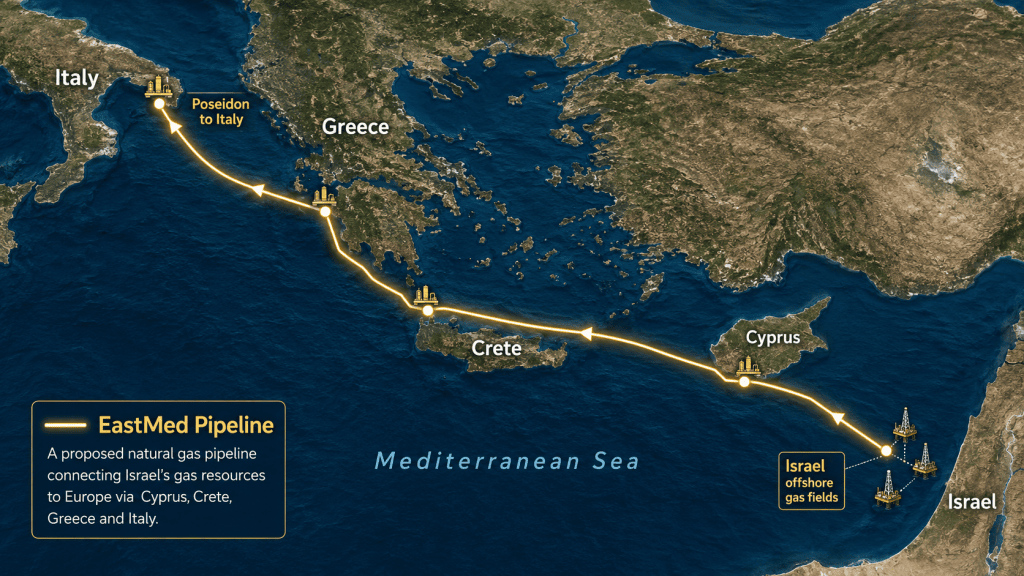
The Anamur–Teknecik pipeline, by comparison, would be only around 101 kilometers long. The two projects naturally differ in both capacity and purpose. Nevertheless, the difference in distance and cost helps explain why a route through Türkiye may be seen as a more economically realistic option.
Europe may not be ready today to recognize the Turkish Republic of Northern Cyprus diplomatically. Yet energy security can narrow the gap between political principles and economic necessity. If sufficient gas reserves are discovered and the Türkiye–Turkish Republic of Northern Cyprus route becomes commercially attractive, it may become increasingly costly for Brussels to maintain its current policy of complete exclusion.
Ultimately, this development is likely to cause the greatest concern in Greece, Israel and the Greek Cypriot administration. While these three actors have long attempted to establish an Eastern Mediterranean energy order that excludes Türkiye, Ankara is seeking to transform the northern part of the island into an alternative energy corridor stretching from the Eastern Mediterranean to Europe.
In other words, rather than waiting for Europe to recognize the Turkish Republic of Northern Cyprus, Türkiye is trying to make it too important to ignore.masını beklemek yerine, onu yok sayılamayacak kadar önemli bir aktör hâline getirmeyi hedefliyor.