Türkiye’s external dependence on energy has long been viewed solely as an economic problem. Yet the issue is far larger than the import bill it pays. A country that imports a significant share of its oil and natural gas is directly affected by every development beyond its control, from international price increases to wars, from sanctions to disruptions in pipelines. When energy prices rise, inflation increases, the foreign trade balance deteriorates, industry’s competitiveness weakens, and room for maneuver in foreign policy narrows.
For this reason, Energy and Natural Resources Minister Alparslan Bayraktar’s reminder that Türkiye pays 60-70 billion dollars every year for energy imports points not only to an economic cost. This figure shows the enormous resource Türkiye channels into other countries’ oil, natural gas, and coal instead of financing its own development.
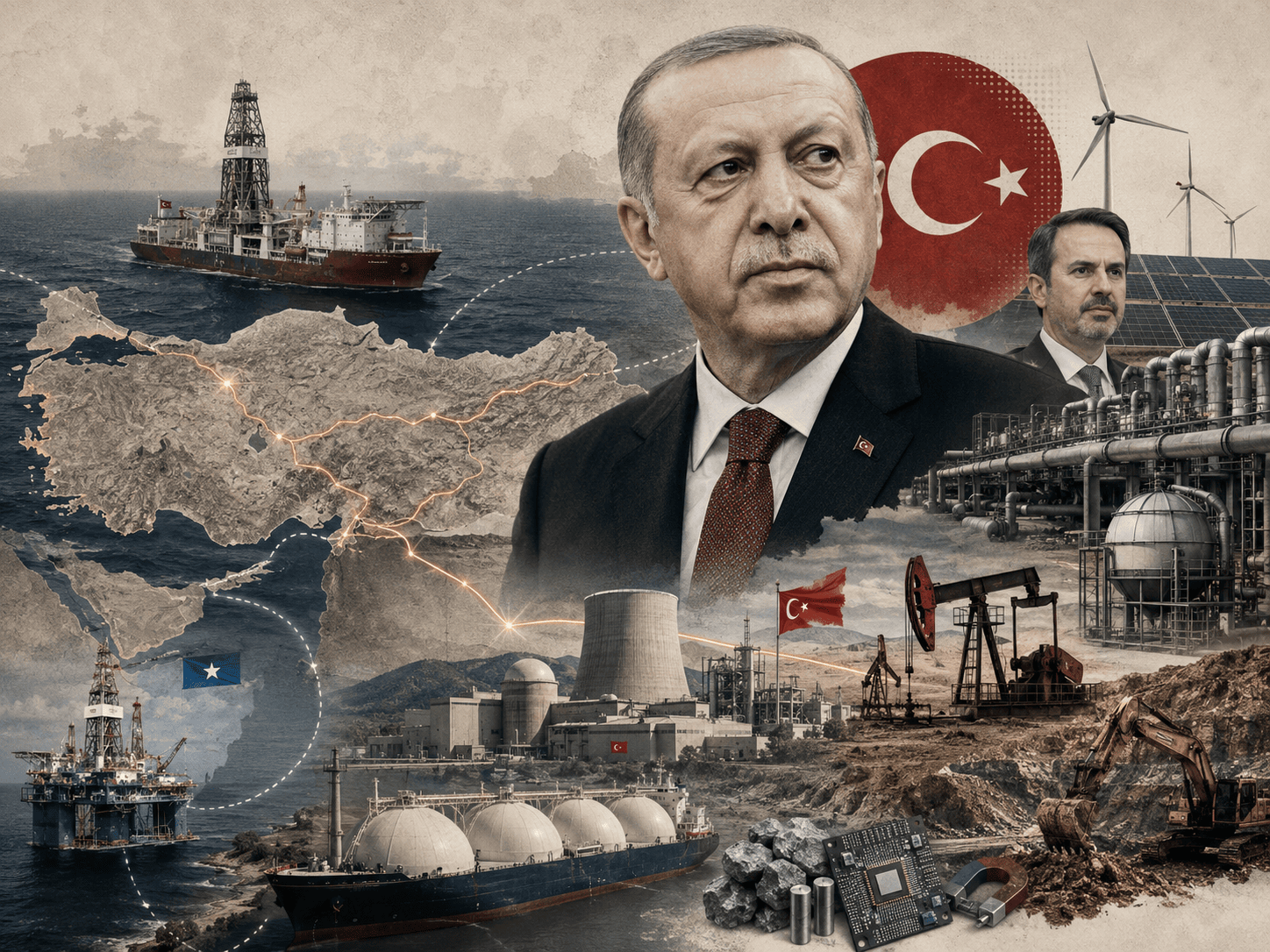
The policy Ankara is pursuing today, however, clearly differs from the old understanding of energy. Türkiye no longer wants to be merely a consumer country trying to buy the oil and natural gas it needs at favorable prices. It aims to become a multi-layered energy power that conducts exploration on its own territory, sends drilling ships into deep waters, obtains licenses in other countries, partners in production fields, builds pipelines, stores gas, constructs nuclear power plants, and invests in renewable energy technologies.
Energy Independence Is Moving Beyond Türkiye’s Borders
The Sakarya Gas Field in the Black Sea and Gabar oil in Şırnak have been the two most visible results of the shift in mindset in Türkiye’s energy policy. Production from the Sakarya field is targeted to double by the end of 2026 and to reach roughly four times today’s level in 2028. According to the ministry’s plan, Black Sea gas will reach a capacity capable of meeting the needs of around 8 million households from the beginning of 2027 and 17 million households after 2028.
The rise in daily oil production at Gabar to more than 80,000 barrels is also a historic threshold for Türkiye. However, when Türkiye’s daily oil consumption is considered, this production cannot end external dependence on its own. This is exactly where the importance of Ankara’s new strategy emerges: Türkiye is not tying energy independence only to resources found within its national borders.
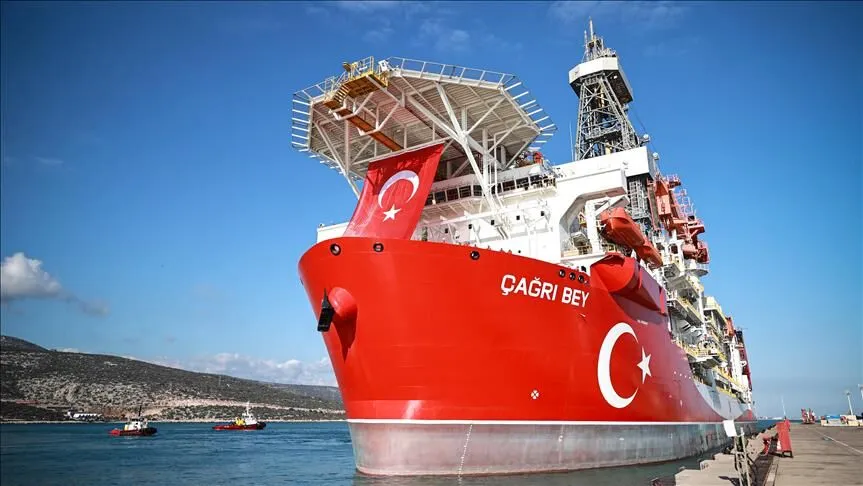
The Çağrı Bey deep-sea drilling ship sent to Somalia is a symbol of this transformation. For the first time, Türkiye has assigned a vessel from its own drilling fleet to an exploration activity outside the “Blue Homeland.” The work to be carried out in three offshore blocks allocated to Türkiye off the coast of Somalia makes Ankara not merely a partner providing technical support, but an actor directly searching for hydrocarbons and aiming to take part in production.
Planned seismic surveys in Pakistan, projects targeted to be made concrete in Libya from 2026 onward, partnership initiatives in Iraq, and planned work in the exclusive economic zones of other countries in the Black Sea are also parts of the same strategy. When Türkiye’s energy initiatives in Syria and the Caucasus are added to this picture, it becomes clear that Ankara is now trying to build an energy portfolio spread across a broad geography, not focused on a single field.
“We are searching for oil in Somalia. We will search in Pakistan. Türkiye has intensive efforts and intensive endeavors in Libya, Syria, Iraq, and the Caucasus region. Together with these, God willing, when we end external dependence, Türkiye will become a much stronger, much more prosperous, and more developed country in economic terms.”
—Energy and Natural Resources Minister Alparslan Bayraktar
Independence Is Not Only About Discovering Oil and Natural Gas
It would be incomplete to assess Türkiye’s energy independence only through new oil wells and natural gas discoveries. Real independence can be possible through diversifying, storing, transporting, and transforming energy resources into technology.
After 2016, Türkiye made major investments in its deep-sea drilling and seismic research fleet. Today, its ownership of six deep-sea drilling ships represents not only an increase in the number of vessels, but also the ability to carry out with national means a critical service that was previously purchased from foreign companies. Being able to decide when, where, and at what intensity exploration activities will be conducted without depending on the calendars of other companies forms the technical infrastructure of energy independence.
“Today Türkiye is a country searching for oil and natural gas not only on its own land and in its own seas, but also abroad. With our own ships, one of which is named ‘Yıldırım’, we have 6 deep-sea drilling ships. Türkiye is the country with the 4th largest fleet in the world. We have developed very important capabilities, especially after 2016. If I were to describe the difficulties placed before us in acquiring these ships before the coup attempt, that would be a separate matter, but with determination, we said, ‘With our own ships, we will leave no place in Türkiye unexplored, unsearched.'”
—Energy and Natural Resources Minister Alparslan Bayraktar
A similar transformation is also taking place in natural gas. Türkiye’s ability to procure gas from more than ten countries, and its possession of liquefied natural gas terminals and floating storage and regasification units in addition to pipeline gas, reduce dependence on a single country or route. The goal is to increase the underground storage capacity that has reached a total of 6.3 billion cubic meters at the Silivri and Tuz Gölü facilities and to reach a level capable of storing at least 20 percent of annual consumption in 2028.
Storage capacity is as important as production. Because a country’s ability to buy gas does not mean it will be able to access that gas when it needs it. Reserves that come into play during winter months, wartime, or pipeline disruptions make energy supply more resilient against external political pressure.
Renewable energy also constitutes an indispensable pillar of this strategy. As of May 2026, Türkiye’s installed electricity capacity reached 125,598 megawatts. Solar accounts for 21.4 percent of installed capacity, wind for 12 percent, and hydroelectric power for 25.8 percent. By contrast, the fact that 33.6 percent of electricity generation in 2025 came from coal and 23 percent from natural gas shows that the increase in renewable installed capacity has not yet been reflected in generation to the same extent.
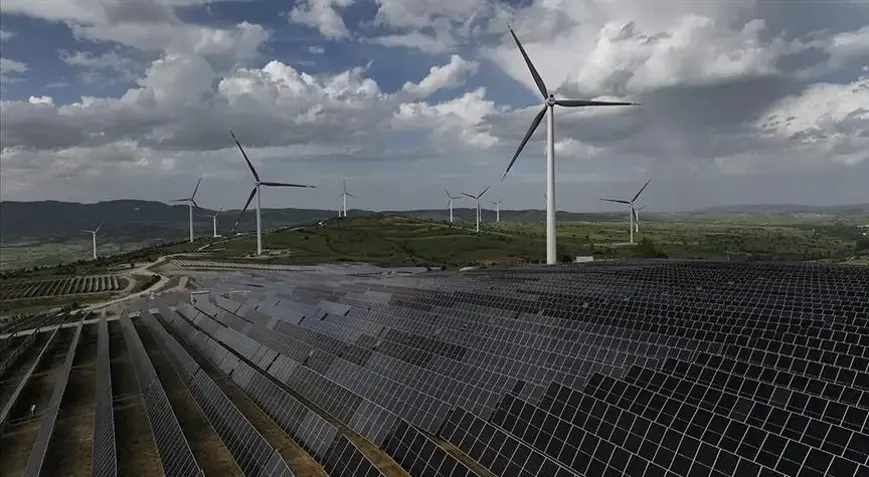
For this reason, Türkiye’s target of increasing installed solar and wind capacity to 120,000 megawatts by 2035 and reaching 5,000 megawatts of offshore wind capacity is critical. Solar and wind can reduce Türkiye’s need for imported fuel; however, because of the intermittent nature of these resources, electricity storage systems, smart grids, and domestic equipment production must also be developed at the same pace.
Otherwise, while reducing its dependence on oil and natural gas, Türkiye could develop a new external dependence on solar panels, batteries, turbines, chips, and critical mineral technologies. The greatest danger of the energy transition is that the old dependence merely changes form.
The rare earth elements field in Beylikova offers a strategic opportunity in this respect. A resource of 694 million tons has been identified at the site, and preparations are underway for an industrial facility planned to process 570,000 tons of ore per year. However, extracting ore from the ground alone is not enough. The real added value is captured by countries that can separate rare earth elements, process them at high purity, and turn them into magnets, batteries, defense systems, or advanced technology products. Türkiye’s real goal should not be to become a mineral exporter, but to build a high-technology industry with these resources.
Nuclear energy is another part of this picture in terms of uninterrupted electricity generation. When the Akkuyu Nuclear Power Plant is completed, it is expected to generate approximately 35 terawatt-hours of electricity per year and meet about 10 percent of Türkiye’s current electricity consumption. Work on new plants in Sinop and Thrace, as well as small modular reactors, shows that nuclear energy is planned to assume a larger share in the future.
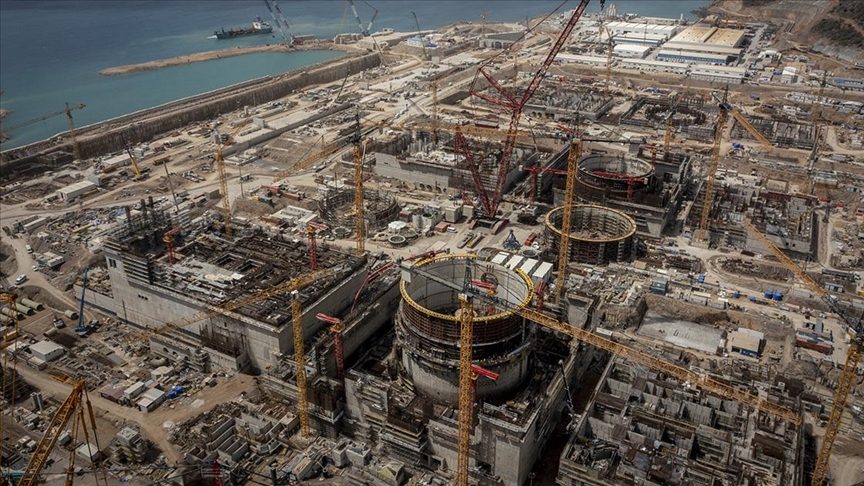
At the same time, it is also clear that a nuclear program excessively dependent on foreign technology, fuel, financing, and operating models will not by itself provide “full independence.” Nuclear engineering capacity, fuel-cycle knowledge, the domestic supply chain, and regulatory institutions must be developed. As much as the establishment of the power plant in Türkiye, how much of the technology behind the plant is learned and produced by Türkiye also matters.
In short, Türkiye’s energy independence does not mean extracting all of its oil and natural gas from its own territory. Such a goal is neither realistic nor necessary in today’s interconnected energy markets. Real independence means not being forced to rely on a single country, a single fuel, a single pipeline, or a single technology provider.
The opportunity before Türkiye is significant: If the right strategies in energy continue to be pursued, a country may emerge that produces in the Black Sea, extracts oil in Gabar, drills in Somalia, partners in fields in Libya and Iraq, transports energy between the Caucasus and Europe, stores gas, increases its renewable capacity, learns nuclear technology, and turns its critical minerals into industry.
But for this to happen, announced reserves must turn into production, signed agreements into lasting partnerships, and extracted ore into high-technology products. Energy independence is not won with a discovery announcement; it is won through decades of sustained planning, technology investment, and institutional determination. If Türkiye can complete this path, it will not only reduce its energy bill; it will cease to be a country whose surrounding energy map is drawn by others and become one of the actors drawing that map.