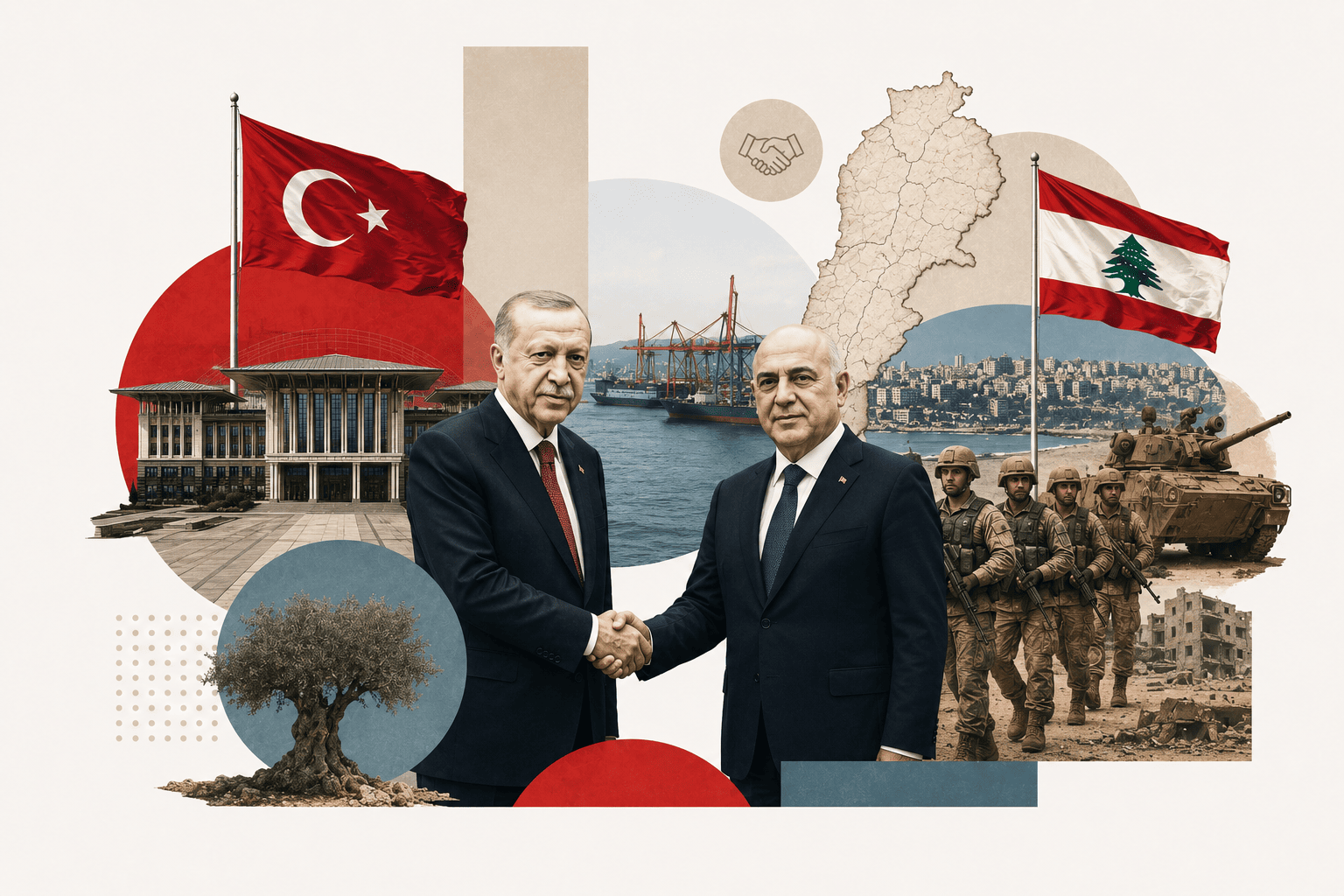

Within the span of a single month, Lebanon’s Prime Minister Nawaf Salam was followed by President Joseph Aoun on official visits to Ankara. Two high-level visits from the same country in such a short period can hardly be dismissed as routine diplomacy. More importantly, the timing of these meetings and the messages delivered afterward suggest that Türkiye’s Lebanon policy is entering a new phase.
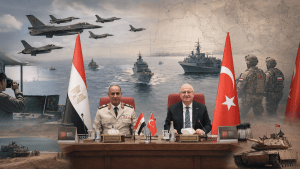
Following his meeting with President Aoun, President Recep Tayyip Erdoğan reaffirmed that Türkiye would continue supporting the Lebanese Armed Forces. He also stressed that Ankara stands ready to take an active role in international efforts aimed at restoring security in southern Lebanon. At first glance, these statements may appear to be standard diplomatic rhetoric. Viewed against the backdrop of recent regional developments, however, they point to a much broader strategic vision.
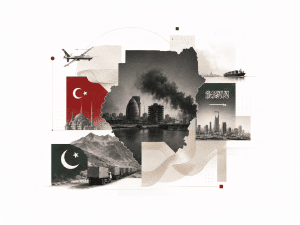
The war in Gaza has transformed far more than the Palestinian question. It has reshaped the geopolitical landscape of the entire Middle East, from Syria and Lebanon to the Eastern Mediterranean and the Gulf. The gradual erosion of Iran’s regional influence, the significant weakening of Hezbollah’s military and political capabilities, and international efforts to strengthen the Lebanese state have created a new geopolitical competition. Lebanon is no longer merely a small Mediterranean country struggling with economic collapse; it has become a strategic arena where regional and global powers are competing to shape the post-war order.
The United States seeks to strengthen the Lebanese Armed Forces in order to reinforce state authority and reduce Hezbollah’s military influence. France is striving to preserve its historic political role in Beirut. Gulf states are returning through investment and financial assistance, while Israel aims to establish a more predictable and manageable security environment along its northern border. Against such a backdrop, it would have been surprising if Türkiye had remained on the sidelines.
Recent analyses published across both Arab and Western media reflect this changing perception. Lebanese and Gulf-based commentators increasingly describe Türkiye not merely as a provider of humanitarian assistance or diplomatic support, but as an emerging actor prepared to contribute to security cooperation, reconstruction efforts and the rebuilding of regional stability. Several analyses suggest that Ankara could assume a greater role in enhancing the capabilities of the Lebanese Armed Forces, become more visible in any future security arrangements following the evolution of UNIFIL’s mission, and establish a lasting strategic presence in the Eastern Mediterranean.
In reality, Türkiye’s primary focus extends beyond Lebanon itself; it is Lebanon’s geopolitical position that matters.
Located on the eastern shores of the Mediterranean, Lebanon sits at the crossroads of Israel, Syria and Cyprus. Energy competition, maritime trade routes, ports, offshore natural gas resources and maritime jurisdiction disputes all elevate Lebanon’s strategic importance far beyond its size. The political and security architecture that eventually emerges in Lebanon will shape not only the country’s future but also the broader balance of power across the Eastern Mediterranean.
Türkiye’s growing interest in Lebanon should therefore be understood within this broader strategic framework.
The strategic partnership being developed through Iraq’s Development Road Project, close coordination with Syria on security and reconstruction, deepening economic relations with the Gulf, expanding diplomatic and security engagement across Africa, and stronger institutional ties with ASEAN all represent different components of the same geopolitical vision. Lebanon now appears to be another link in this broader chain, suggesting that Türkiye is seeking to build a new sphere of political, economic and security influence stretching from the Eastern Mediterranean to the Gulf.
Seen from this perspective, President Erdoğan’s pledge that “our support for the Lebanese Armed Forces will continue” should not be interpreted merely as a commitment to military assistance. It also reflects Ankara’s belief that a strong Lebanese state is an essential pillar of stability in the Eastern Mediterranean. A Lebanon with resilient state institutions would directly serve Türkiye’s interests in areas ranging from Syria’s reconstruction and regional energy security to maritime trade and broader regional stability.
The economic dimension should not be overlooked either. Lebanon’s eventual reconstruction is expected to generate billions of dollars in infrastructure, port management, energy, transportation and construction projects. Turkish companies are well positioned to participate in these opportunities. Likewise, stronger logistical connections between the ports of Mersin and İskenderun and the Lebanese ports of Beirut and Tripoli could further reinforce Türkiye’s role in Eastern Mediterranean trade.
For this reason, the recent diplomatic engagements should not be viewed simply as bilateral visits between two friendly countries. If they are followed in the coming months by concrete cooperation in defense industries, military training, security agreements, port investments, logistics, reconstruction and energy, it will become increasingly clear that the messages delivered in Ankara were far more than symbolic. They may well represent the early stages of Türkiye’s effort to secure a lasting place in the emerging post-war order of the Middle East.