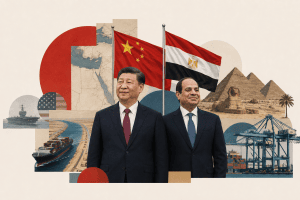
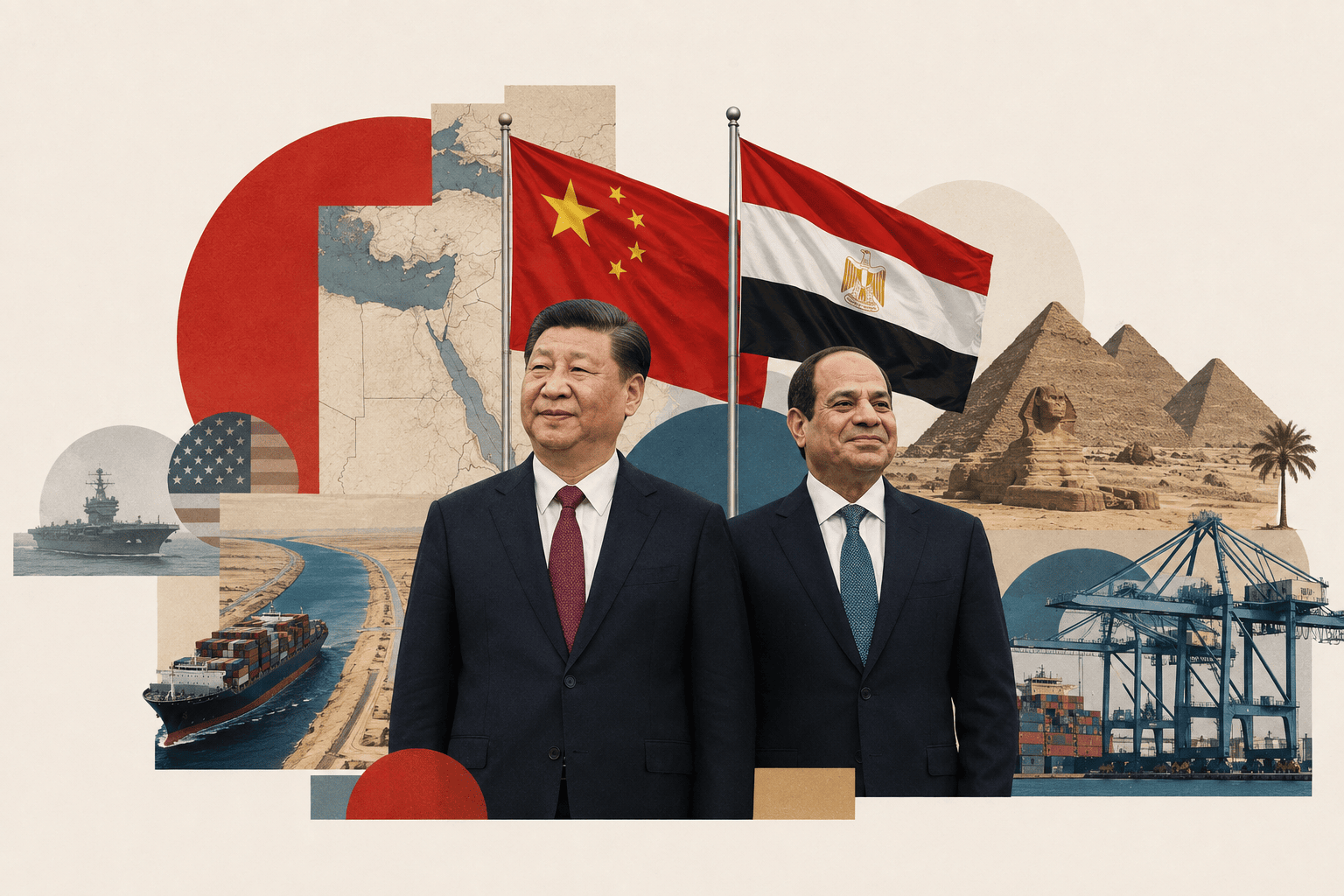
Chinese President Xi Jinping’s visit to Egypt after a ten-year absence is far more than a routine diplomatic engagement. It is also his first trip to the Middle East since 2022, and its timing could hardly be more significant.
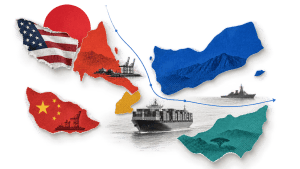
Through its war against Iran alongside Israel, the United States is seeking to reassert its military dominance over the Middle East. Washington’s objective is not merely to weaken Tehran, but also to demonstrate that it remains at the centre of the regional security architecture stretching from the Gulf to the Eastern Mediterranean. It is against this backdrop that China is re-entering the stage through Egypt, one of America’s most important regional partners.
In 2023, Beijing scored a major diplomatic success by brokering the restoration of relations between Saudi Arabia and Iran. The agreement demonstrated that China was no longer content to remain merely a buyer of Middle Eastern oil and a source of investment. It also aspired to become a political mediator.
The wars in Gaza and Lebanon, followed by the conflict with Iran, exposed the limits of the balance China was trying to build. Beijing was unable to prevent the escalation, protect Iran or exert decisive influence over military developments in the region. China’s economic reach may be growing, but it still lacks anything comparable to America’s network of regional bases, alliances and operational capabilities.
From this perspective, the war with Iran can also be seen as a concealed dimension of the wider US–China struggle. Iran is one of China’s key energy partners. With China purchasing more than 80 per cent of Iranian oil exports, Washington’s military and economic pressure on Tehran indirectly threatens Beijing’s energy security and the routes underpinning its Belt and Road Initiative. China therefore cannot view Iran’s weakening as a purely regional development.
Egypt Is No Accidental Choice
Egypt is one of the most strategically valuable gateways through which China can expand its presence in the Middle East. It controls the Suez Canal, lies at the crossroads of the Arab world and Africa, and receives approximately $1.3 billion in US military assistance each year. By deepening its ties with Cairo, Beijing is carving out a place for itself within a sphere traditionally dominated by Washington.
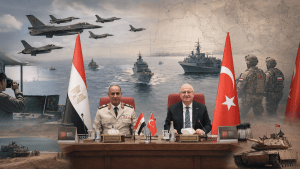
During the visit, Xi said that the countries of the region should be “masters of their own destiny” and called for a new Middle Eastern security architecture free from external interference. China and Egypt agreed to deepen cooperation in security, counterterrorism, semiconductors, data centres, critical minerals and trade conducted in their national currencies. Their recent joint air exercise also shows that the relationship is no longer confined to economics.
China’s investments in Egypt, now exceeding $10 billion, and its strong presence in the Suez Canal Economic Zone provide the economic foundations for this strategy. Beijing is not responding to American military superiority on the same terms. Instead, it is building long-term influence through ports, manufacturing, technology, energy and finance.
Xi’s visit to Cairo ultimately sends a clear message: Beijing has no intention of allowing Washington and Israel to shape the post-war Middle East on their own. Egypt may well become the starting point for China’s next regional move.