
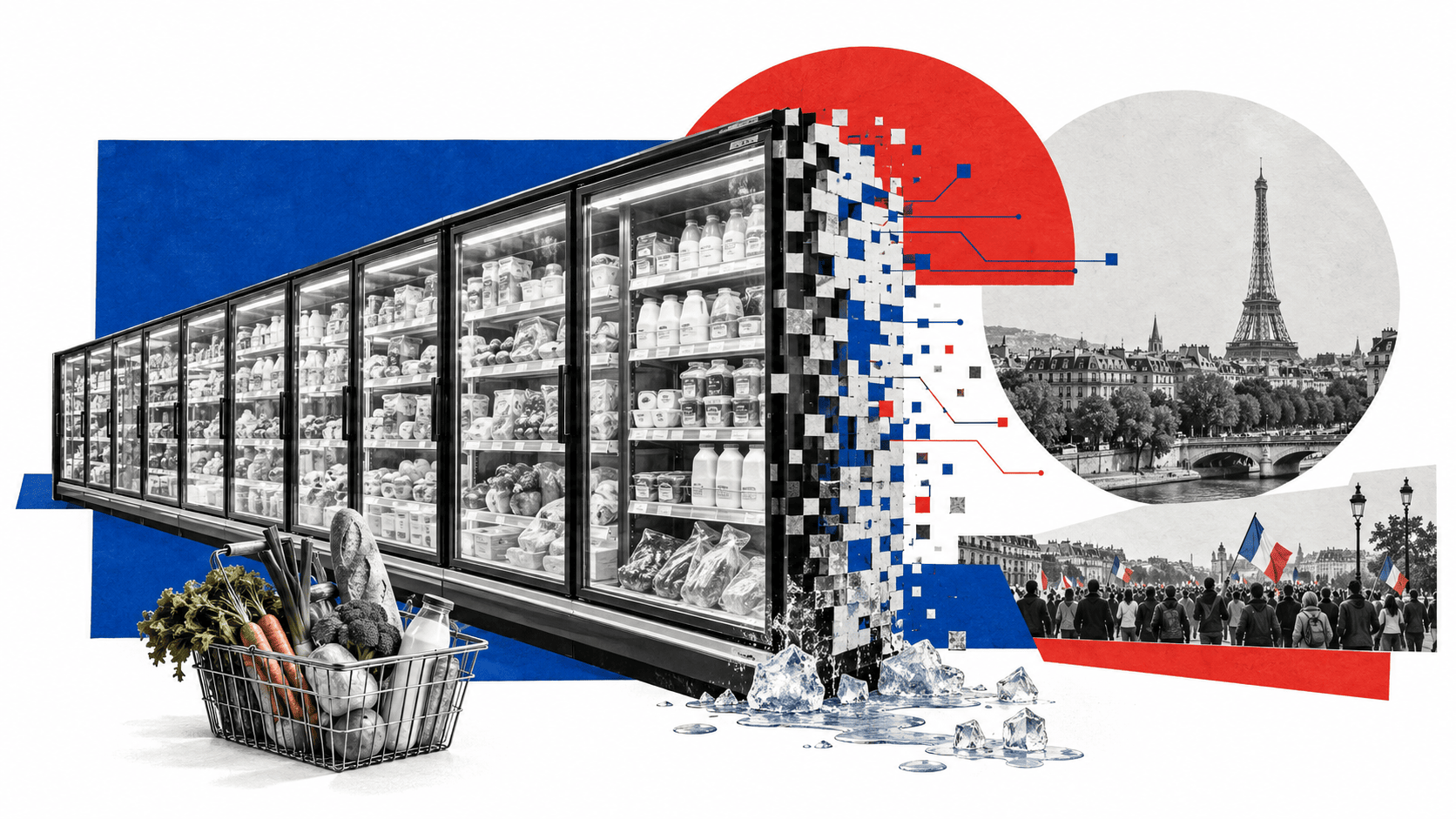
During the night of 11–12 October, a cyberattack targeted internet-connected refrigeration systems in French supermarkets. Temperatures in some units rose to 50°C, food spoiled and fires were reported. The incident, which affected chains including Intermarché, Carrefour, Monoprix and Coopérative U, showed how a digital vulnerability can cause physical damage within hours.
On 13 October, French Finance Minister Roland Lescure said that around 700 supermarkets had been affected. He stressed, however, that the country’s food supply was not at risk. A breakdown in the cold chain that keeps food safe does not, in itself, mean that nationwide shortages will follow.
The problem extends beyond France. Dutch retailer Ahold Delhaize announced that it had taken some systems offline as a precaution following a separate cybersecurity incident, while keeping its stores in Europe and the United States open. Dutch authorities said they had found no connection between that incident and the attack in France. Meanwhile, Sekoia cybersecurity expert Félix Aimé told Reuters that refrigeration systems in Spain, Portugal, Poland, Germany and Belgium had also been affected. In 2025, a cyberattack on the UK’s Co-op had disrupted ordering and deliveries to stores. What these cases share is a reliance on vulnerable digital systems to get food to consumers.
Food security is now a cybersecurity issue
There is no need to cross a country’s borders to disrupt everyday life. Interruptions to food supplies, energy, transport and payment systems can cause economic losses, fuel anxiety and undermine confidence in government. When combined with disinformation and economic pressure, cyberattacks can form part of a hybrid operation. NATO’s approach to hybrid threats similarly highlights the coordinated use of different forms of pressure.
France’s social tensions add to the concern. Student protests over learning conditions and inadequate funding have escalated in some cities, with clashes, injuries and police interventions. Anger over the severity of the police response has joined the protesters’ original grievances.
Saturday 17 October therefore warrants close attention. Calls for further demonstrations aim to bring the student movement together with those protesting against the rising cost of living. CGT Paris has also announced demonstrations for that date. The scale of participation and the course of events remain uncertain. For now, suggestions that something “major” will happen that day amount to speculation.
These developments raise a question: could a foreign power be seeking to weaken France and draw it into war? There is currently no concrete evidence to support that claim. Yet another question is becoming harder to avoid: how prepared is France for a possible war?
A country’s readiness for war cannot be measured by military strength alone. Its ability to maintain access to food, keep public services running and preserve trust in official information also matters. If France struggles to protect supermarket refrigeration systems in peacetime, how would it cope with the far greater disruption of war? That is the question its leaders must answer if they are to reassure the public.