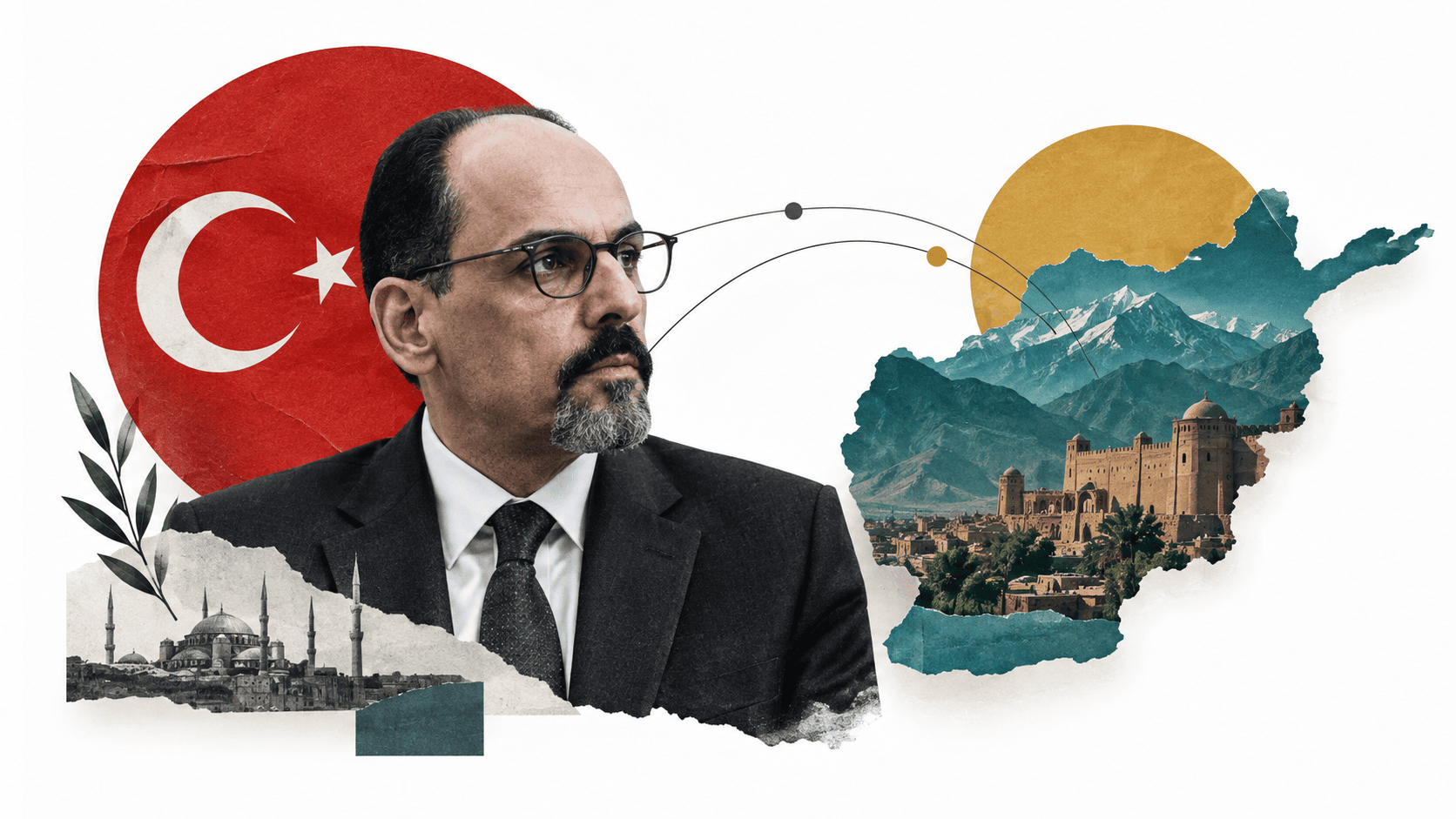
As attention across the Middle East and the Gulf focuses on attacks, alliances and energy routes, Turkish intelligence chief İbrahim Kalın’s visit to Afghanistan points to broader security considerations. Bordering Iran, Pakistan and China, Afghanistan occupies a sensitive position where separate crises can spill over and compound one another. Understanding the visit therefore requires looking not only at what Ankara discussed in Kabul, but also at why Kalın travelled to Kandahar at this particular moment.
The announced agenda included security and intelligence cooperation, counterterrorism, and efforts to combat human and drug trafficking. The war involving the United States, Israel and Iran was also discussed. Kalın’s meetings with the intelligence chief, the deputy prime minister responsible for economic affairs, and the defence and interior ministers reflect the breadth of these talks.
The stop in Kandahar adds political significance to the visit. Although Kabul houses the institutions of government, Kandahar, where Taliban leader Hibatullah Akhundzada is based, remains one of the administration’s most important centres of decision-making.
Ankara may be seeking to act before overlapping crises fuel further escalation
Two ideas help explain the visit’s potential strategic significance: gauging intentions and forestalling escalation. Türkiye’s continued engagement with the Taliban administration, despite not formally recognising it, provides the diplomatic basis for this approach. Ankara is keeping this channel open to address security concerns arising from Afghanistan and assess regional developments.
One objective may have been to understand the repercussions of the Iran war along Iran’s eastern flank. Afghanistan’s shared border with Iran, their trading relationship and cross-border population movements make it an important vantage point from which to assess the war’s effects. Ankara may have wanted to hear directly from the Taliban leadership about its relations with Tehran, its border security concerns and the prospect of increased migration.
The second, more concrete dimension concerns Pakistan. The security dispute between Islamabad and Kabul remains unresolved. Pakistan maintains that the TTP carries out attacks from Afghan territory, while the Taliban administration denies providing the group with a safe haven. The mediation efforts undertaken by Türkiye and Qatar in Doha and Istanbul in 2025 show that Ankara’s attempts to contain these tensions already have a history.
Renewed friction with India adds to this picture. After Pakistani and Indian warships collided in the Arabian Sea on 15 September, the two countries exchanged accusations and lodged diplomatic protests.
Kalın’s visit to Afghanistan can therefore also be interpreted as an effort to prevent renewed escalation between Pakistan and Afghanistan, helping a close partner avoid being drawn into several conflicts at once.
The third dimension is the Mecca Mutual Defence Agreement signed by Türkiye, Pakistan and Saudi Arabia. Türkiye’s Ministry of National Defence lists regional stability and the ability to act jointly in a crisis among the agreement’s objectives. The resilience of such a partnership also depends on managing tensions around its members. Hearing directly from Afghanistan’s leadership about its positions on Pakistan, Iran and developments in the Gulf may therefore form part of Ankara’s effort to consolidate this new defence partnership.
Meanwhile, conflict in the Middle East and the Gulf is unfolding alongside escalating security tensions between Russia and NATO. Shipping disruptions in the Gulf and attacks on energy infrastructure in Russia and the Middle East are placing further pressure on fuel markets. Through higher energy costs, these shocks are affecting transport, manufacturing and household budgets alike.
This is where Türkiye’s importance becomes even clearer. Its position within NATO, its channels of communication with Russia and its relationships across the region give Ankara scope to pursue diplomatic initiatives on several fronts.
Kalın’s contacts in Afghanistan should be viewed in this light: as crises feed into one another, Türkiye is stepping in before another conflict breaks out. The central question now is whether Türkiye can translate its growing diplomatic influence into the global clout needed to safeguard energy security and prevent new conflicts.