With attention focused on the Strait of Hormuz, a significant development has taken place on the African shores of the Red Sea. On 18 September, the United States removed several individuals and entities from its sanctions list, including the Eritrean military and the ruling People’s Front for Democracy and Justice. According to OFAC, the decision followed the termination of the national emergency declared under a 2021 executive order addressing the crisis in Ethiopia.
The sanctions had been imposed over Eritrean forces’ involvement in the war in Ethiopia’s Tigray region and serious abuses committed during the conflict. The removal of this source of pressure now raises questions about the priorities that will guide Washington’s efforts to reshape its relationship with Asmara.
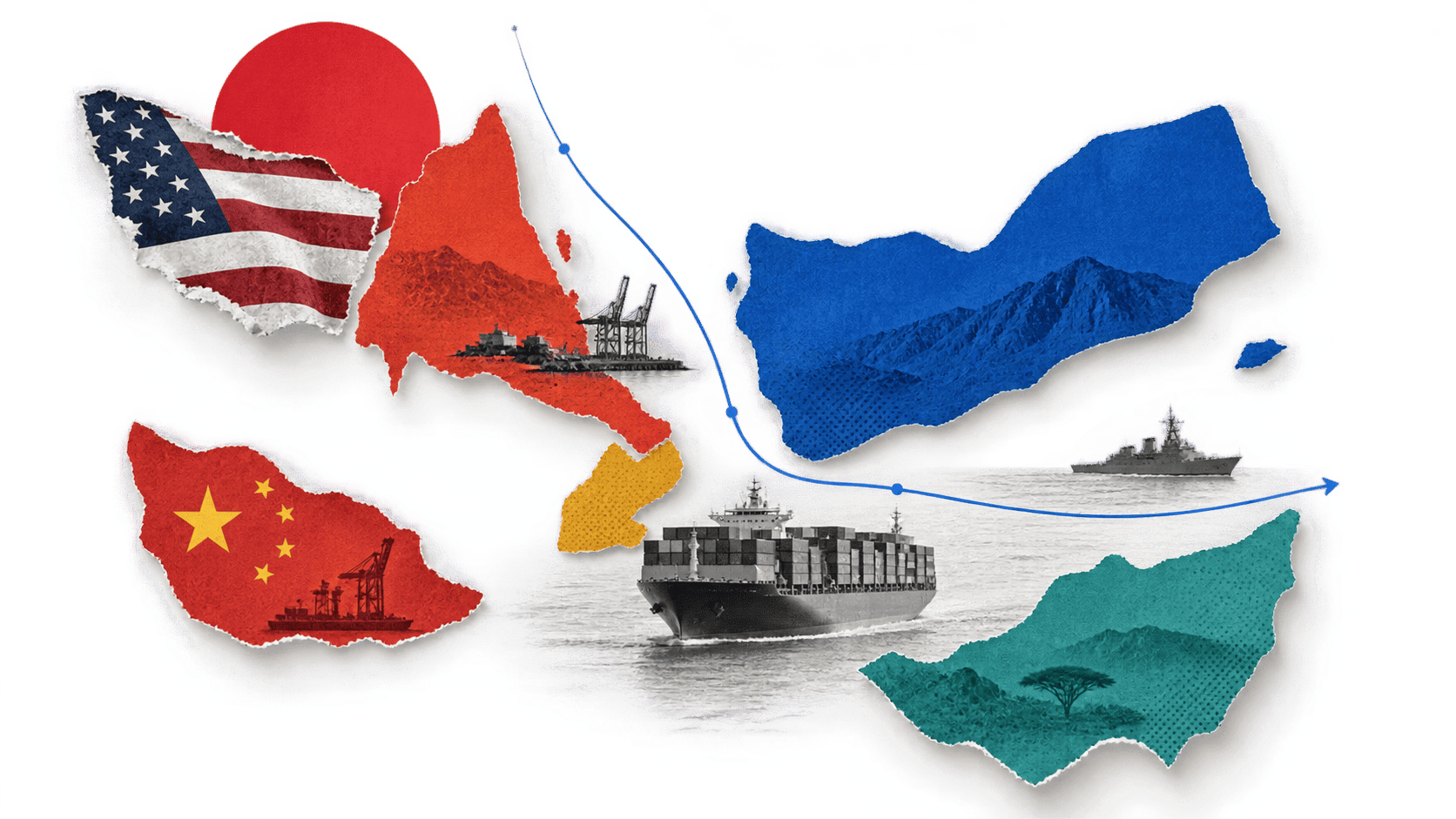
A glance at the map reveals the decision’s strategic significance. Eritrea has more than 1,100 kilometres of mainland coastline along the Red Sea. Its southern port of Assab stands out for its proximity to Yemen and the Bab el-Mandeb Strait. Eritrea and Djibouti lie on the African side of the strait, opposite Yemen, while Somaliland sits farther east along the Gulf of Aden, close to the same shipping route.
In this setting, lifting sanctions is difficult to view solely as a thaw in bilateral relations. As security grows more fragile along a major trade route linking Europe and Asia, partnerships with coastal states become increasingly valuable.
Washington’s biggest gain may be a wider range of options in the Red Sea
The US opening towards Eritrea can be understood as an attempt to expand Washington’s access and bargaining power in the region.
For Washington, the central questions are which ports it can use in a crisis, which partners it can work with and how effectively it can sustain its military presence. Protecting shipping routes requires more than deploying warships: it also depends on resupply, maintenance, intelligence and political coordination with coastal states. This is where closer ties with Eritrea could prove valuable.
Competition with China is another part of the equation. The presence of both US and Chinese military bases in Djibouti illustrates how much importance the two powers attach to this strategic passage. Building stronger relationships with neighbouring countries could give Washington a way to reduce its reliance on a single host country. For Beijing, the security of maritime trade with Europe matters, as does the growing military presence of rival powers along those routes.
Developments in Yemen further complicate these calculations. Houthi advances along the Red Sea coast and threats to shipping are increasing the strategic value of ports on the African shore. Cooperation around Assab could offer opportunities for surveillance and logistical support.
Yet the pursuit of military access cannot be separated from tensions in the Horn of Africa. Renewed conflict between Eritrea and Ethiopia could undermine efforts to establish a stable security framework along the coast. The success of Washington’s rapprochement with Asmara will therefore depend as much on its ability to contain regional tensions as on gaining access to ports.
The next repercussions of this move could be felt in Somaliland. Home to the port of Berbera, Somaliland is seeking to turn its geographic position into leverage in its quest for international recognition. In a 16 September interview with Semafor, its leader, Abdirahman Mohamed Abdullahi, highlighted opportunities for port access and investment while leaving open the possibility of a future military base agreement. A bargain involving military access in return for recognition is therefore a scenario worth considering.
This is also where the stakes become particularly significant for Türkiye. Given Ankara’s partnership with Somalia, negotiations over Berbera cannot be treated simply as a matter of port access. The debate opened by the lifting of sanctions on Eritrea could extend to questions of sovereignty and recognition involving Somaliland. The defining question in the Red Sea’s next chapter will concern not only which power establishes a base where, but also what political concessions are made in exchange for that access.