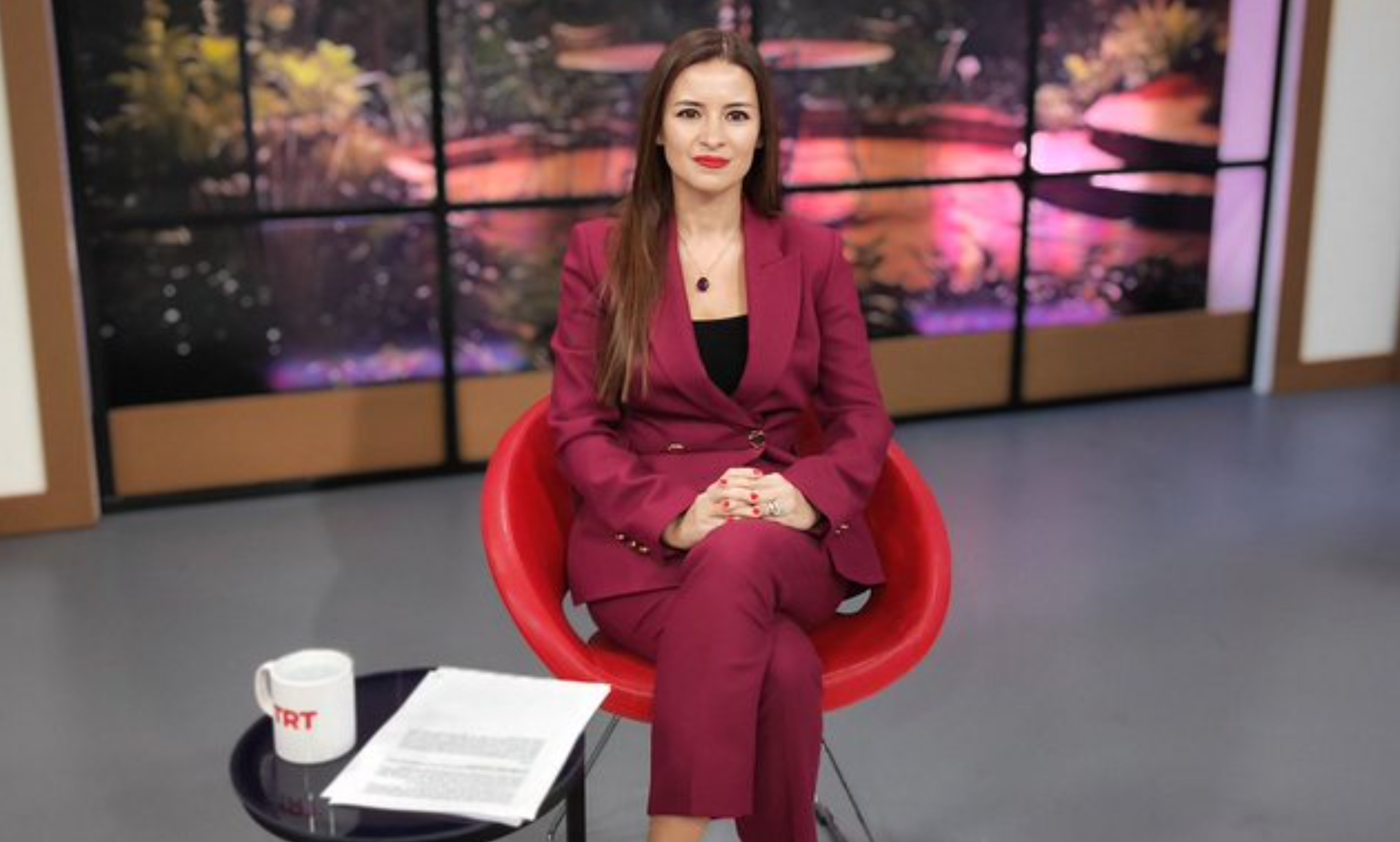
On October 3, 2025, I answered the questions of Multipolarra, a French-language analysis site:
Multipolarra: Could you briefly introduce yourself to our readers? Who are you, what is your background, and what issue interests you most at the moment?
I am Öznur Sirene, a specialist on Türkiye and international relations. After graduating from a French high school in Istanbul, I continued my education at the Paris Institute of Political Studies (Sciences Po), completing my master’s degree in International Relations in 2009.
After various experiences in diplomacy, I chose the media path in order to bring geopolitical issues to a wider audience.
Today I work at the intersection of traditional media and digital platforms, addressing an international community. My aim is to decipher the dynamics of the multipolar world under construction — and in particular to examine Türkiye’s growing role on the international stage.
My work currently focuses on the Middle East and on the Gaza question, which starkly exposes the fractures of today’s global order.
Multipolarra: Our observation is that Türkiye is often misrepresented and misunderstood in the West. Could you explain Türkiye’s current geopolitical position?
Indeed, Türkiye is often presented in the Western media in a reductive or biased way. This skewed perception stems both from insufficient knowledge of its internal dynamics and from rivalries that sometimes play out beneath the surface. Yet Türkiye, with its unique geographic position at the crossroads of Asia and Europe, is a key actor on energy, migration and security files.
Let us make this concrete with a few examples. First, the Syrian file. Türkiye became the country hosting the largest number of Syrian refugees. This humanitarian diplomacy had profound consequences both for the stability of the Middle East and for Europe’s balances. Another example is the war in Ukraine. This crisis laid bare Türkiye’s position as an energy hub: today TurkStream remains the main route bringing Russian gas to Europe.
With complex neighbours and intense rivalries with the West, Türkiye chose a path of its own: “being at every table”. In other words, Ankara acts on the principle of strategic autonomy within a changing international system. A NATO member, a founding member of the Organization of Turkic States, an official EU candidate — while at the same time strengthening its domestic defence programmes, energy corridors and regional alliances.
It is no longer merely an implementer of Western decisions; it is a balancing power able to hold dialogue on an equal footing with Washington, Moscow, Beijing or Brussels. With its military strength it is a source of regional stability; with its diplomatic role, an indispensable mediator. Indeed, it played an important role in the normalisation between Azerbaijan and Armenia after the Karabakh war, and it remains the most effective mediator between Russia and Ukraine.
Multipolarra: Türkiye has long been making harsh statements against Israel. Recently it closed its airspace to Israeli aircraft, and calls were made in parliament for Israel’s UN membership to be suspended. Does this signal a hardening of Ankara’s strategy?
This is not a sudden hardening; on the contrary, it is a consistent continuity. Türkiye’s commitment to the Palestinian cause did not begin yesterday. Palestine remained under Ottoman administration for nearly four centuries; and Türkiye, as the heir of that empire, continues to carry a sense of historical responsibility.
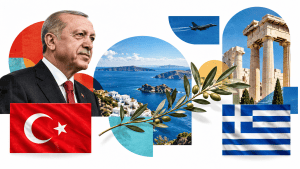
One of the turning points of this bond was President Erdoğan’s famous “One Minute” moment in Davos, when he harshly condemned Israeli attacks. A few years later, in 2010, the crisis of the Mavi Marmara humanitarian aid ship, attacked by the Israeli army in international waters, marked another breaking point in Turkish–Israeli relations.
Despite this heavy history, in the aftermath of the events of October 7 Erdoğan initially used more measured language; he sought to maintain balance between the parties and even to reduce tensions by offering mediation. But in the face of Israel’s utterly disproportionate retaliation and the “double standards” of Western countries, Ankara took an increasingly firm stance.
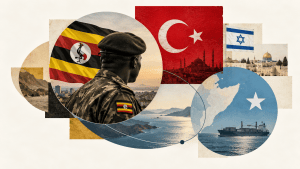
Today Türkiye has moved from words to action: the suspension of direct trade relations, the closure of its airspace to Israeli aircraft, the barring of Israeli-flagged ships from Turkish ports, and initiatives to have Israel tried before international courts. These steps reflect both the pressure of Turkish public opinion and Ankara’s response to the flagrant violation of international law.
With this stance, Türkiye is sending a clear message: the era of crimes committed with impunity is over. And Erdoğan, with his oft-repeated motto “The world is bigger than five”, stands out as one of the strongest defenders of the Palestinian cause, openly describing what is happening in Gaza as “genocide”.
Multipolarra: Multipolarra’s aim is to introduce a Western audience to “the other’s point of view” and to issues that are little discussed or misreported in the West. In your view, which developments should Western public opinion follow closely in the coming period?
If Western public opinion truly wants to grasp the reshaping of the global order, it should pay particular attention to a few phenomena:
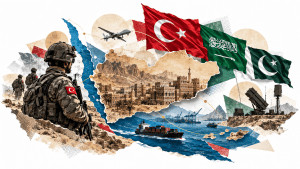
Türkiye’s technological and military rise: For the past two decades, Ankara has made strategic autonomy a priority, and the results are plain to see: armed drones exported across continents, fighter jet programmes, domestic engine development, satellites, and energy corridors linking Asia to Europe and the Middle East… These developments are redefining regional balances and making Türkiye a key actor both in conflicts and in peace negotiations.
The growing solidarity of the Global South: Africa, Asia and Latin America now refuse to be passive spectators of a Western-centred order. Through BRICS, the Shanghai Cooperation Organisation or new regional alliances, they are demanding their rightful place at the table. This expresses a profound demand for rebalancing that rejects the hierarchy inherited from the colonial era.
The Palestinian question: This is not merely a regional dispute but a global fault line. Violated international justice, law and the West’s double standards become most clearly visible here. What is happening in Gaza is an issue that goes beyond the Israeli–Palestinian borders: it is the symbol of a global divide between those who want the rules applied universally and those who accept exceptions according to their interests.
The emergence of a genuinely multipolar world: The West is no longer the sole centre of power; it is merely one of the poles. This requires a mental revolution for Western societies: accepting that the U.S. and Europe can no longer set the international agenda alone. We are in an era where power is dispersed, new voices are rising and new perspectives are emerging: from Istanbul to Moscow, from Beijing to Brasília and Johannesburg.
Source: Multipolarra