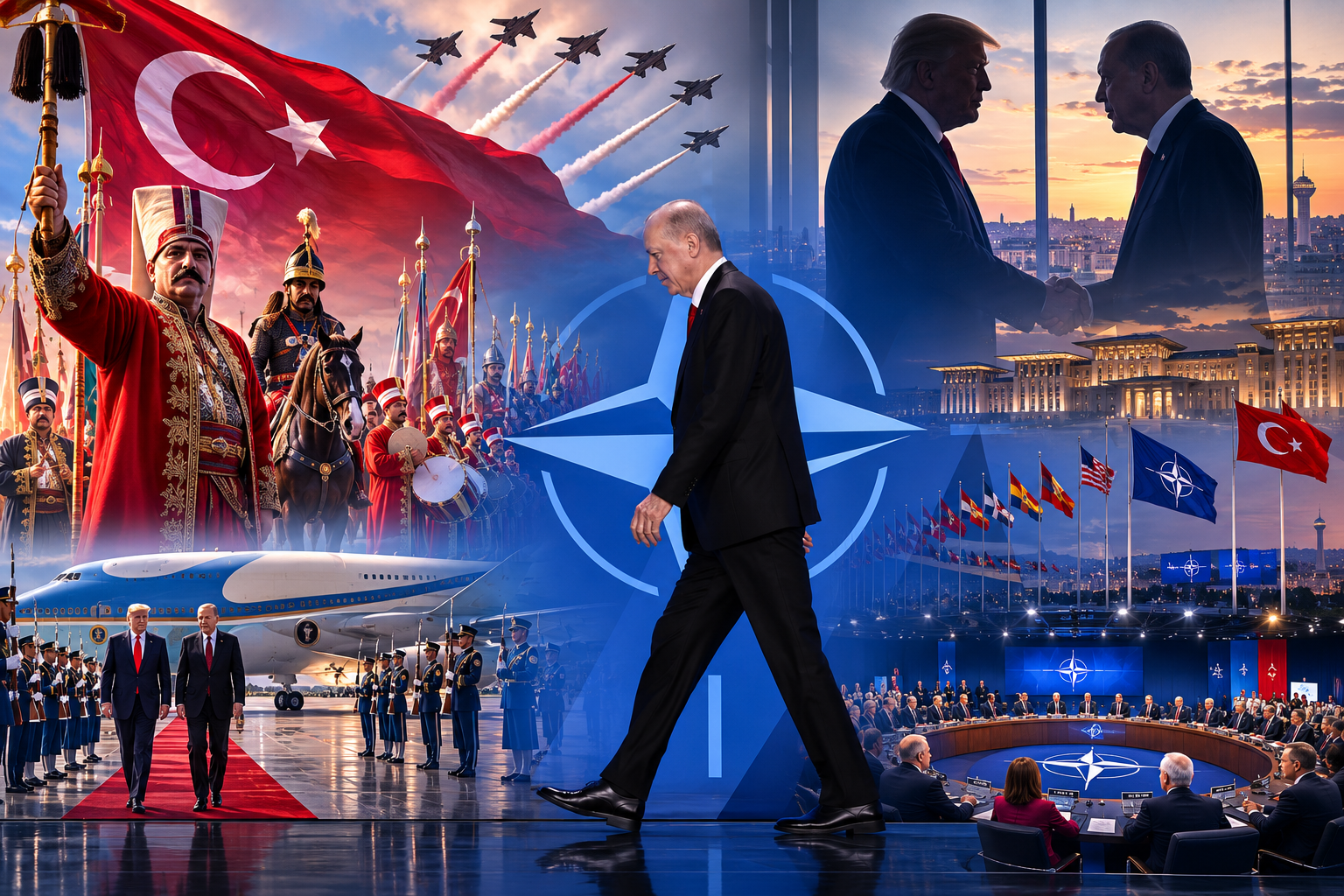
Held on 7–8 July 2026, the NATO Summit in Ankara proved to be far more than a routine meeting of Allied leaders. Taking place amid the continuing war in Ukraine, renewed tensions in the Middle East, Europe’s accelerated rearmament, and intensifying global power competition, the summit has already entered history as one of the Alliance’s most consequential gatherings in recent years.
The event also drew attention for its remarkable ceremonial display. The Mehter military band, Janissary guards, mounted police units, aerial demonstrations, and state protocol all reinforced the message Ankara sought to convey to the world: Türkiye is no longer simply NATO’s southeastern flank, it has become one of the central actors shaping the Alliance’s new security landscape.
Yet the summit’s real significance lay not in its symbolism but in its political outcomes. The inclusion of the Defense Industry Forum in NATO’s official summit programme for the first time, commitments to increase defense spending, the reaffirmation of support for Ukraine, and the announcement of multi-billion-dollar defense agreements collectively made the Ankara Summit a defining moment for the Alliance.
A New Chapter in Relations Between Türkiye and the West
Perhaps the most significant outcome for Türkiye was the markedly improved atmosphere in its relations with its Western allies, something not witnessed for many years.
The summit’s most symbolic moment came when U.S. President Donald Trump received an exceptionally warm welcome from President Recep Tayyip Erdoğan. However, the real breakthrough occurred behind closed doors during leaders’ meetings. Trump announced that the United States would lift CAATSA sanctions imposed on Türkiye and confirmed that a decision regarding Türkiye’s return to the F-35 fighter jet programme would soon be made. Reuters described these developments as one of Ankara’s most significant diplomatic achievements in recent years.
These announcements went far beyond defense procurement. They signaled the possibility of Türkiye’s deeper reintegration into the Western security architecture.
The summit also witnessed the launch of free trade negotiations between Türkiye and Canada, the strengthening of the defense partnership with the United Kingdom, growing German interest in Türkiye’s long-range missile technology, France’s increasingly positive stance toward the sale of SAMP/T air defense systems to Türkiye, and discussions with Italy regarding joint production. Together, these developments demonstrate that Türkiye’s place within the Western defense ecosystem is undergoing a profound transformation.
Reuters also reported President Emmanuel Macron’s confirmation that technical discussions on the SAMP/T programme with Türkiye and Italy are continuing—an indication that France may be turning a new page on an issue it had long approached with considerable caution.
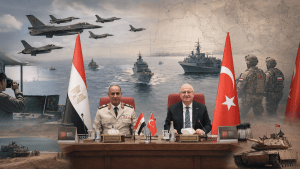
The broader picture is becoming increasingly clear. Türkiye is no longer merely a purchaser of defense equipment. It is emerging as a country capable of developing advanced technologies, engaging in joint production, and becoming an indispensable partner for Europe’s defense industry. Baykar’s partnership with Italy’s Leonardo and its expanding cooperation with France’s Safran should be viewed as integral components of this wider strategic transformation.
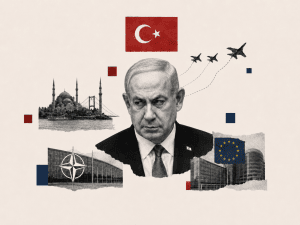
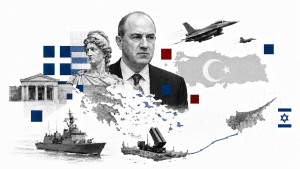
This process, however, is unlikely to be without obstacles. The U.S. Congress will ultimately determine the future of the F-35 issue. Israel continues to oppose the sale, while several political disagreements between Türkiye and Europe remain unresolved. Nevertheless, the Ankara Summit appears to have opened the door to a new, more pragmatic phase in Türkiye’s relations with the West—one increasingly driven by defense cooperation.
The World Watched Ankara: Türkiye Emerged as an “Indispensable Actor”
Another defining feature of the Ankara Summit was the extraordinary attention it received from the international media. Global news organizations portrayed the event not simply as another NATO summit, but as a moment showcasing Türkiye’s growing geopolitical influence.
Reuters described President Trump’s visit to Ankara as a diplomatic success for President Erdoğan, arguing that the summit highlighted Türkiye’s expanding influence within NATO. The agency emphasized Trump’s praise for Erdoğan, his pledge to lift sanctions, and his willingness to reopen the path for Türkiye’s return to the F-35 programme, presenting these developments as major diplomatic gains for Ankara.
The Associated Press noted that although the summit had been expected to begin amid tensions, it ultimately concluded with a strong display of Alliance unity. It also highlighted Trump’s renewed commitment to NATO and his remark at the conclusion of the summit that he “felt the love” in Ankara.
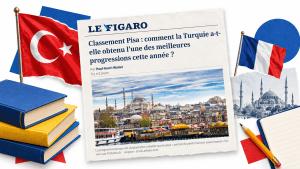
Le Monde observed that while criticizing several allies, Trump simultaneously reaffirmed his commitment to NATO’s principle of collective defense. According to the French newspaper, the summit reflected Washington’s search for a new balance in its relationship with the Alliance.
Al Jazeera interpreted Trump’s announcement regarding the lifting of sanctions on Türkiye and the possible sale of F-35 fighter jets as a significant shift in Washington’s policy toward Ankara, despite strong objections from Israel.
Table Media, in an analysis published ahead of the summit, explained why NATO increasingly considers Türkiye a strategic partner. It highlighted Türkiye’s unique geographical position, military capabilities, and pivotal role in regional crises as factors that have made the country indispensable to the Alliance.
Similarly, IFIMES (International Institute for Middle East and Balkan Studies) argued that Türkiye has become an indispensable actor within the Euro-Atlantic security architecture. The institute cited Türkiye’s strategic location connecting Europe, the Black Sea, the Caucasus, and the Middle East, its rapidly expanding defense industry, and its ability to engage simultaneously with competing global powers as the principal drivers of its rising influence.
Taken together, these assessments point to the same conclusion: the international media viewed the Ankara Summit as a turning point that strengthened Türkiye’s position within NATO and reaffirmed President Erdoğan’s role as one of the central figures shaping the Alliance’s strategic direction.
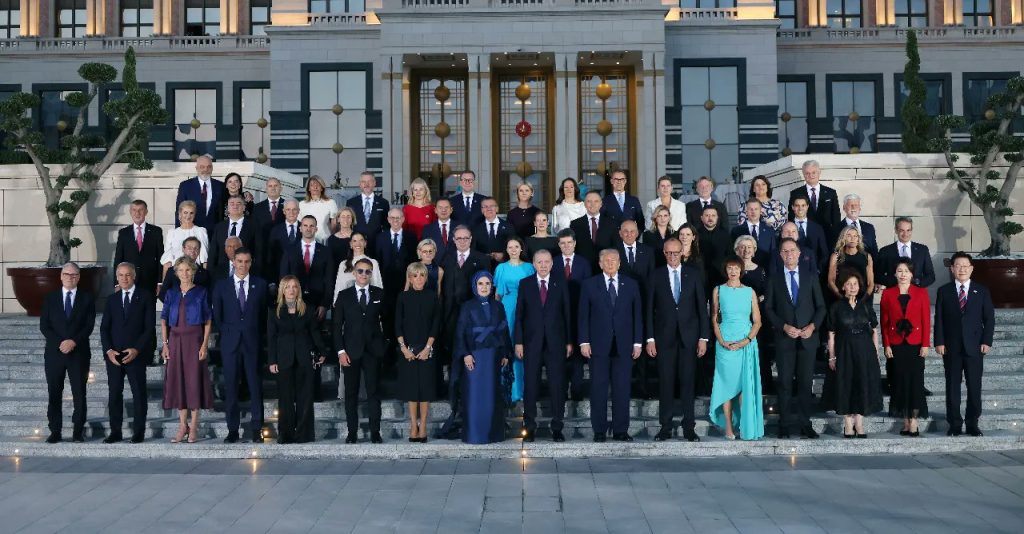
Beyond diplomacy, the summit’s human dimension also captured widespread international attention. Giorgia Meloni’s elegance, the visible tension between her and Donald Trump, Albanian Prime Minister Edi Rama’s trademark sneakers, Emmanuel Macron’s early morning run through the streets of Ankara while wearing his signature black sunglasses, Greek Prime Minister Kyriakos Mitsotakis’s reception to the sound of the Ottoman Mehter military band, Iceland’s Prime Minister’s astonishment upon arriving at the Presidential Complex, and President Erdoğan’s presentation of specially crafted commemorative pistols to world leaders all became memorable moments that resonated far beyond traditional diplomatic reporting.
The Ankara Summit may be over, but its consequences will be felt for years to come.
By hosting the summit, Türkiye did far more than organize a successful international event. It opened a new chapter in its relations with the West, reinforced the prominence of its defense industry, and once again demonstrated that it occupies a central place in global diplomacy.
Attention now turns to the summit’s next chapter. How will Iran, Russia, and China interpret NATO’s display of unity in Ankara and Türkiye’s renewed momentum in its relations with the West?
At a time when the ceasefire in the Middle East is beginning to unravel, the war in Ukraine continues, and strategic competition in the Indo-Pacific is intensifying, the answer to that question may shape not only regional dynamics but also the broader geopolitical landscape for years to come.