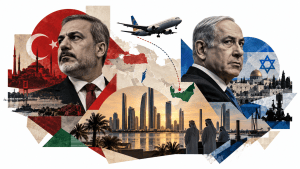
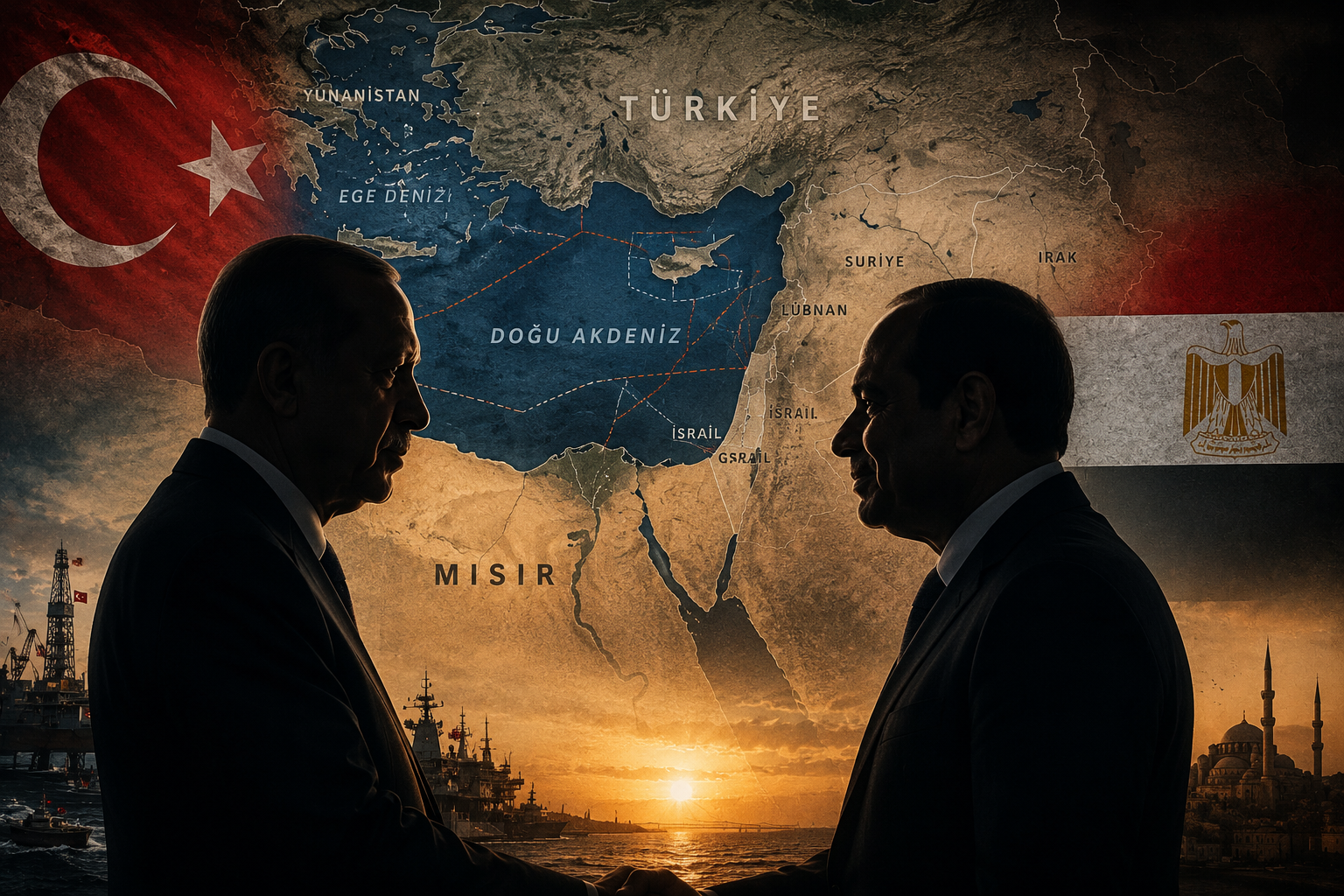
The normalization between Ankara and Cairo is no longer a simple diplomatic thaw. It is gradually evolving into a new geopolitical equation stretching from the Eastern Mediterranean to Gaza, and from Libya to Sudan. This emerging alignment is being followed with particular attention in Athens and Tel Aviv.
Relations between Türkiye and Egypt cannot be reduced to the diplomatic exchanges of two modern states. They rest on a much deeper historical and strategic foundation: an Ottoman legacy, a shared Mediterranean memory, the geopolitics of the Red Sea and the Eastern Mediterranean, ties with the Arab world, and the regional ambitions of two countries that see themselves as natural centers of power.
Egypt entered the Ottoman sphere in 1517 under Sultan Selim I and remained one of the most important centers of the Ottoman world for nearly four centuries. Cairo was not just a major city; it was a strategic hub linking the Eastern Mediterranean, North Africa, the Red Sea and the Hejaz. This historical depth helps explain why relations between Ankara and Cairo have always carried a weight that goes beyond ordinary diplomacy. It also makes both their rivalry and their rapprochement more intelligible today.
In the modern era, relations suffered a severe rupture after the overthrow of Mohamed Morsi in 2013. Ankara refused to recognize Abdel Fattah el-Sisi’s rule as legitimate, while Cairo accused Türkiye of offering political space to the Muslim Brotherhood. For years, the two countries found themselves on opposing sides in Libya, the Eastern Mediterranean and the broader contest over regional alignments. Diplomatic relations deteriorated sharply after 2013 and only began to normalize in 2023, when the two sides reappointed ambassadors.
Today, however, the regional picture has changed dramatically. Erdoğan and Sisi have exchanged visits, while the two countries have intensified contacts on defense, trade and regional crises. Erdoğan’s visit to Cairo was one of the clearest signs that the rapprochement had moved beyond symbolism.
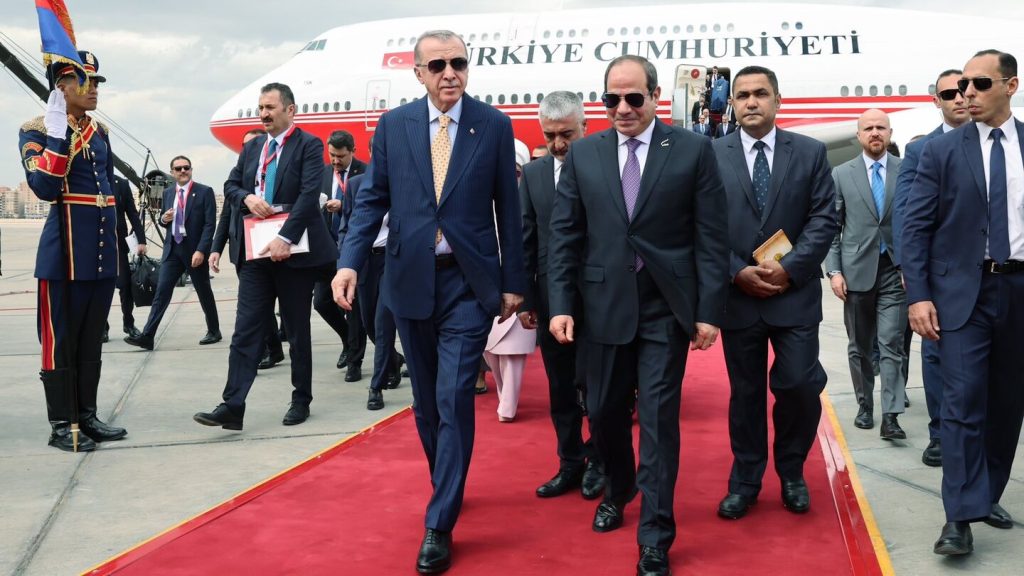
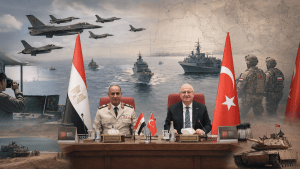
Egypt and Türkiye later held their first joint naval exercise in 13 years with the “Sea of Friendship 2025” drill. Military contacts then expanded to include air forces and special forces, suggesting that cooperation is no longer confined to diplomatic gestures.
The defense industry has also become central to this new phase. ASELSAN’s decision to open a representative office in Egypt shows that the relationship is moving from political normalization toward practical strategic cooperation.
For this reason, it would be too simplistic to describe the Türkiye-Egypt rapprochement merely as “the reconciliation of two former rivals.” The real transformation lies elsewhere: Ankara and Cairo, confronted with a shifting regional order, have begun to see each other less as adversaries and more as necessary partners.
Regional Crises Are Pushing Ankara and Cairo into the Same Security Equation
The first driver of the Türkiye-Egypt rapprochement is the growing overlap between the two countries’ security concerns. Gaza, Libya, Sudan, the Red Sea, Somalia and the Eastern Mediterranean are no longer separate files. Each of these crises now feeds into the strategic calculations of both Ankara and Cairo.
For Egypt, regime security and border security remain urgent priorities. The Sisi administration faces demographic pressure, economic fragility and an unstable regional environment. This has pushed Cairo toward a more flexible and pragmatic foreign policy. In an analysis published by Kathimerini, Constantinos Filis underlined that Egypt, with a population approaching 115 million, refugee pressure, declining Suez Canal revenues and vulnerabilities in the tourism sector, is actively searching for capital and new partnerships.
This environment creates an opening for Türkiye. Ankara can offer Cairo more than trade. It can provide cooperation in defense industries, technology, joint production and regional crisis management. For Egypt, these opportunities are increasingly attractive at a time when confidence in the United States is weakening, Israel is seen as more unpredictable, and the Arab world is once again debating how to build its own security capacity.
The Israeli factor is particularly important in Egypt’s reassessment of Türkiye. The war in Gaza, the Rafah border crossing and the possibility of Palestinians being pushed into Sinai have heightened Egypt’s national security anxieties. The Kathimerini analysis also notes that Israel, under its current leadership, is viewed as increasingly unpredictable, and that even countries such as Egypt and Jordan, which have maintained long-standing channels with Israel, now harbor deep doubts about its intentions.
This is where Turkish and Egyptian interests converge. Both Ankara and Cairo oppose the forced displacement of Palestinians from Gaza. Both are concerned that Israel could widen the war across the region. And both reject the idea that the Palestinian question can be managed solely through Israel’s security lens.
Libya is another file where a visible softening has taken place. For years, Türkiye and Egypt backed opposing camps. Ankara worked closely with the Tripoli-based government, while Cairo viewed Khalifa Haftar’s forces in eastern Libya as a security buffer. Recently, however, Türkiye’s outreach to actors in eastern Libya has changed the equation from Cairo’s perspective. Kathimerini argues that Ankara’s contacts with eastern Libyan actors have pushed Türkiye toward a more balanced policy and helped reduce tensions with Egypt.
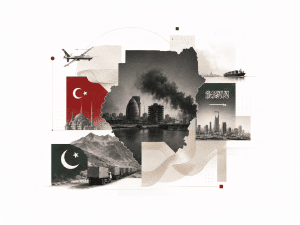
Sudan is another critical arena. For Egypt, the civil war there is not a distant conflict. It carries direct consequences through refugee flows, arms trafficking and the activity of armed groups near its borders. According to Kathimerini, Ankara and Cairo have found common ground in their support for the government led by General Abdel Fattah al-Burhan. Türkiye’s support for the Sudanese army is also affecting the balance on the ground in favor of the government.
Syria, too, is shaping Egypt’s view of Türkiye. After the fall of the Assad regime, Türkiye became one of the key backers of the new administration in Damascus. Reuters reported that Ankara has provided military training and advisory support to Syria’s new government, sought to strengthen the capacity of the Syrian army, and maintained more than 20,000 troops on the ground.
At a time when Türkiye’s weight in the regional balance of power has grown so visibly, Egypt’s rapprochement with Ankara is not merely a goodwill gesture. Cairo appears to understand that confrontation with Türkiye would be costly, while cooperation could generate strategic dividends.
A New Equation in the Eastern Mediterranean: Why Athens and Tel Aviv Are Uneasy
The most strategic consequence of the Türkiye-Egypt rapprochement may emerge in the Eastern Mediterranean. A potential maritime jurisdiction agreement between Ankara and Cairo could shake the diplomatic architecture Greece has spent years trying to build.
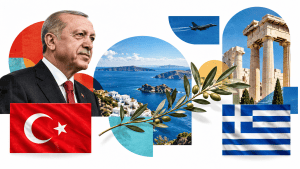
For Greece, Egypt has long been one of the central pillars of its Eastern Mediterranean strategy. In 2020, Athens signed a maritime jurisdiction agreement with Cairo in an effort to counterbalance the Türkiye-Libya maritime memorandum. That move also strengthened the Eastern Mediterranean Gas Forum as a regional platform designed, in part, to contain Türkiye’s influence.
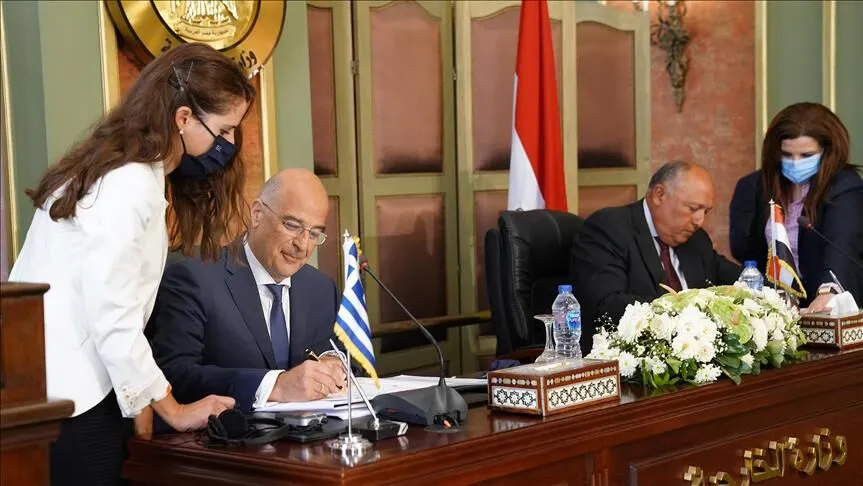
Today, however, unease is growing in Athens. According to Kathimerini, the positive momentum in Greek-Egyptian relations has weakened. The paper argues that the cooling began with the dispute over Saint Catherine’s Monastery in Sinai and continued as the two sides failed to keep each other sufficiently informed about steps related to maritime jurisdiction. The same analysis suggests that Cairo currently appears to be moving closer to Ankara.
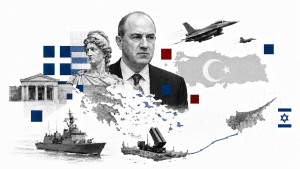
The reason for Greek concern is clear. If Türkiye and Egypt were to sign a maritime jurisdiction agreement, Greece’s maximalist approach in the Eastern Mediterranean, especially its claims based on Kastellorizo, would come under serious pressure. Türkiye has long argued that islands cannot generate continental shelves and exclusive economic zones on the same scale as mainland territories. Greece, by contrast, maintains that islands have full maritime effect. This dispute directly shapes the region’s energy, shipping and security calculations.
This is why Kathimerini’s observation that “Türkiye will logically seek to sign an exclusive economic zone agreement” is so significant. Such an agreement would not only transform Ankara-Cairo relations; it could also alter the entire diplomatic framework Greece has constructed in the Eastern Mediterranean.
For Israel, the picture is no less sensitive. A closer Türkiye-Egypt relationship could increase Ankara and Cairo’s ability to act together in regional crises, particularly over Gaza. That would inevitably narrow Israel’s room for maneuver. Experts cited by Asharq Al-Awsat argue that the rapprochement between Türkiye and Egypt is aimed, above all, at reshaping the regional balance in response to Israel’s expanding influence.
The defense dimension reinforces this concern. Egypt has one of the largest armies in the Arab world and considerable diplomatic weight. Türkiye brings NATO experience, a rapidly expanding defense industry, advanced drone technology, electronic warfare capabilities and an active military presence across several regional theaters. If these capacities begin to converge, the consequences would extend far beyond bilateral relations.
ASELSAN’s opening of a representative office in Egypt should therefore not be dismissed as a symbolic move. It could give the Egyptian military more direct access to Turkish defense technologies, increase the prospects for joint production and create a more durable strategic link between the two countries.
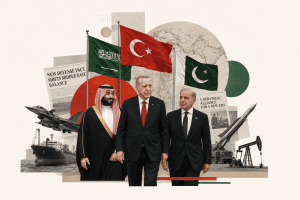
The Saudi Arabia and Pakistan dimension also deserves attention. According to Kathimerini, Riyadh’s support for the Egyptian economy is not only aimed at keeping Cairo financially stable; it also reflects a desire to position Egypt within a broader regional equation. In this emerging picture, Saudi Arabia and Egypt appear along one axis, while Türkiye and Pakistan represent another. Given Pakistan’s nuclear capability, Türkiye’s NATO membership and military power, Egypt’s large armed forces and its geographical proximity to Gaza, this competition is not merely diplomatic. It carries a clear regional security dimension.
Whether the Türkiye-Egypt rapprochement will prove durable remains uncertain. Serious areas of mistrust persist. The Muslim Brotherhood file has not fully disappeared. Interests in Libya do not entirely overlap. Ankara’s regional leadership ambitions can still generate unease in Cairo.
Yet under current conditions, this rapprochement also offers a significant opportunity for regional stability. If Türkiye and Egypt can coordinate over ceasefire efforts, humanitarian aid and diplomatic pressure in Gaza and Lebanon, they could help shape a new balance in the Middle East.
The real question, however, lies in the Eastern Mediterranean. If Ankara and Cairo one day reach an agreement on maritime jurisdiction, the consequences would not be limited to bilateral relations. Such a move could also reshape the strategic calculations of Greece and Israel. That is why the Türkiye-Egypt rapprochement should be watched closely: it is a quiet geopolitical shift, but one whose effects could be far-reaching.