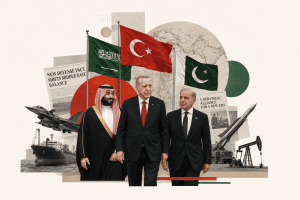
The transport and logistics memorandums signed between Türkiye and Saudi Arabia in Riyadh on June 9, 2026 may, at first glance, look like technical agreements. Yet behind these signatures lies a much larger geopolitical meaning.
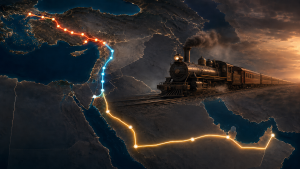
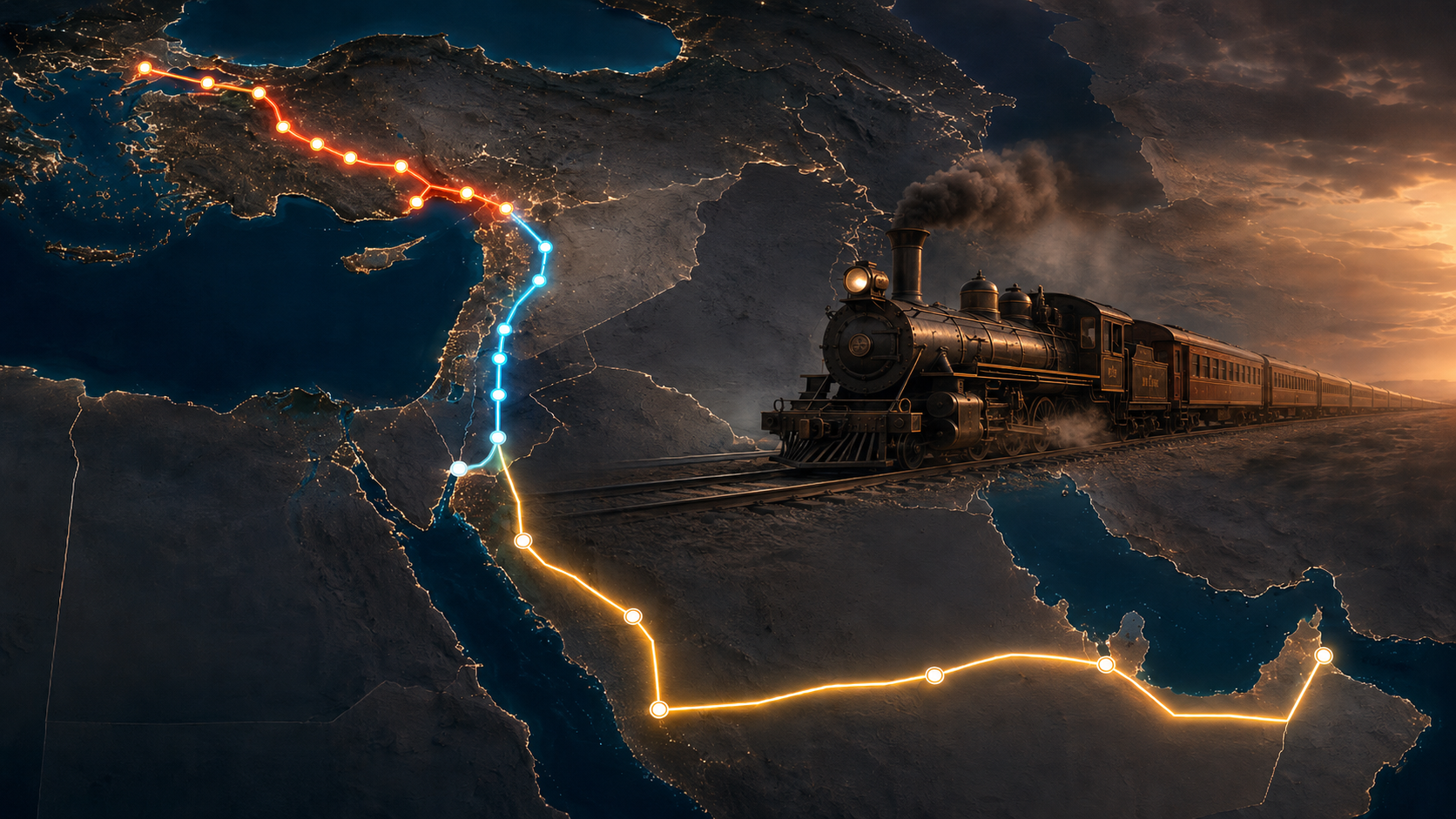
The modern Hejaz line, which is expected to include Syria and Jordan and open onto the Indian Ocean through Oman, offers a new land-based trade architecture capable of connecting the Gulf to Europe and Central Asia via Türkiye.
On the map, it may look like nothing more than a railway running along the Istanbul-Aleppo-Damascus-Amman-Riyadh, and Muscat route. But under today’s conditions, this line means far more: it could reduce dependence on the Strait of Hormuz, provide Gulf countries with an alternative outlet, and emerge as a new power corridor capable of replacing the Israel-centered IMEC project.
A geopolitical project designed to connect the Muslim world
The Hejaz Railway was one of the most ambitious projects of Sultan Abdülhamid II’s reign. Launched in 1900 with donations collected from across the Muslim world, it was not designed merely to facilitate the pilgrimage to the holy lands.
Its real purpose was to strengthen the political, administrative and military bond between Istanbul and the Hejaz, consolidate Ottoman influence in the Arab provinces, and unite the Muslim world around a common symbol.
The line reached Medina, but it never made it to Mecca. During the First World War, it suffered heavy blows as a result of the Arab Revolt and sabotage operations organized by the British intelligence officer T. E. Lawrence. The Hejaz Railway thus entered history as the unfinished vision of an empire.
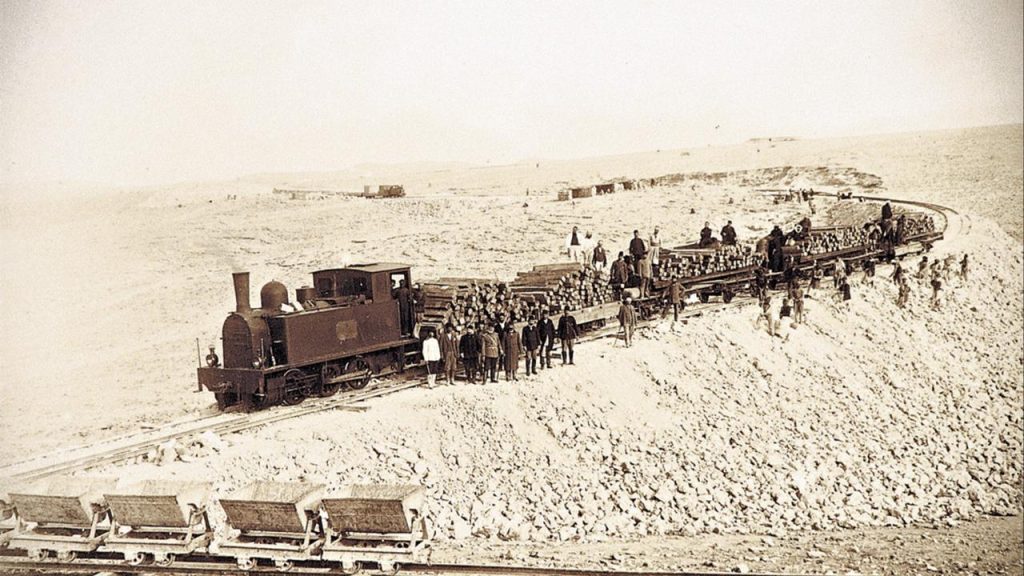
That is why the return of this same line to the agenda today is not simply a nostalgic gesture. The modern Hejaz Railway can be read as Türkiye’s attempt to reinterpret, under today’s geoeconomic conditions, an unfinished idea of geographic connectivity.
A century ago, this line carried the Ottoman vision of political and religious unity. Today, it could become one of the symbols of Türkiye’s ambition to position itself once again as a central country.
The Hormuz crisis and the growing importance of land corridors
To understand why the modern Hejaz Railway is now back on the agenda, one only needs to look at the Strait of Hormuz.
The possibility that this passage, through which roughly one-fifth of global oil trade flows, could be closed has reminded Gulf countries how great a strategic risk it is to depend on a single maritime chokepoint. Energy market volatility, rising cargo insurance costs and the accelerated search for alternative routes show that this is no longer merely a commercial issue. It has become a matter of security and geopolitics.
This is where the land connection offered by Türkiye becomes critical.
A line capable of linking the Red Sea to the Mediterranean by land, carrying Gulf cargo to Europe through Türkiye and reducing dependence on Hormuz would not merely be an economic alternative in times of crisis. It would also become a strategic security instrument.
For Saudi Arabia, Türkiye is not just a transit country. After the crisis with Iran, Riyadh understood that it could no longer rely on American regional security guarantees as confidently as before. In such a period, Saudi Arabia increasingly needs a partner like Türkiye: a NATO member with a powerful defense industry, influence on the Syrian and Iraqi fronts, connections to Central Asia and a strategic gateway to Europe.
Because the issue is no longer just about selling oil or moving goods. The real question is how to diversify export routes, reduce security risks and avoid dependence on a single strait, a single route or the security guarantees of a single global power.
The modern Hejaz Railway therefore cannot be seen as a merely technical outcome of the Türkiye-Saudi Arabia rapprochement. It is one of the most concrete geopolitical symbols of that rapprochement.
A strategic move against the Israel-centered IMEC corridor
The reactions in the Israeli press to the return of the Hejaz Railway are no coincidence. This project directly contradicts the IMEC vision in which Israel had sought to place itself at the center in recent years.
Announced in September 2023 by U.S. President Joe Biden, the India-Middle East-Europe Economic Corridor, known as IMEC, aimed to turn Israel into one of the key trade hubs between the Gulf and Europe. Goods arriving from India were expected to pass through the United Arab Emirates, Saudi Arabia, Jordan and Israel before reaching the Port of Haifa and then Europe.
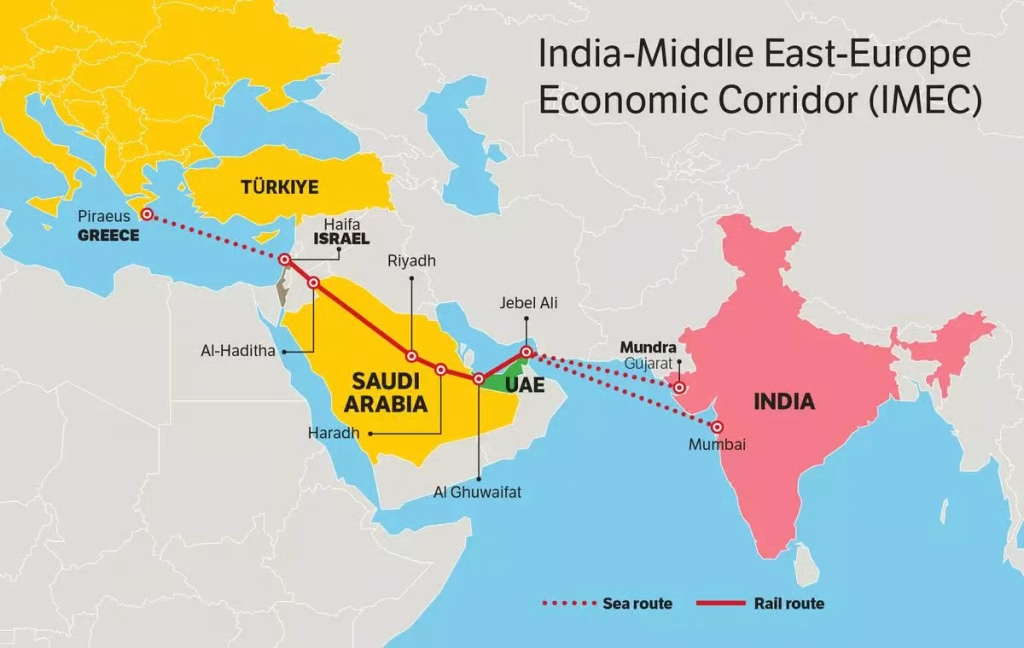
In this design, Israel was not merely a country located along the route. It was meant to be one of the corridor’s strategic centers. Türkiye, by contrast, was largely left outside the map.
But the war in Gaza effectively froze this plan. Saudi Arabia put the project on hold, Jordan distanced itself, and the United Arab Emirates adopted a more cautious position. In the region’s new political climate, an Israel-centered trade corridor no longer appeared sustainable.
Türkiye stepped forward precisely in this vacuum.
After the war in Gaza, Ankara suspended trade with Israel and adopted a clear position on Palestine. This allowed Türkiye to appear as a more credible actor in the eyes of Gulf public opinion. Saudi Arabia’s turn toward Türkiye is therefore not only an economic choice. It is also a political one.
The fact that not a single Israeli city appears on the new route further increases the symbolic weight of this choice.
This is precisely where Israel’s discomfort comes from. If the modern Hejaz Railway becomes operational, the Port of Haifa may lose part of the transit revenues and geostrategic advantages it had hoped to gain through IMEC. More importantly, on the new route between the Gulf and Europe, it may not be Tel Aviv that rises to prominence, but Ankara.
That is why the Hejaz Railway is not merely a transport project. It represents the possibility of a new regional economic axis from which Israel would be excluded.
Ultimately, the return of the Hejaz Railway should not be read in isolation. China’s Belt and Road Initiative, Iraq’s Development Road, the Middle Corridor and the modern Hejaz line form different fronts in the new connectivity wars between Asia and Europe.
In this new era, Türkiye’s real test will not be whether it remains a transit country through which goods simply pass. It will be whether it can become a strategic node connecting the Far East, the Gulf, Central Asia and Europe.
Because power no longer belongs only to those who possess energy resources. It is increasingly shaped by those who control routes, corridors and chokepoints.