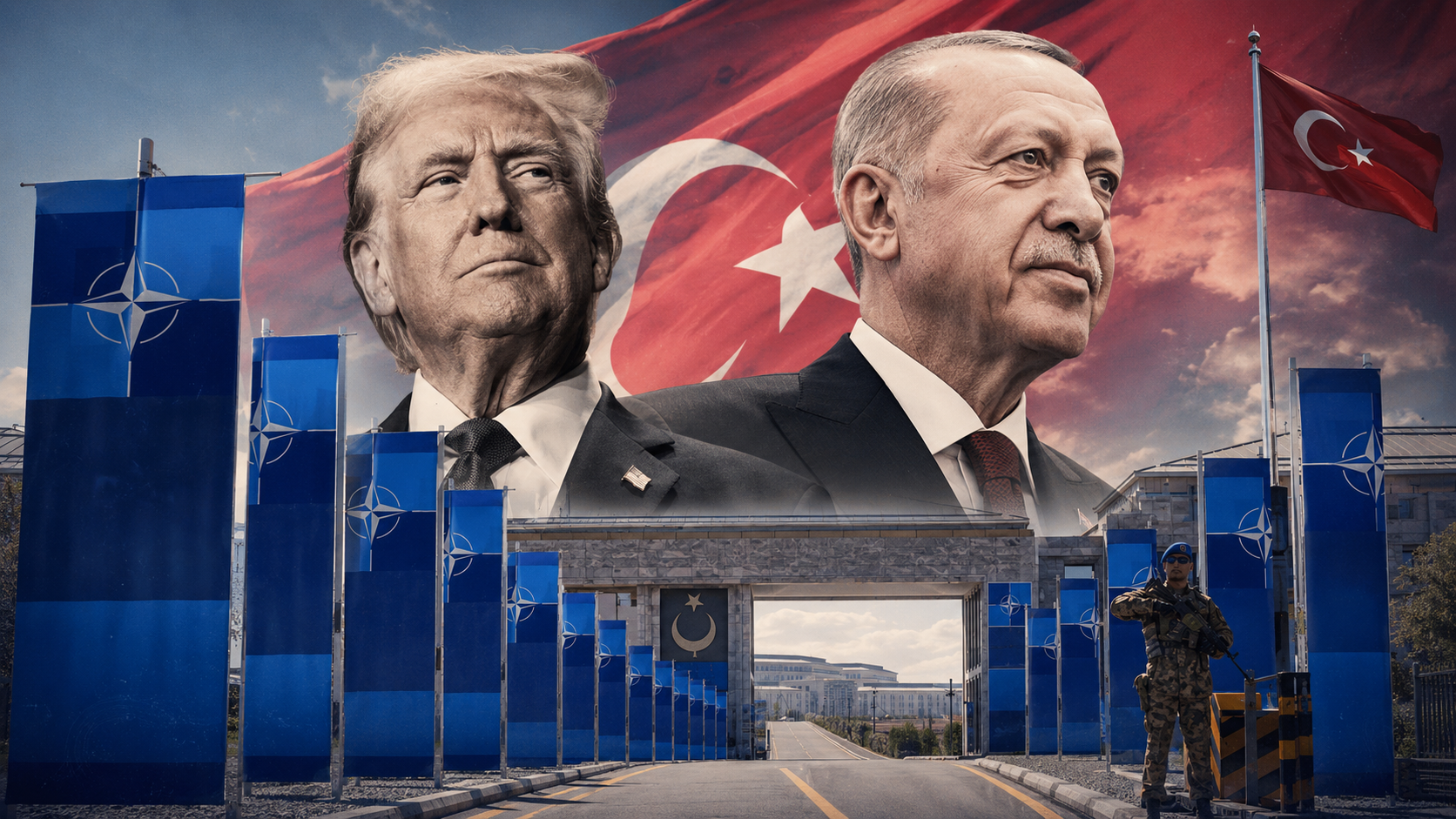
The NATO summit the whole world has been waiting for with bated breath opens in Ankara on Tuesday. Heads of state and government from the alliance’s 32 member countries, along with thousands of diplomats, experts and journalists, will attend a meeting held under the highest level of security and followed closely by the international press.
The summit also carries historic significance for Türkiye. The 2026 Ankara Summit will be the second NATO summit hosted by Türkiye, 22 years after the 2004 Istanbul Summit. But circumstances are very different this time. Compared with 2004, the world is going through a far more fragmented, far more fragile and far more dangerous security environment.
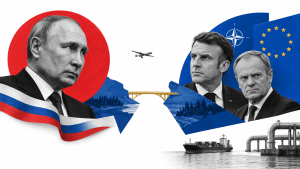
The Russia-Ukraine war is now past its fourth year. The Middle East is gripped by deep instability along the Gaza–Iran–Lebanon–Hormuz line. The US-China rivalry is no longer confined to the Pacific; it spans everything from energy routes to technology wars. On top of this come the tensions between the United States and Europe over defence spending, burden-sharing and strategic priorities.
The Ankara Summit will therefore not only address NATO enlargement or classic alliance matters. Far more fundamental questions will be on the table: How ready is NATO for a large-scale war? Is the alliance’s defence production capacity sufficient? Is Europe truly prepared to take more responsibility for its own security? And what role will Türkiye play in this new security equation?
Choosing Ankara is no coincidence
Holding the NATO summit in Ankara means far more than symbolism. The choice shows that Türkiye’s strategic weight within the alliance has reached a level that can no longer be ignored.
Türkiye’s importance to NATO is of course nothing new. Its geopolitical position opening onto the Black Sea, the Caucasus, the Middle East and the Eastern Mediterranean has long made Ankara one of the alliance’s most critical members. Today, however, Türkiye’s value no longer stems from its geography alone.
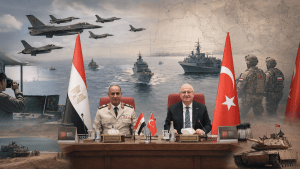
In recent years, Türkiye has undergone a profound transformation in its defence industry. It is no longer merely a country that buys weapons; it has become an actor that develops its own systems, exports them, proves them in the field and discusses joint production with NATO countries. Drones and armed UAVs, ammunition, electronic warfare, air defence, naval platforms and low-cost yet effective solutions put Türkiye at the forefront of the very areas NATO needs most today. The Ankara Summit will therefore also be an international showcase for the Turkish defence industry.
The Ankara Summit will be an international showcase for the Turkish defence industry.
The motto Ankara has chosen for the summit — “Ankara, the Key to Peace” — is also striking. Far more than a simple slogan, it reflects the mediating, playmaking and crisis-solving role Türkiye has taken on in recent years.
Within the framework of its humanitarian diplomacy vision, Türkiye has become one of the world’s leading providers of humanitarian aid and one of the countries hosting the largest number of migrants. But it did not stop there. By taking the diplomatic initiative in global crises, it has become one of the rare actors able to talk to different sides at the same time.
The Grain Corridor during the Russia-Ukraine war was one of the most powerful examples. Together with the United Nations, Türkiye brought the two warring parties around the same table and enabled millions of tonnes of grain to reach world markets. This was not merely a diplomatic success; it became a strategic move that kept the global food crisis from deepening further.
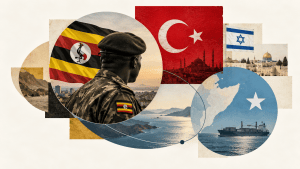
Türkiye’s strategic support for Azerbaijan in the Karabakh process shifted the balance in a file that had seemed frozen for thirty years. Ankara took on a mediating role in the Somalia-Ethiopia tension. And on files such as Gaza, Iran, Syria and Ukraine, Türkiye stood out as one of the few countries able to talk to the West, to the countries of the region and to the parties to the conflict alike.
Holding the NATO summit in Türkiye therefore cannot be read as a mere diplomatic hosting assignment given to Ankara. The choice also shows that NATO acknowledges Türkiye’s contribution to regional and global peace, stability and security.
The Ankara Summit could be a turning point for Türkiye
The 2026 Ankara Summit could offer Türkiye significant opportunities in three key areas.
The first opportunity lies in the defence industry. NATO is now seeking to rearm, expand its production capacity and strengthen its technological deterrence. The war in Ukraine showed that the West’s ammunition stocks, air-defence systems and production infrastructure were not as strong as assumed. Here, Türkiye’s rapid production capacity, battle-proven systems and lower-cost solutions carry strategic value for the alliance.
In this respect, the Ankara Summit will give Türkiye more than an opportunity to showcase its products; it will also offer the chance to make the Turkish defence industry part of NATO’s long-term production plans. Beyond increasing Türkiye’s defence exports, this could anchor the country in a more permanent and indispensable place within the Western security architecture.
The second opportunity concerns opening a new page in relations with the United States. In recent years, the F-35 programme, CAATSA sanctions and defence-industry restrictions have been major sources of tension between Türkiye and the US. The Ankara Summit could help create new ground on these issues.
The sale of GE F110 engines for the KAAN fighter jet, a possible return to the F-35 programme and the lifting of CAATSA sanctions could all come onto the agenda more forcefully during the summit process. The Trump administration’s preparations to move forward with the sale of the GE engines to be used in KAAN suggest that a new pragmatism may be emerging in the defence field.
The third opportunity is linked to European security. Europe is now trying to build up its defence capacity. Yet it cannot construct a realistic European security architecture while leaving Türkiye out. Türkiye has one of NATO’s largest armies, a growing defence industry and a broad strategic reach stretching from the Black Sea to the Middle East. Even so, Ankara’s exclusion from Europe’s SAFE defence programme shows that Europe still acts on political reflexes when it comes to its own security.
The Ankara Summit will offer Türkiye an important opportunity to send the West a clear message: without Türkiye, European security remains incomplete. Europe’s security cannot be designed in Brussels, Paris or Berlin alone. No lasting European security order can be built without taking into account the security realities of the Black Sea, the Eastern Mediterranean, the Caucasus and the Middle East.
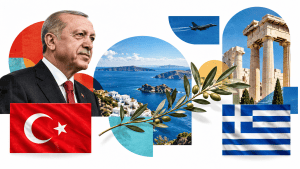
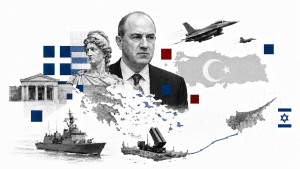
In short, all eyes are now on Ankara. The 2026 NATO Summit offers Türkiye major opportunities in areas ranging from the defence industry to diplomacy, from relations with the United States to European security — while also putting Ankara’s delicate balancing act to the test. How will Türkiye preserve the balance in its relations with Russia while increasing its weight within NATO? Was Hakan Fidan’s pre-summit visit to Moscow part of the effort to manage that sensitivity? How will Israel, Greece and Türkiye’s regional rivals read Ankara’s transformation into a more visible and more powerful actor within NATO? We will get the answers to all these questions in the days ahead. But one thing is already clear: the Ankara Summit will reshape regional balances of power while enhancing Türkiye’s importance within NATO.