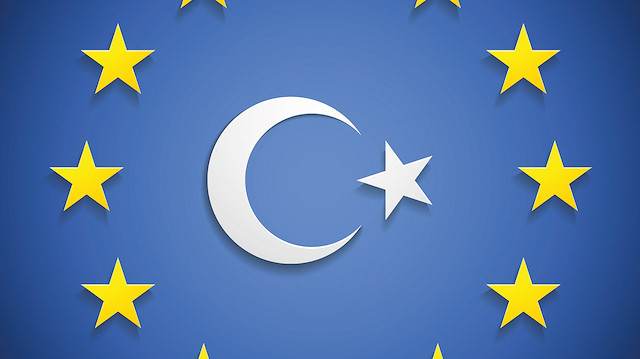
With millions of citizens of Turkish origin living in European Union (EU) countries, and with its ever-growing importance in defence, migration, security and energy, Türkiye has long ceased to be a country the EU can keep waiting in the wings. Worried by the rapprochement with Russia and China of a Türkiye further emboldened by the war in Ukraine, the EU should abandon the “carrot and stick” strategy it has applied to Türkiye for many years and offer Ankara a clearer road map on the course of bilateral relations. Because recent geopolitical developments show that all the roads the EU turns down now lead to Türkiye.
We could call the story of Türkiye and the EU a love-and-hate story. Countries that admire each other yet compete with each other, unable to decide what to call their relationship, have been dragged into an impasse.
Bilateral relations, strained especially after the 2016 coup attempt, came to breaking point several times. When the European Parliament, with its 2018 ‘Türkiye Report’, called for “the suspension of negotiations with Türkiye”, relations grew even more tense.
Despite all the problems between Türkiye and EU countries, in 2020 President Recep Tayyip Erdoğan declared that Türkiye had not yet given up on its EU adventure, saying: “We see ourselves nowhere else but in Europe. We envision building our future with the EU.”
As much as the President’s words, the latest geopolitical developments in the world prove that, just as Türkiye wants to continue with the EU, the EU needs Türkiye. When we examine both sides, we see intersecting paths and destinies.
More than 5 million Turkish citizens live in Western Europe
One of the fundamental factors binding the destinies of European countries and Türkiye today is the strong Turkish diaspora living in Europe.
According to the latest figures published by the Ministry of Foreign Affairs, around 6.5 million Turkish citizens live abroad, 5.5 million of them in Western Europe.
Among EU countries, the Western European countries with the largest Turkish populations are, in order, Germany, France, the Netherlands, Austria and Belgium.
To meet the employment needs of European countries deeply affected by the Second World War, Türkiye signed labour agreements with Germany in 1961, with Austria, the Netherlands and Belgium in 1964, with France in 1965 and with Sweden in 1967.
Today, more than 60 years after the first Turkish migration to Europe, the young people who make up the third generation in European countries are highly integrated into the countries where they live and hold important positions in every sphere of economic, social, political and cultural life. Citizens of Turkish origin, increasingly visible in European politics, are also expected to build a powerful lobby in the future.
Türkiye’s defence power keeps growing
Of course, Türkiye’s influence over European countries is not limited to the citizens of Turkish origin living there. Even though French President Emmanuel Macron declared in 2019 that NATO was “brain dead”, the Ukraine–Russia war once again changed the entire geopolitical balance and laid bare Türkiye’s importance.
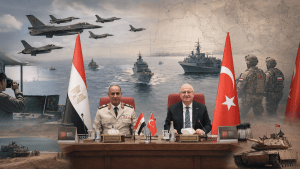
Türkiye, which has NATO’s second-largest army in terms of troop numbers, also holds geostrategic importance through its control of the Straits.
Indeed, drawing on that importance, Türkiye invoked the provisions of the Montreux Convention, applied its “wartime” clauses and decided to close the Straits to Russia and Ukraine. This being so, a European Union with weak military power cannot ignore a major defence force like Türkiye.
Moreover, Türkiye’s growing importance in defence is not limited to its NATO membership. Having decided to develop its own defence industry after the arms embargoes it endured, Türkiye has become one of the standout countries in this field.
A few days ago, the U.S.-based Wall Street Journal ran an extensive story headlined “Drones, unmanned naval vessels and killer robots have made Türkiye a powerhouse of the arms industry”.
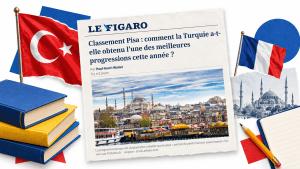
Praise for the armed drone technology that Türkiye has used successfully in different theatres such as Syria, Libya and Nagorno-Karabakh does not come only from the U.S. The French press has covered this success repeatedly. To give an example, in a story published last year entitled “A technology at the service of Turkish foreign policy”, Le Figaro wrote that “Türkiye has become one of the world’s leading armed-drone producers in just 15 years”. Likewise, in an analysis on the subject, La Croix assessed that “Türkiye is increasingly asserting itself as a military power that produces weapons”.
Türkiye is indispensable to the EU on security and migration
Beyond its ever-growing importance in the defence industry, there are two more areas where Türkiye can be considered indispensable for the EU:
Migration and security. Unable to cope with the migration flows swollen by the Syrian civil war that had been raging since 2011, the EU signed a migration agreement with Türkiye on March 18, 2016.
According to figures reported by Le Monde, after March 18, 2016 there was a radical change in the number of refugees crossing the border to reach EU countries. Just before the agreement, an estimated 3,500 refugees a day were attempting to cross the Aegean Sea to the Greek islands. After March 18, that figure fell to 40 a day. The annual figures are even more striking: between March 2015 and March 2016, 800,000 refugees tried to cross into Greece via Türkiye. Between March 2016 and March 2017 that number fell to 26,000, and by 2019 it had dropped to 11,000.
With the Taliban’s return to power in Afghanistan and the outbreak of the war in Ukraine, the migration issue has become an even heavier burden on the EU’s shoulders.
Another problem growing alongside the world’s wars, conflicts and migration movements is terrorism. Türkiye, as the only country fighting the DAESH and PKK/YPG terrorist organisations face to face in Syria, safeguards the borders of EU countries as much as its own territory.
Türkiye’s hand is strengthening at the table as much as on the ground
Türkiye consolidates the successes it has won directly on the ground in different parts of the world — Syria, Libya, Nagorno-Karabakh — with its skills at the table, that is, in diplomacy. The successful mediating role Türkiye has played, especially during the Ukraine–Russia war, frequently puts it at the top of the world agenda.
In May, Ukrainian Foreign Minister Dmytro Kuleba stated that “the most successful country in mediation is Türkiye”.
Thanks to the close ties it has built with both countries, Türkiye achieved yet another success. On July 24, the “Grain Shipment Agreement” on the export of grain products from Ukrainian ports was signed in Istanbul between Türkiye, Russia, Ukraine and the UN. Under the agreement, the implementation and monitoring of the plan will be carried out by a joint coordination centre to be established in Istanbul. The resolution by Türkiye of a food crisis that closely concerns the whole world was received “with appreciation” by the European Union.
While Türkiye resolves international issues one by one, it is also successfully managing the process of normalising relations with Armenia, Israel and the Gulf countries, with which it had been at odds.
The thaw in these tense relationships further increases Türkiye’s power, influence and weight in the region.
In conclusion, for all the reasons I have listed, Türkiye is no longer a country the European Union can easily forgo. But in my view, one of the most important areas where Türkiye will make a difference for the EU in the coming period will be energy. A few days ago, in order to free itself from its dependence on Russia, the EU signed an agreement that will double within two years the gas it imports from Azerbaijan, Türkiye’s close ally.
Türkiye, thanks to its geographic position, has the potential of an energy hub as a transit country and attaches the utmost importance to its energy policy.
Let us recall that the Trans-Anatolian Natural Gas Pipeline (TANAP) carries Azerbaijani natural gas to Europe via Türkiye. According to some experts, Israeli gas that could be brought to Türkiye might be connected to the TANAP line by reverse flow.
In other words, by mending its relations with Israel as well, Türkiye aims to become an indispensable country for the EU in the energy field too in the near future. The winter season will show us how accurate these predictions are.
Source: Gerçek Hayat