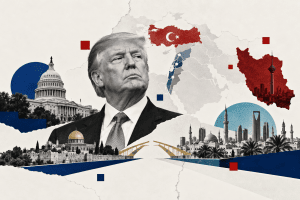
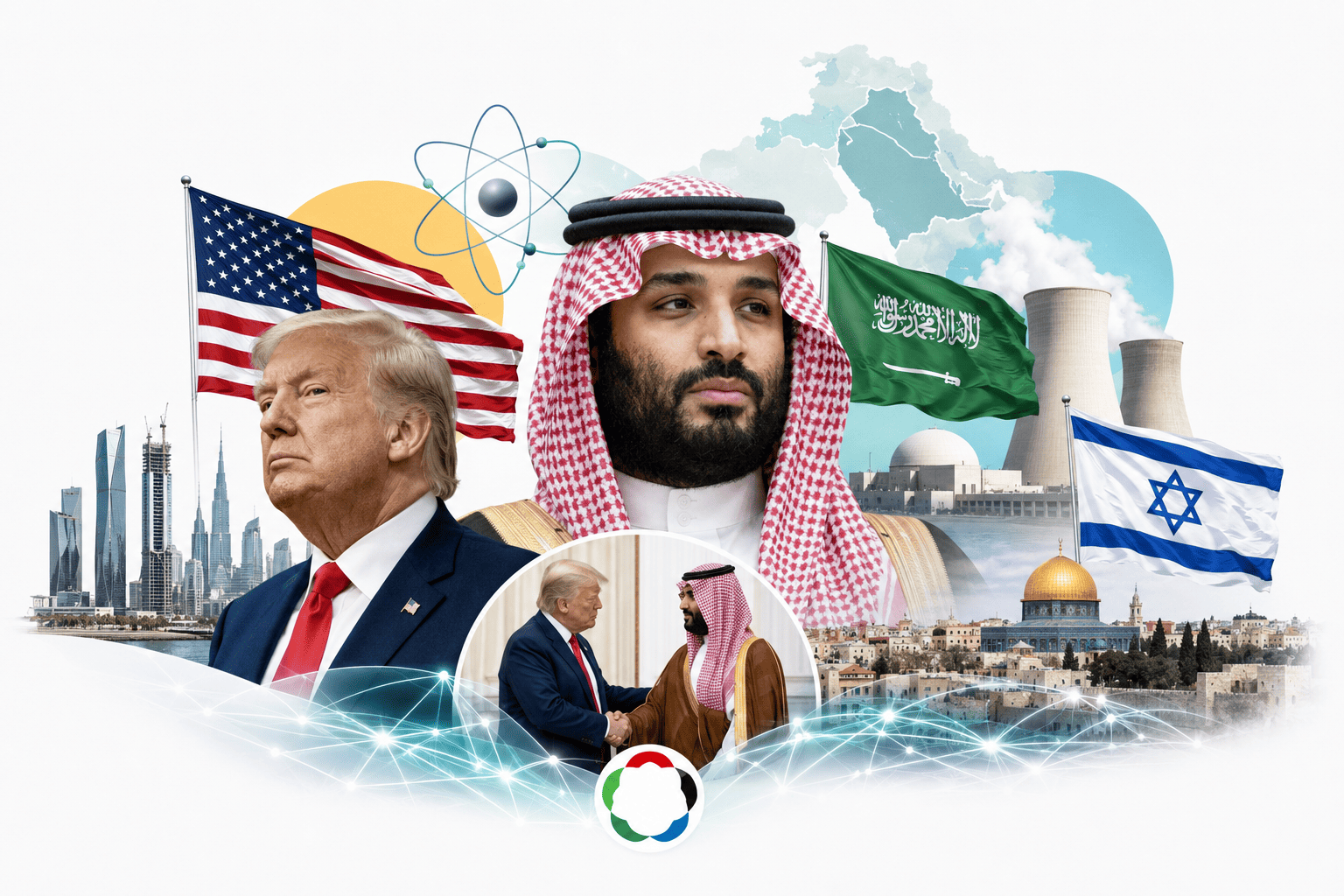

U.S. President Donald Trump has announced that the civilian nuclear cooperation agreement signed with Saudi Arabia will only be approved if Riyadh joins the Abraham Accords and normalizes relations with Israel. Nuclear negotiations that had long been conducted within the framework of energy security and economic transformation have thus suddenly become tied to one of the Middle East’s most sensitive political issues: Israel’s regional recognition.
The arrangement known as a “Section 123 Agreement” would provide the legal foundation for American companies to participate in Saudi Arabia’s nuclear energy program. For Washington, this represents not only a multibillion-dollar economic opportunity but also a means of preventing Riyadh from turning to China or Russia for nuclear cooperation.
For Saudi Arabia, nuclear power is an important component of both its Vision 2030 program, which seeks to diversify the economy beyond oil, and its long-term energy security. The U.S. Department of Energy has also stated that the agreement would give American companies broad access to the Saudi market and establish a partnership between the two countries extending over many years.
However, the normalization condition introduced by Trump at the last minute has transformed a technical energy agreement into a major geopolitical bargain. Washington’s message to Riyadh is clear: If you want access to American nuclear technology, recognize Israel. Trump is effectively seeking to use Saudi Arabia’s energy needs to secure for Israel one of the most valuable diplomatic achievements available in the Arab world.
Would Saudi Arabia accept such a condition?
Under the current circumstances, Riyadh is unlikely to accept Trump’s demand exactly as presented. The Saudi leadership is not fundamentally opposed to normalization with Israel. On the contrary, Crown Prince Mohammed bin Salman has previously indicated that he is open to such a possibility. It is also well known that Saudi Arabia and Israel share overlapping interests behind the scenes in areas such as security, intelligence and the threat posed by Iran. Nevertheless, Saudi Arabia has repeatedly stated that normalization must be accompanied by a concrete and credible process leading toward the establishment of an independent Palestinian state. Riyadh’s official position remains that diplomatic relations with Israel cannot be established unless the legitimate rights of the Palestinian people are recognized and a Palestinian state with East Jerusalem as its capital is created.
This position is not based solely on diplomatic support for the Palestinian cause. As the custodian of Mecca and Medina, Saudi Arabia occupies a unique position in the Islamic world. If Riyadh were to recognize Israel without securing anything in return for the Palestinians, it could create the impression among Arab and Muslim public opinion that Palestine had been abandoned in exchange for nuclear technology. Particularly at a time when the war in Gaza and regional tensions continue, such a decision could damage the political legitimacy Mohammed bin Salman is seeking to build both domestically and internationally.
Saudi Arabia’s actual choice, therefore, is not as simple as rejecting the nuclear agreement or abandoning its policy on Palestine altogether. Riyadh will most likely treat Trump’s condition as the opening move in a new round of negotiations. It could demand binding Israeli steps toward Palestinian statehood, stronger security guarantees and more advanced weapons systems from Washington, as well as broader technological rights for its nuclear program.
The central question is how far the Israeli government would be prepared to accommodate these demands. Normalization with Saudi Arabia would represent a historic diplomatic victory for Israel. Yet accepting a binding process leading toward a Palestinian state would contradict the political position of the current Israeli government. Trump’s condition therefore places not only Riyadh but also Israel before a difficult choice: Will Israel agree to a process toward Palestinian statehood in exchange for normalization with Saudi Arabia, or will it maintain its current position even at the cost of losing this historic diplomatic opportunity?
Another factor strengthening Saudi Arabia’s negotiating position is that it does not depend exclusively on the United States for nuclear technology. Marco Rubio’s statement that other countries are also prepared to offer technology to Saudi Arabia reflects Washington’s concern about the growing influence of rivals such as China and Russia in Riyadh. If the Saudi leadership fails to reach an agreement with the United States, it will not necessarily have to abandon its nuclear program; it could turn to alternative partners. This possibility transforms Trump’s condition from an ultimatum into a negotiation in which both sides may be required to make concessions.
Saudi Arabia should therefore not be expected to reject normalization with Israel outright. However, it is equally unlikely to accept it solely in exchange for nuclear energy while obtaining nothing on the Palestinian issue. Riyadh’s most probable strategy will be to draw out the negotiations, extract greater concessions from Washington and link normalization to a tangible political outcome for the Palestinians.