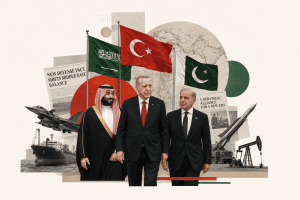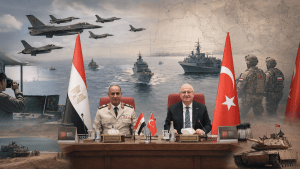
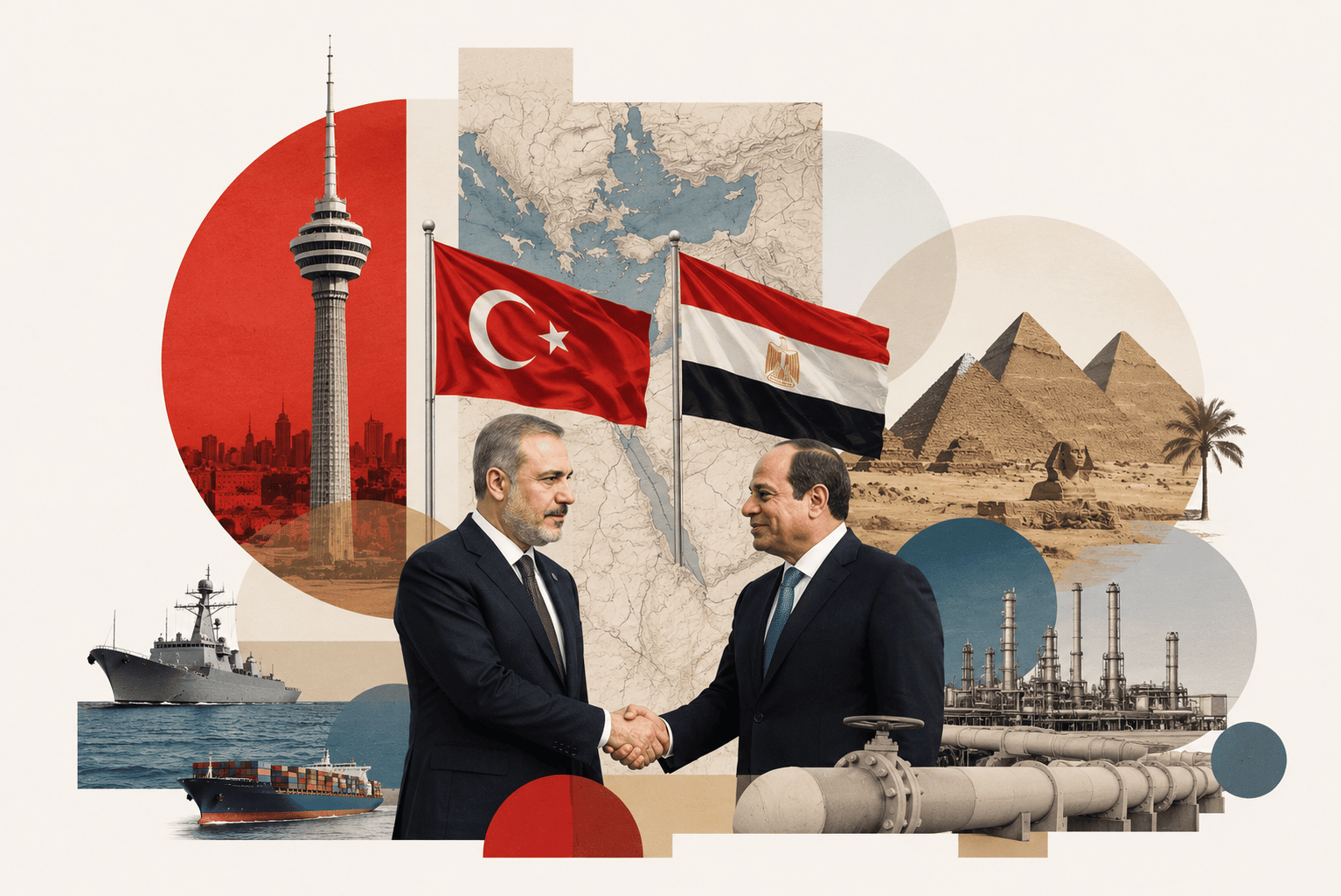

Foreign Minister Hakan Fidan’s visit to Egypt on 13–14 August comes at a particularly significant moment in Türkiye’s intensifying regional diplomacy. His talks in Cairo follow closely on the heels of the Mecca Joint Defence Agreement, signed by Türkiye, Saudi Arabia and Pakistan on 7 August, as well as his visit to Libya. At the same time, relations between Ankara and Cairo are undergoing one of their most significant periods of rapprochement in recent years, not only politically but also in the military and economic spheres. Taken together, these developments raise an important question: could Egypt become the fourth member of the Mecca Agreement?
The official agenda of Fidan’s visit to Cairo is extensive. The second meeting of the Türkiye–Egypt Joint Planning Group is taking place, with discussions covering agreements currently under negotiation, the outcomes of the High-Level Strategic Cooperation Council held in Cairo in February, and preparations for its next meeting in Türkiye. Gaza, Libya, Sudan and other regional crises are also expected to feature prominently in the talks.
Yet the timing of the visit warrants looking beyond the formal agenda. Ankara has made clear that it does not necessarily envisage the new defence mechanism established with Riyadh and Islamabad as an exclusively trilateral arrangement. President Recep Tayyip Erdoğan has stated that the Mecca Agreement is open to other countries committed to regional peace and stability, while presenting Türkiye’s longer-term vision as one of building a broader security framework. Following the agreement, Hakan Fidan also described Egypt as a “natural partner” in such an architecture. His visit to Cairo only days after the Mecca Agreement therefore inevitably raises the possibility that Egypt could eventually join the framework.
What makes this prospect particularly significant is the new stage that Türkiye–Egypt relations have reached. The normalisation between Ankara and Cairo is no longer simply about repairing diplomatic ties. The two countries are increasingly drawing closer in the fields of defence and security. At the Türkiye–Egypt Military Cooperation Committee meeting in June, the two sides agreed on a new roadmap for military cooperation, while Egyptian fighter aircraft participated in the Anatolian Eagle 2026 exercise hosted by Türkiye. Prospects for joint production and technological cooperation in the defence industry are also receiving increasing attention. Egypt’s accession to the Mecca Agreement would therefore not mark the beginning of a military relationship from scratch; rather, it could institutionalise a security partnership that is already taking shape.
Fidan’s presence in Libya immediately before travelling to Cairo is equally noteworthy. For almost a decade, Libya was one of the most contentious issues between Türkiye and Egypt. Ankara backed the authorities in Tripoli, while Cairo maintained close ties with actors in eastern Libya. Today, however, Türkiye is engaging with both western and eastern Libya and seeking to contribute to the reunification of the country’s divided institutions. For Egypt, Libya is not simply a neighbouring country: it is a core national security concern encompassing border security, energy, migration and the strategic balance in the Eastern Mediterranean. Whether Türkiye and Egypt can move from competition towards coordination in Libya may therefore prove to be one of the most important tests of their emerging strategic rapprochement.
Against this backdrop, it would be incomplete to view Fidan’s journey from Libya to Cairo as two entirely separate diplomatic engagements. Türkiye is simultaneously recalibrating its relations with Libya’s competing centres of power and expanding the scope for cooperation with Egypt on regional issues. Should Ankara and Cairo succeed in establishing a durable understanding over Libya, the implications could extend far beyond North Africa.
Egypt’s Accession Could Transform the Mecca Agreement into a Regional Security Architecture
Were Egypt to join the Mecca Agreement, the resulting framework could acquire a geopolitical weight significantly greater than that of the current trilateral arrangement. Türkiye, Saudi Arabia and Pakistan already bring together three complementary forms of power: Türkiye’s military capabilities and increasingly sophisticated defence industry, Pakistan’s nuclear deterrent, and Saudi Arabia’s financial and economic resources. Egypt would add one of the Arab world’s largest armed forces, control over the Suez Canal, a strategic bridge between North Africa and the Middle East, and a unique geographical position at the intersection of the Eastern Mediterranean and the Red Sea.
Moreover, the Mecca Agreement is not intended to remain merely a symbolic political declaration. The three countries plan to establish high-level mechanisms involving their foreign and defence ministers and chiefs of general staff, conduct joint exercises encompassing land, air and naval forces, and deepen cooperation in areas ranging from air defence to unmanned systems. In the defence industry, the ambition extends beyond arms procurement to joint development and production, technology sharing and the establishment of common logistical infrastructure.
Egypt’s inclusion would also create a striking geopolitical continuum. A security framework could emerge stretching from Pakistan through the Gulf and Saudi Arabia, across the Red Sea and Egypt, into the Eastern Mediterranean and ultimately Türkiye. Such an architecture would connect several of the world’s most strategically important maritime and geopolitical spaces: the Indian Ocean, the Persian Gulf, the Red Sea and the Eastern Mediterranean.
One of the most consequential effects of Egyptian participation would be felt in the Red Sea. Egypt controls the Suez Canal, one of the principal arteries of global trade, while Saudi Arabia is one of the dominant powers on the opposite shore of the Red Sea. Türkiye, meanwhile, has steadily expanded its diplomatic, economic and military footprint in the Red Sea and the Horn of Africa. Cairo’s accession could therefore give the Mecca Agreement not only a stronger military dimension but also a significant role in maritime security and the protection of critical trade routes.
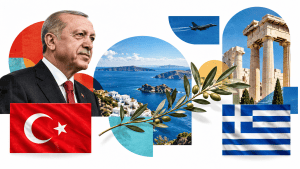
A second major shift could occur in the Eastern Mediterranean. For years, Türkiye and Egypt found themselves aligned with different geopolitical groupings in the region. Cairo’s energy and security partnerships with Greece, the Republic of Cyprus and Israel were closely watched in Ankara. Yet the normalisation of Türkiye–Egypt relations, combined with rapidly expanding military cooperation, suggests that these alignments are no longer as rigid as they once were. Egypt joining a collective defence mechanism alongside Türkiye would not mean that Cairo would abandon its relations with Athens or Nicosia. It could, however, contribute to a gradual loosening of the bloc politics that have shaped the Eastern Mediterranean over the past decade and allow Egypt to recalibrate its regional positioning.
Gaza and the Palestinian question constitute a third important dimension. Türkiye, Egypt and Saudi Arabia each possess different forms of leverage over Gaza’s future. Egypt cannot be excluded from any viable post-war arrangement because of its geographical connection to Gaza and its control of the Rafah crossing. Türkiye is one of the regional actors capable of maintaining channels of communication with Palestinian factions, including Hamas. Saudi Arabia, meanwhile, could play a major role in Gaza’s reconstruction given both its political weight in the Arab world and its financial capacity. A broader security mechanism that also includes Pakistan could create a platform through which Muslim-majority states move beyond diplomatic declarations towards more structured coordination on security and reconstruction.
Egyptian participation could also reshape the Libyan equation. If Türkiye and Egypt were incorporated into the same security architecture, Libya could gradually evolve from an arena of bilateral competition into a testing ground for coordinated stabilisation policies. Such a development would affect not only Libya’s internal balance of power but also the wider security landscape of North Africa. A durable Ankara–Cairo understanding over Libya could, in turn, make Türkiye’s simultaneous engagement with Tripoli and Benghazi more sustainable.
There are, however, significant obstacles to Egyptian accession. Cairo has longstanding military ties with the United States while simultaneously seeking to balance its relations with the Gulf states, Europe, China and Russia. It maintains its peace treaty with Israel, even as it has voiced serious objections to Israeli policies in Gaza. For a country pursuing such a multidirectional foreign policy, joining a new framework carrying collective-defence obligations would require careful strategic calculation.
Nor would Egypt’s participation depend solely on political will in Ankara and Cairo. The positions of Saudi Arabia and Pakistan would also matter, as would the agreement’s decision-making mechanisms, membership criteria and, crucially, the precise manner in which its collective-defence provision would be implemented.
If Ankara succeeds in bringing Cairo into the framework, however, the Mecca Agreement could evolve well beyond its origins as a trilateral defence pact. Bringing Türkiye, Egypt, Saudi Arabia and Pakistan into a common security architecture would have implications stretching from the Eastern Mediterranean and the Red Sea to the Gulf and South Asia. More importantly, it could provide the nucleus of the kind of institutionalised security cooperation that has long been largely absent across the Muslim world.