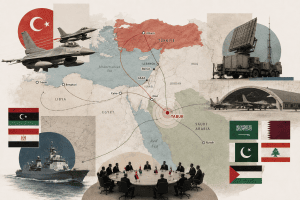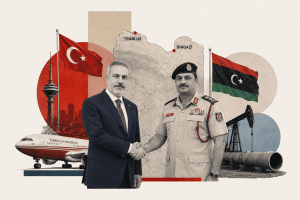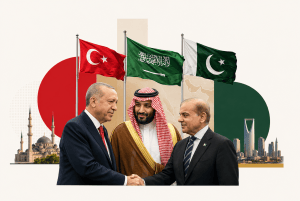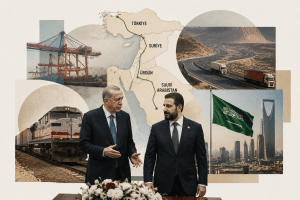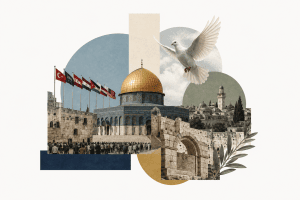
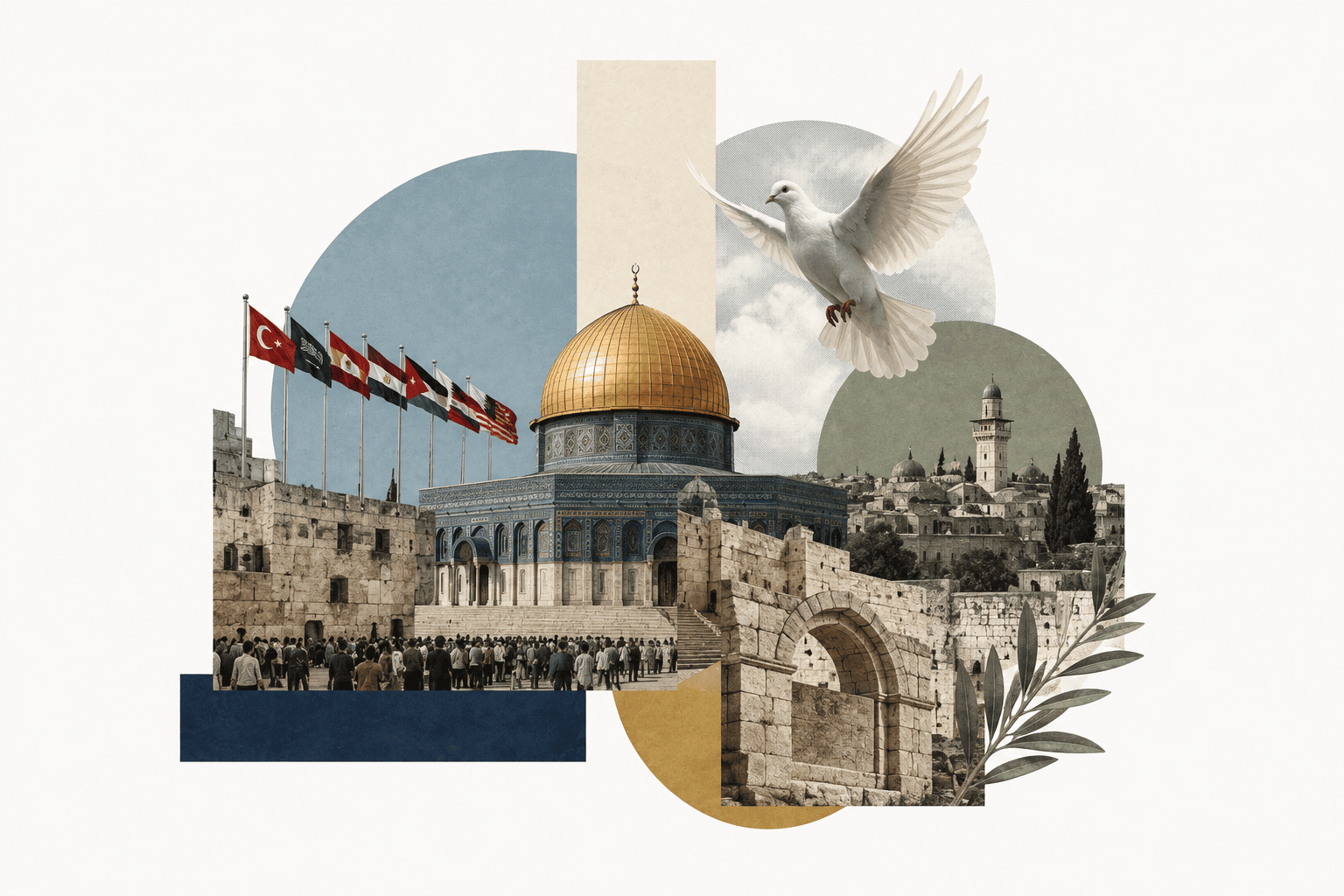

The ministerial meeting on Jerusalem held in Amman, the capital of Jordan, emerged as one of the Islamic world’s most comprehensive diplomatic initiatives in recent years, amid mounting tensions surrounding the city. Türkiye was represented by Foreign Minister Hakan Fidan. The meeting also brought together representatives from Jordan, Saudi Arabia, Qatar, Egypt, Iraq, Algeria, Tunisia, Morocco, Palestine, Pakistan, Indonesia, Malaysia and Somalia, as well as the General Secretariat of the Arab League.
In the joint declaration issued at the end of the meeting, the participants strongly condemned Israel’s policies aimed at altering Jerusalem’s Arab, Muslim and Christian identity, its violations at Al-Aqsa Mosque, unlawful excavations and attempts to change the historic status quo. The declaration also reaffirmed that an independent and sovereign Palestinian state with East Jerusalem as its capital remains the foundation of the two-state solution.
The timing of the summit was no coincidence. In recent years, Israel has sought to consolidate its de facto control over Jerusalem both politically and legally. One of the most significant turning points in this process came when the United States recognised Jerusalem as Israel’s capital in 2017 and moved its embassy from Tel Aviv to Jerusalem in 2018. Although Washington’s decision was rejected by much of the international community, it provided substantial diplomatic support for Israel’s claim to sovereignty over the city. The joint declaration issued in Amman is therefore particularly significant, as it demonstrates the existence of a distinct diplomatic front opposing this approach.
What makes Jerusalem one of the world’s most sensitive issues is not merely its political status. The city is one of the most important religious centres in the world, sacred to Muslims, Christians and Jews alike. Al-Aqsa Mosque is regarded as the third-holiest site in Islam. As the first direction of prayer for Muslims, a site associated with the Prophet Muhammad’s Night Journey and Ascension, and a symbol of Islamic civilisation for centuries, Al-Aqsa is not merely a place of worship for nearly two billion Muslims. It is also a central part of their religious identity and historical memory.
For this reason, incursions into the Al-Aqsa compound by far-right Israeli politicians and settlers, restrictions on Muslim worship and attempts to alter the historic status quo have provoked outrage not only in Palestine but throughout the Islamic world.
The Importance of Jerusalem in Türkiye–Israel Tensions
For Türkiye, Jerusalem is not merely a foreign policy issue. It is also an integral part of its historical memory, cultural ties and sense of responsibility inherited from the past. For nearly four centuries, the Ottoman Empire administered Jerusalem through a system that sought to protect the holy sites of different faiths. This historical legacy remains one of the principal foundations of Ankara’s sensitivity towards the city today.
The recent disputes between Türkiye and Israel over Jerusalem offer one of the clearest examples of this. Interior Minister Mustafa Çiftçi’s statement, “May God grant me the honour of serving as Governor of Jerusalem, even if only for one day,” triggered a strong reaction in Israel and led to a new diplomatic controversy between the two countries. The dispute once again demonstrated that Jerusalem is not an ordinary item on Türkiye’s diplomatic agenda, but a unique issue deeply intertwined with historical memory and public sentiment.
The Amman summit attended by Hakan Fidan should also be viewed within this context. Türkiye regards Jerusalem not only as an integral part of the Palestinian cause, but also as a strategic issue involving the defence of international law, the preservation of the status of the holy sites, the survival of the two-state solution and the continuation of the historical responsibility inherited from the Ottoman era.
While Israel seeks to make its control over Jerusalem increasingly permanent, Türkiye and a number of Muslim-majority countries are strengthening their diplomatic coordination in preparation for a collective political response.
The Amman meeting should therefore be understood not merely as a joint reaction to Israel, but as the first significant step in a broader diplomatic struggle that could reshape regional power dynamics through the question of Jerusalem.