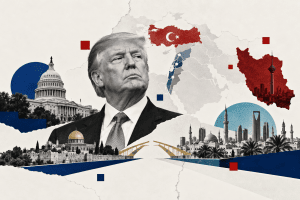
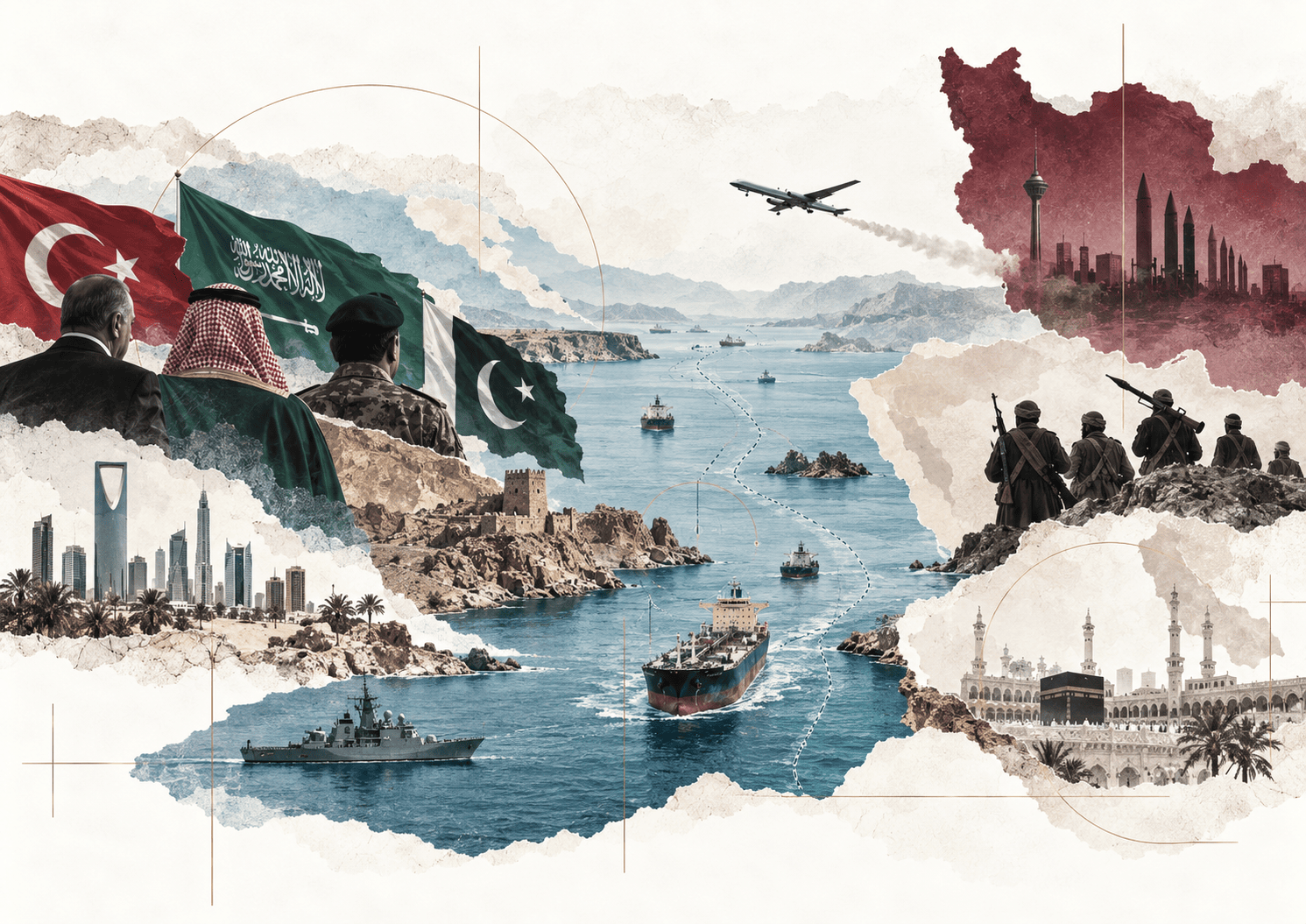
The Houthis’ renewed focus on Saudi Arabia should not be seen simply as another phase of the war in Yemen. When viewed alongside the energy routes stretching from the Strait of Hormuz to Bab el-Mandeb, the balance of power in the Gulf, and the new defence cooperation taking shape between Türkiye, Pakistan and Saudi Arabia, the attacks appear to fit into a much broader regional contest.
The rivalry between Iran and Saudi Arabia is nothing new. Yemen has long been one of the arenas where that rivalry is felt most acutely. On one side are the Iran-backed Houthis; on the other, the Yemeni government supported by Riyadh, alongside a range of local actors.
When Iran and Saudi Arabia restored diplomatic relations in March 2023 through Chinese mediation, hopes emerged that a new chapter might be opening. But normalisation never meant that the two countries’ regional interests had converged. What we are seeing today suggests that the rivalry did not disappear; it merely changed form.
The renewed use of missiles and drones against Saudi targets is therefore significant. Even more noteworthy is the timing: this escalation comes just as Türkiye, Pakistan and Saudi Arabia are moving towards a new defence framework.
That raises a crucial question: is the Houthi turn back towards Saudi Arabia simply a consequence of developments on the Yemeni front, or is it also a strategic message aimed at the new security architecture taking shape around Riyadh?
The Target May Be More Than Saudi Arabia: It Could Be the Mecca Alliance
For Iran, the first major lever is energy routes.
For years, global energy security debates have focused overwhelmingly on the Strait of Hormuz. But Bab el-Mandeb is almost as critical. Hormuz controls access out of the Gulf, while Bab el-Mandeb connects the Red Sea to the Indian Ocean. If pressure builds simultaneously at both chokepoints, the consequences would extend far beyond Saudi Arabia and could affect global trade and energy flows.
Seen from this perspective, the Houthis are strategically useful to Iran in ways that go beyond the traditional role of a proxy force. Without deploying its own military to a new front, Tehran can create insecurity in the Red Sea, increase pressure on Saudi energy security and signal to Washington that the economic cost of a confrontation with Iran would not remain confined to Iranian territory.
In other words, Tehran’s message may be simple: if military pressure on Iran intensifies, Iran will not be the only country to pay the price.
But the issue goes well beyond energy.
Saudi Arabia has spent years trying to reduce its dependence on oil, attract foreign investment and position itself as one of the Middle East’s leading economic hubs. A Riyadh living under permanent security pressure, however, would be forced to devote more resources to defence, manage greater investor uncertainty and pursue its regional leadership ambitions under more difficult conditions.
It is also worth noting that Tehran is simultaneously seeking to improve relations with Gulf actors such as the United Arab Emirates. Iran may be trying to increase pressure on Saudi Arabia while preventing the Gulf states from forming a united front against it.
Yet the most important dimension may be the new defence axis itself.
The real weight of the emerging cooperation between Türkiye, Pakistan and Saudi Arabia will not be measured by agreements alone, but by how that cooperation functions in a crisis. From that perspective, renewed attacks on Saudi Arabia could represent the first serious political test of the alliance.
That does not mean Türkiye and Pakistan are likely to enter into a direct war against the Houthis. Such a scenario could widen the regional conflict and place the already complex Türkiye-Iran relationship under much greater strain.
Ankara has other options at its disposal: supporting Saudi air defence, strengthening intelligence and early-warning capabilities, accelerating defence industry cooperation, and increasing diplomatic pressure on Tehran.
The strength of the Mecca Alliance, therefore, does not necessarily have to come from fighting a common war. Its real deterrent value may lie in demonstrating that a threat directed at one member will not simply be ignored by the others.
This also creates a potential risk for Iran. Increasing pressure through the Houthis may offer Tehran short-term strategic advantages, but it could also produce the opposite result by accelerating security cooperation between Türkiye, Pakistan and Saudi Arabia. In other words, testing the Mecca Alliance could paradoxically make it more cohesive.
Yet behind this broader regional power struggle lies another Yemen that is too often overlooked.
One of the world’s oldest centres of civilisation has spent years dealing not only with war, but also with economic collapse, institutional breakdown and deep social problems, including the widespread use of qat. While regional powers debate control of Bab el-Mandeb, energy corridors and new alliances, Yemen’s own human capital continues to erode.
Perhaps this is where the region’s deeper tragedy lies: instead of building stronger solidarity in the face of common threats, much of the Islamic world continues to pay the price of its internal rivalries. Yemen is one of the clearest examples.
That is precisely why Türkiye’s diplomatic weight in the region matters more than ever. Ankara’s role is not limited to military capability; its ability to mediate, balance competing actors and reduce regional polarisation is equally important. What the region needs today is not another front, but a common framework for security and peace that prevents the Islamic world from becoming even more fragmented.