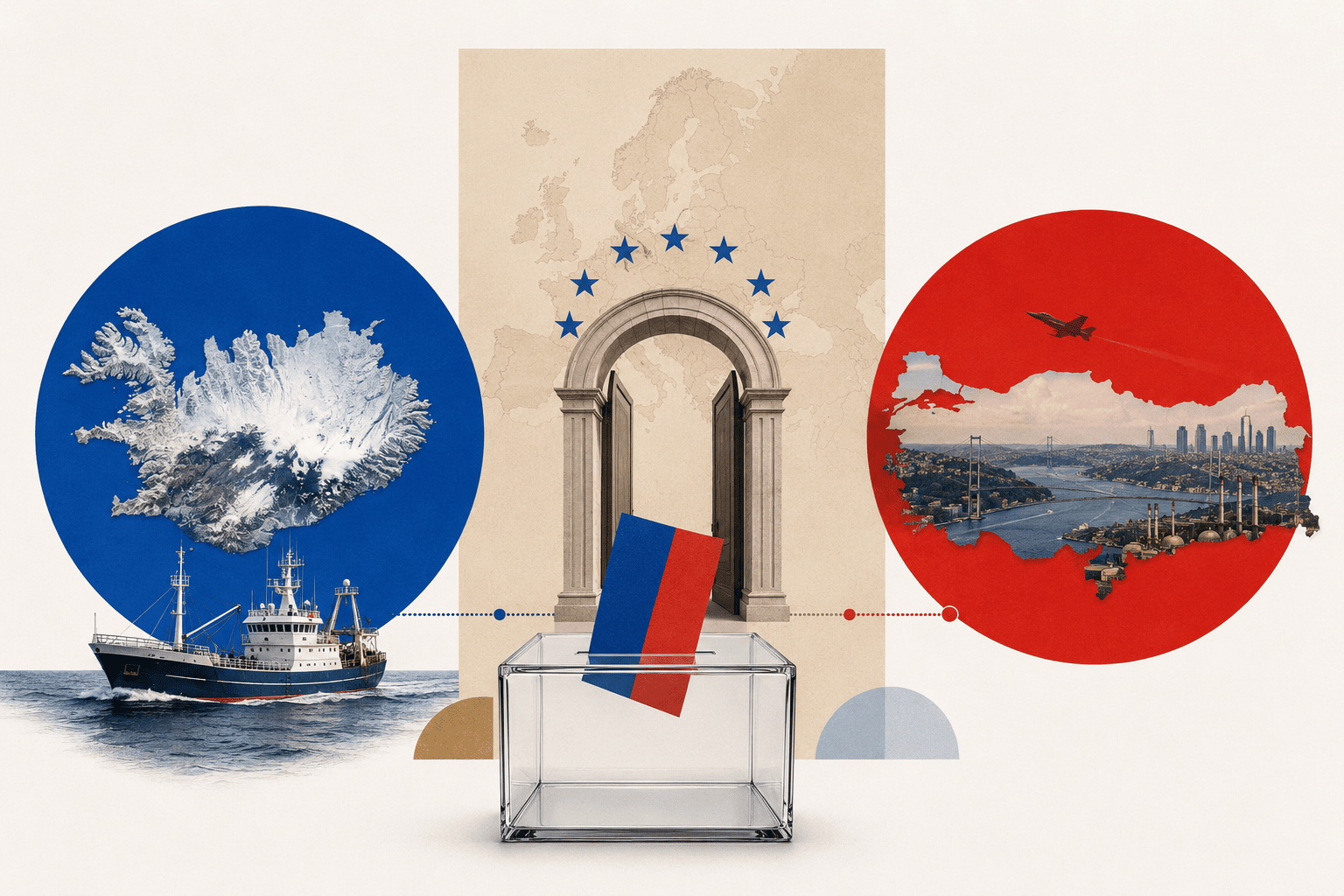

On 29 August, Iceland voted against reopening accession negotiations with the European Union. Some 52.8 per cent opposed resuming the talks, while 47.2 per cent voted in favour. Turnout reached an impressive 82.5 per cent.
The result sends a powerful political message.
At the heart of the “No” campaign was the fear that Iceland could lose control over fishing, one of the country’s most strategically important economic sectors. Concerns over national sovereignty, control of natural resources and the transfer of decision-making powers to Brussels also proved decisive.
Moreover, Iceland already enjoys extensive access to the EU single market and freedom of movement through its membership of the European Economic Area and the Schengen Area. For many Icelanders, the obvious question was therefore: why assume the obligations of membership when the country already enjoys many of its benefits?
Iceland’s decision demonstrates that close relations with Europe do not necessarily require EU membership. Switzerland and Norway have also chosen to remain outside the Union despite maintaining deep economic and political ties with it. The United Kingdom, meanwhile, left the bloc altogether through Brexit.
So what would happen if the same question were put to voters in Türkiye today?
Neither the EU nor Türkiye Is What It Once Was
In a poll conducted on my social media account, a clear majority said they would vote against Türkiye joining the European Union. Had the same question been asked thirty years ago, the result would probably have been very different. At the time, the EU was widely regarded as the ultimate destination for prosperity, democracy, the rule of law and modernisation.
Today, however, public trust in the EU has eroded considerably in Türkiye.
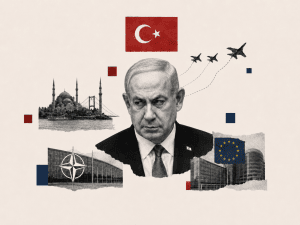
One of the main reasons is the perception of European double standards towards Türkiye. Institutional relations between Ankara and Brussels date back to 1963. Türkiye has been a candidate country since 1999, and accession negotiations formally began in 2005. Yet the process has effectively been frozen for years. The Customs Union has not been modernised, visa liberalisation remains unrealised, and the belief that Brussels continually demands concessions from Türkiye over Cyprus and the Eastern Mediterranean has become deeply entrenched.
The war in Gaza has also become a defining test of Europe’s commitment to its professed values. The EU presents human rights as a cornerstone of its foreign policy, yet its failure to adopt a strong and coherent position in the face of the Palestinian tragedy has further deepened mistrust in Türkiye.
Rising Islamophobia and racism across Europe have contributed to this estrangement. The perception that the EU remains, in some respects, a “Christian club” defined by cultural and religious boundaries reinforces the belief that Türkiye will never genuinely be accepted as an equal member.
Some of the comments on my poll reveal just how profound this disillusionment has become. One respondent wrote: “I would rather lead within an order of our own making than remain a pawn in a system whose rules are written by others.” The same respondent argued that Türkiye was “not an ordinary state, but the heir to an empire” and should reconnect with its own historical and civilisational foundations.
One of the sharpest comments described the EU as “the sick man of our time,” adding: “And illness is contagious.” Another respondent captured the mood of the “No” camp in a single question: “Why board a sinking ship?”
Behind this outlook lies a broader critique of the European Union: its ageing population, cumbersome bureaucracy, slow decision-making processes and persistent inability to forge a common foreign policy. To those inclined to vote “No,” Europe is no longer the undisputed centre of the future, but a bloc struggling to preserve its economic dynamism, technological edge and global influence.
For all its economic difficulties, Türkiye today is more capable of acting independently than it was thirty years ago. Its young population, manufacturing capacity, geostrategic position, expanding diplomatic reach and growing defence industry have significantly strengthened its room for manoeuvre.
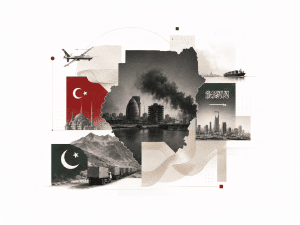
Many respondents therefore argued that Türkiye should stop waiting at the EU’s door and instead diversify its partnerships—with the Organization of Turkic States, Muslim-majority countries through initiatives such as the Mecca Joint Defence Agreement, BRICS, and emerging powers across Asia and Africa.
The current geopolitical climate is another major factor driving opposition to EU membership. As warnings of a potential Russian attack on Europe become increasingly prominent in political discourse, some respondents fear that the EU could seek to use Türkiye as a frontline state—or even as a proxy—in a future confrontation with Moscow.
From their perspective, Türkiye should not be expected to shoulder the military burden of a European–Russian conflict that does not directly serve its national interests. Europe, they argue, must learn to provide for its own security.
Yet the arguments of those who would vote “Yes” should not be dismissed.
For this group, visa liberalisation and the modernisation of the Customs Union remain vital objectives. They argue that EU membership could offer Türkiye tangible benefits in areas ranging from the rule of law and institutional quality to economic stability, investment and freedom of movement.
Others believe that, after more than six decades of engagement, Türkiye should not be the party that voluntarily abandons the European objective. Some of the comments even revealed a more assertive, and at times distinctly revanchist, vision: Türkiye should join the EU, use the parliamentary weight conferred by its population to become one of the most powerful actors in the European Parliament, and ultimately assume a leading role within the Union.
Another view holds that no political structure remains unchanged forever and that no conflict is inherently insurmountable. From this perspective, genuine mutual understanding between Turks and Europeans, and the erosion of deeply rooted prejudices, may only become possible if they inhabit the same political space.
The message emerging from both Iceland’s referendum and my poll in Türkiye is clear: the European Union is no longer regarded as an indisputable source of attraction or the only possible future.
Thirty years ago, the question was: “When will Türkiye join the EU?”
Today, the question has fundamentally changed:
It is no longer whether the EU would accept Türkiye, but whether Türkiye would still accept the EU as it is today.