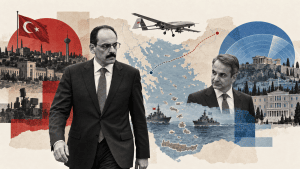
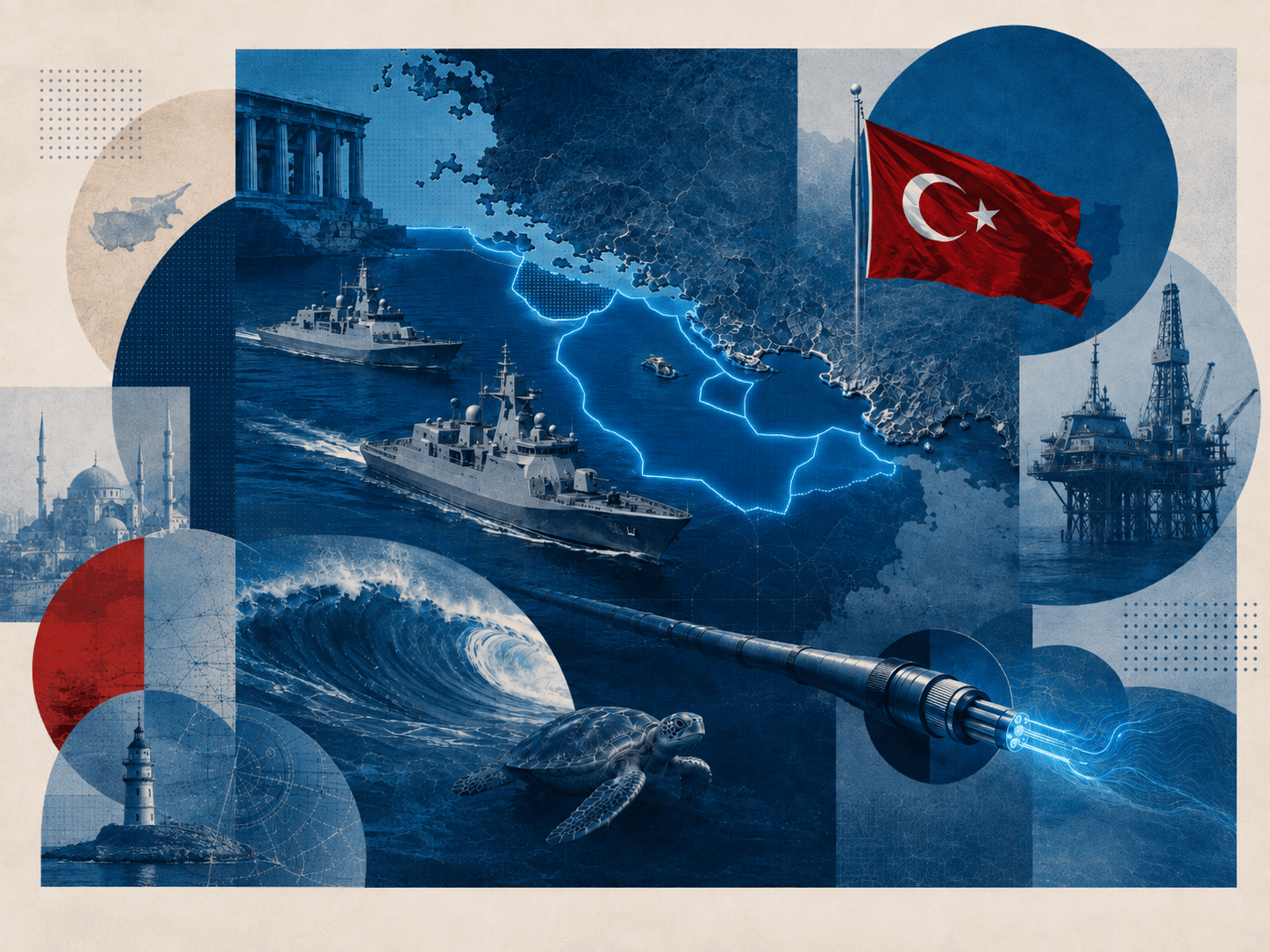
The Fethiye–Kaş Marine National Park, declared on 16 August 2026, covers an extensive area of roughly 21,700 square kilometres. A second marine national park was established in the northern Aegean. Türkiye’s Ministry of Agriculture and Forestry presents the initiative primarily as an effort to protect marine ecosystems and biodiversity. That environmental rationale is significant. But to understand the geopolitical implications of the decision, it is necessary to look back at developments over the previous year.
Türkiye did not identify these areas for the first time in 2026. The zones around Fethiye–Kaş and the northern Aegean had already appeared in Ankara’s Maritime Spatial Planning Map, unveiled in April 2025, and were subsequently designated as marine conservation areas in August 2025. What has changed is their formal designation as marine national parks by presidential decree. In other words, Türkiye is now turning areas previously marked on a map into zones subject to a concrete domestic administrative framework.
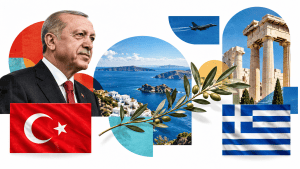
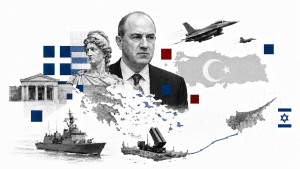
The Greek dimension is equally important. Athens announced plans in April 2024 to establish two major marine parks in the Aegean and Ionian Seas, prompting objections from Ankara. When Greece formally declared those parks in July 2025, Türkiye announced that it would establish its own marine conservation areas. As Reuters noted at the time, environmental protection quickly became intertwined with the two countries’ longstanding disputes over maritime jurisdiction.
The location of the Fethiye–Kaş park makes Kastellorizo particularly important. Greece argues that the island, situated only a few kilometres off the Turkish coast, is entitled to generate a substantial continental shelf and exclusive economic zone. Türkiye, by contrast, maintains that a small island located so close to the Anatolian mainland cannot generate maritime zones of such scale that they effectively cut across Türkiye’s long Mediterranean coastline.
This dispute is not simply about who controls more sea on a map. Maritime jurisdiction determines who can regulate energy exploration, scientific surveys, subsea cables and the exploitation of natural resources.
That is precisely why the Fethiye–Kaş Marine National Park matters. The designation does not, in itself, create a new Turkish continental shelf or exclusive economic zone. It does, however, allow Ankara to exercise planning, environmental protection and administrative authority over a broad maritime space that it regards as consistent with its own interpretation of maritime jurisdiction. In this sense, the Blue Homeland is increasingly being underpinned by sustained state practice rather than remaining confined to maps and diplomatic statements.
This is also at the heart of Greece’s concern. Athens argues that parts of the park extend into areas it considers to be part of the Greek continental shelf, while sections of the Greek media have described the move as an attempt to “encircle” Kastellorizo. Retired Rear Admiral Cihat Yaycı, meanwhile, argues that one of the decision’s most important consequences is that it makes Türkiye’s capacity to “regulate, administer and monitor” maritime areas more visible. In his view, Ankara is also challenging what he describes as an earlier pattern in which Athens acted unilaterally while Türkiye largely confined itself to objections.
The Blue Homeland Is Becoming a Strategy of State Practice, Not Just a Map
The marine parks have acquired even greater significance as competition over energy and strategic infrastructure in the Eastern Mediterranean intensifies.
At the centre of this competition is the Great Sea Interconnector, which is designed to connect the electricity grids of Greece and the Greek Cypriot administration through an undersea cable, with a later extension envisaged towards Israel. The European Union has committed hundreds of millions of euros to the project.
For Türkiye, the core issue is not the cable itself, but the question of through whose maritime jurisdiction it will pass.
Before the cable can be laid, detailed seabed surveys are required. Some of these surveys are taking place east of Crete, around Kasos and Karpathos, in waters where Turkish and Greek claims overlap. In July 2024, survey work off Kasos was interrupted after Turkish naval units entered the area.
That episode illustrates why the electricity interconnector has become a geopolitical issue. By conducting surveys and laying the cable, Greece is effectively putting its own interpretation of maritime jurisdiction into practice. Türkiye, however, considers part of the same area to fall within its continental shelf. From Ankara’s perspective, the project is therefore not merely an energy investment: if it proceeds without Turkish consent in contested waters, it could help entrench Greece’s maritime claims through facts on the ground — or, more precisely, at sea.
The entry of French infrastructure investment group Meridiam into the project in August 2026 is significant for the same reason. The company signed an agreement to acquire a 66 per cent majority stake. Kathimerini interpreted the development as one that could “open the way” for the cable and reported that Athens viewed the French presence not only as financial backing, but also as a potential source of political reassurance should tensions with Türkiye re-emerge.
The Fethiye–Kaş Marine National Park therefore takes on meaning within this wider contest. While Greece and the Greek Cypriot administration seek to consolidate their understanding of maritime jurisdiction through strategic infrastructure projects, Türkiye is increasingly translating its own position into state practice through maritime spatial planning, conservation zones and marine national parks.
The competition is no longer limited to electricity infrastructure. At the end of July, Italy’s Eni and France’s TotalEnergies took a final investment decision to develop the Cronos gas field in Block 6, licensed by the Greek Cypriot administration. Türkiye has long opposed what it regards as unilateral hydrocarbon licensing by the Greek Cypriot side. Subsea electricity cables, offshore gas development, European Union funding and French investment are therefore becoming increasingly interconnected within the same Eastern Mediterranean strategic space.
This makes the Blue Homeland doctrine more consequential for Türkiye. The question is no longer simply where maritime boundaries with Greece should be drawn. It is whether major energy and infrastructure projects built before those boundaries are settled could gradually create a de facto regional order that later becomes difficult to reverse.
The next critical step may be the proposed Turkish Maritime Jurisdictions Law, widely referred to in the public debate as the “Blue Homeland Law”. The draft aims to bring Türkiye’s territorial waters, continental shelf, exclusive economic zone and other maritime areas under a more coherent domestic legal framework. The inclusion of issues such as subsea cables, scientific research and energy activities would connect the legislation directly to the emerging contest in the Eastern Mediterranean.
According to media reports, work on the legislation has been pushed into the autumn because of the parliamentary calendar, while the Greek press is closely watching October as a possible turning point.
Taken together, these developments reveal a clear strategic trajectory. Greece has declared its own marine parks and published its Maritime Spatial Planning Map. Türkiye has responded with its own map, designated marine conservation areas and is now granting them national park status. At the same time, the Greece–Greek Cypriot electricity interconnector is gaining fresh momentum with French capital, while gas projects off Cyprus are moving closer to production. Türkiye, meanwhile, is preparing to place its maritime jurisdiction policy on a broader domestic legal footing.
The Blue Homeland is therefore evolving beyond a map or a political doctrine. Ankara is increasingly backing its maritime claims with planning, environmental regulation, administrative practice and, potentially, a more comprehensive legal framework. The real significance of the Fethiye–Kaş Marine National Park lies here: Türkiye is moving from asserting that it has rights in the Eastern Mediterranean to exercising state authority in ways designed to give those claims greater practical weight.