
The nuclear energy agreement signed between the United States and Saudi Arabia may appear, at first glance, to be nothing more than a technical cooperation framework between two countries. However, the details revealed by The Washington Post suggest that it could mark the beginning of a much broader process capable of reshaping the balance of power in the Middle East. Israel’s concern is not limited to Saudi Arabia moving closer to acquiring uranium enrichment capabilities. Rather, Tel Aviv fears that the door opened to Riyadh could encourage other regional powers, particularly Türkiye, to pursue similar ambitions.
This development has brought a long-standing but often overlooked debate back into the spotlight: Should Türkiye acquire nuclear weapons?
In my view, that is not the most important question we should be asking.
Because the real issue lies not with Türkiye itself, but with the structure of the international system.
Today, nine countries are known to possess nuclear weapons. Some are officially recognized under international law, while others have developed nuclear capabilities without ever facing meaningful international sanctions. Yet when another country merely appears to move toward acquiring the same technology, it is often portrayed as a major international security threat. This contradiction has shaped the global security architecture for nearly eighty years.
This is precisely where Israel’s concerns about Türkiye originate.
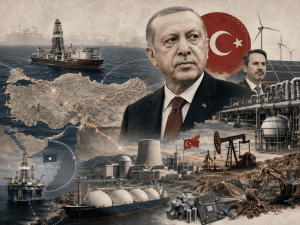
At present, it cannot be argued that Türkiye possesses the capability to produce nuclear weapons. The country has a long history of nuclear research, a highly qualified scientific community, the Akkuyu Nuclear Power Plant, and significant thorium reserves. However, it lacks the highly enriched uranium production or plutonium reprocessing infrastructure required for a nuclear weapons program. Moreover, Türkiye is a party to the Treaty on the Non-Proliferation of Nuclear Weapons (NPT), and launching such a program would expose the country to severe economic sanctions, diplomatic isolation, and significant political costs.
So why does Türkiye continue to feature in these discussions?
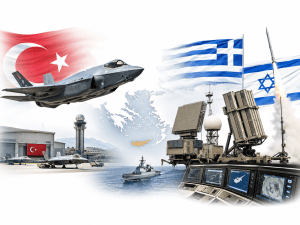
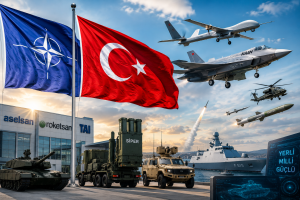
Because over the past decade, Türkiye’s advances in its defense industry, long-range missile programs, space initiatives, and pursuit of greater strategic autonomy have begun to alter the regional balance of power. The concerns reflected in The Washington Post are therefore rooted not in Türkiye’s current capabilities, but in its future potential.
In reality, the nuclear debate is less technical than it is political.
The true power of nuclear weapons lies not in their use, but in the deterrence created by the possibility that they could be used. Russia’s global influence stems not only from its economic or conventional military strength, but also from its vast nuclear arsenal. Despite enduring some of the world’s harshest sanctions, North Korea has largely preserved its regime through nuclear deterrence. Iran, meanwhile, has managed to gain considerable strategic leverage even without officially declaring itself a nuclear-armed state.
Recent history has also demonstrated that international security guarantees are not always sufficient. Ukraine surrendered the world’s third-largest nuclear arsenal in exchange for security assurances, yet it first lost Crimea and later found itself confronting a full-scale war. Libya voluntarily abandoned its nuclear program, but that decision ultimately failed to guarantee the country’s long-term security. These examples have led many states to question whether the security commitments made by major powers can truly be relied upon in times of crisis.
On the other hand, if Türkiye were ever to pursue nuclear weapons, the consequences would extend far beyond Ankara. Such a decision could fundamentally alter the strategic landscape of the Middle East. Saudi Arabia, Egypt, and other regional actors might feel compelled to follow a similar path, potentially triggering a chain reaction of nuclear proliferation across the region. For that reason, this debate is about far more than Türkiye’s security alone; it is equally about preserving regional stability.
Yet there is an even more fundamental question before us.
If nuclear weapons truly represent a universal threat to humanity, why are they considered a legitimate instrument of security when possessed by some states, while being deemed unacceptable when sought by others? If nuclear deterrence is regarded as an indispensable pillar of international security, why is that privilege reserved for only a handful of countries?
Perhaps, then, the real issue is not whether Türkiye should acquire nuclear weapons, but whether a global order built upon unequal security and strategic privilege remains sustainable. Israel’s concern about Türkiye is significant precisely because it reflects a broader reality: the existing nuclear order is increasingly being questioned as global and regional power balances continue to evolve.