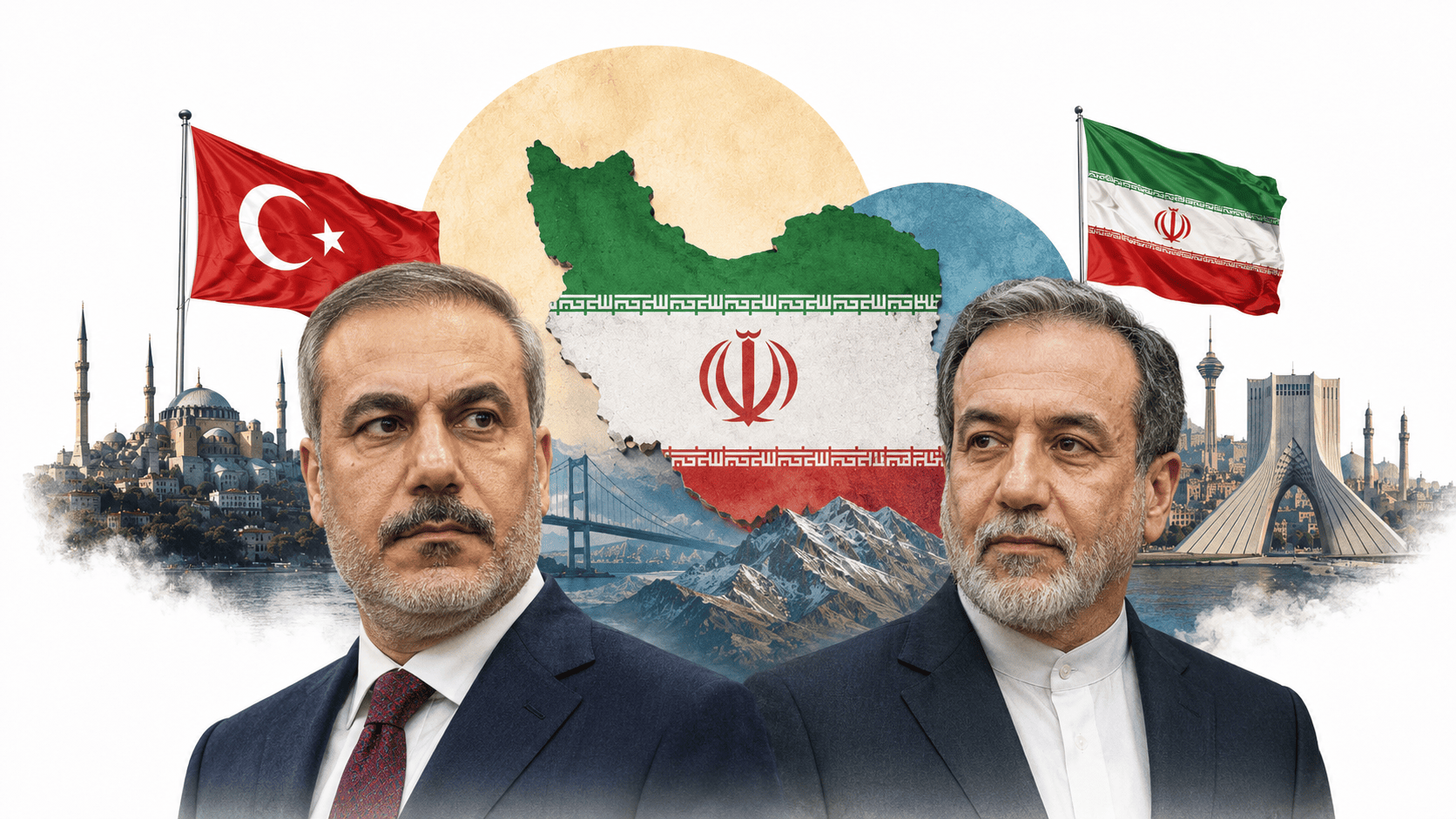

A striking statement recently made by Iranian Foreign Minister Abbas Araghchi attracted widespread international attention. Araghchi said that during the Israeli and US attacks on Iran, a Kurdish uprising was being planned that would begin in Iraq and spread into Iranian territory. According to him, the plan failed because of Türkiye’s firm position. He also claimed that Turkish Foreign Minister Hakan Fidan’s talks with US officials played an important role in this process.
This statement raises an important question: Why does Türkiye oppose the weakening, or even the fragmentation, of Iran despite having competed with it on numerous issues for many years?
The rivalry between Türkiye and Iran dates back several centuries. The wars between the Ottoman and Safavid empires ended with the 1639 Treaty of Qasr-e Shirin, which largely established the present-day border between the two countries. Remarkably, that border has remained mostly unchanged for nearly four centuries.
During the republican era, the two countries also adopted opposing positions on various issues, from Syria and Iraq to the South Caucasus and Central Asia. Yet this competition never developed into a struggle aimed at bringing about the complete collapse of either state.
The main reason is clear: Türkiye and Iran may be rivals, but each is also an important component of the other’s security balance.
From Ankara’s perspective, a strong Iran may at times mean greater diplomatic competition. A fragmented Iran, however, would create far more serious security risks.
Türkiye shares a land border of approximately 560 kilometres with Iran. Any large-scale disintegration of the Iranian state would not remain an internal Iranian matter. Its consequences would quickly reach Türkiye’s borders.
First, severe instability in Iran could trigger new waves of migration. The displacement of millions of people would place an even heavier burden on Türkiye, which is already facing considerable migratory pressure.
Another danger would be the security vacuum created by the weakening of central authority. In areas where state control declined, armed groups, smuggling networks and terrorist organisations would gain greater freedom of movement. Uncontrolled territories in northwestern Iran could offer new areas of operation to various organisations, including groups affiliated with the PKK.
Iran’s fragmentation could also fundamentally transform the regional balance of power. Across a vast area stretching from Iraq and Syria to the Caucasus and the Persian Gulf, borders and spheres of influence could once again be called into question. Such a domino effect would directly threaten not only Iran, but also Türkiye’s security, energy infrastructure and trade corridors.
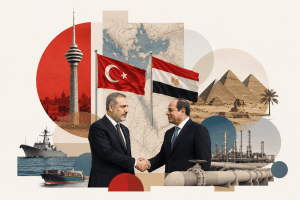
In recent years, Türkiye has repeatedly emphasised in its official statements the importance of protecting the sovereignty and territorial integrity of neighbouring countries. During their joint press conference in January 2026, Hakan Fidan and Abbas Araghchi also highlighted the importance of regional stability and dialogue mechanisms.
Ultimately, Ankara’s defence of Iran’s territorial integrity does not stem from any special affinity with the Iranian government. For Türkiye, the issue is not the nature of the regime but the geopolitical balance. Even while competing with Iran, Ankara regards the continued existence of a stable, predictable and governable neighbour, rather than a weakened and fragmented state, as one of the fundamental pillars of its own national security.