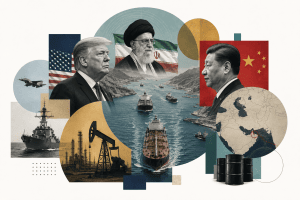
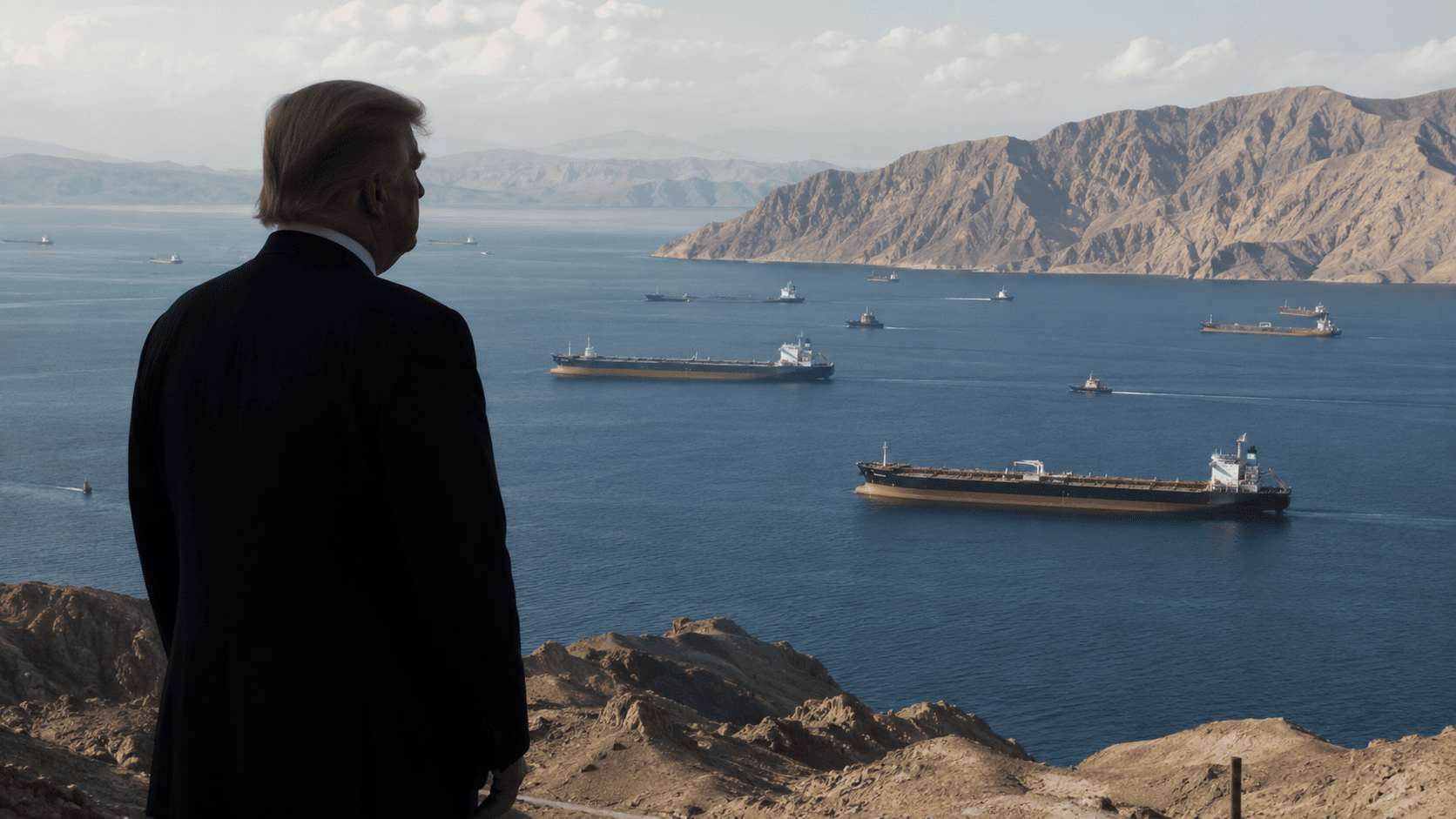
On 13 July, US President Donald Trump said that the United States would keep the Strait of Hormuz “under its control,” that Washington would probably manage traffic through the waterway, and that it would demand payment in return for ensuring its security. Iran responded by declaring that it would not allow the United States to intervene in the strait.
At first glance, Trump’s remarks may appear to be a more explicit and commercial description of the security role that the US Navy has played in the Gulf for many years. Yet the statement that “we will manage the strait” carries implications that go far beyond protecting international maritime trade.
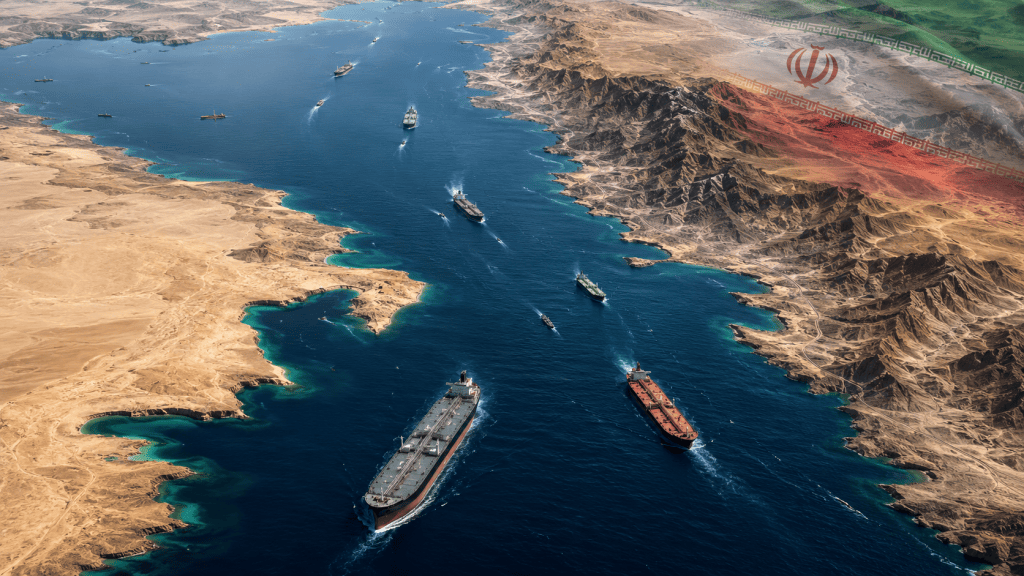
The Strait of Hormuz is one of the most sensitive chokepoints in the global oil trade. Located between Iran and Oman, this narrow passage connects the oil and natural gas producers of the Persian Gulf to the Indian Ocean. A significant share of the energy exports of Saudi Arabia, the United Arab Emirates, Kuwait, Iraq and Qatar passes through it.
According to the US Energy Information Administration, 89 per cent of the crude oil and condensate transported through the Strait of Hormuz in the first half of 2025 was destined for Asian markets. China, India, Japan and South Korea together accounted for approximately three quarters of the total shipments.
Having a say over Hormuz therefore means controlling not only the Gulf, but also the energy arteries of Asia.
Iran’s Most Powerful Instrument of Pressure
For Iran, the Strait of Hormuz is one of its most important strategic assets. Tehran cannot match the United States in military or economic power. However, its coastal geography, naval mines, drones, missiles and small fast-attack boats give it the ability to seriously disrupt commercial traffic through the strait.
Iran does not necessarily need to close the waterway completely for an extended period. Simply increasing insurance costs for oil tankers, forcing companies to use alternative routes and creating uncertainty in oil markets could place considerable pressure on the global economy. Iran is therefore attempting to compensate for its military weakness by exploiting the vulnerability of international energy markets.
Hormuz also strengthens Tehran’s hand at the negotiating table. Any military attack or economic sanction against Iran would threaten not only the Iranian economy, but also the countries that import energy from the Gulf. For Iran, the security of the strait is therefore both a defensive line and an instrument of economic deterrence against the United States and its allies.
Iran’s Khatam al-Anbiya Central Headquarters had already stated that any US intervention in the strait’s security arrangements would be regarded as a threat to Iran’s national security and would prompt a response.
Trump’s assertion that “Iran has nothing” is intended to portray this strategic asset as ineffective. By declaring that the rules governing passage through Hormuz will be determined by the United States rather than Iran, Washington is seeking to weaken Tehran’s negotiating leverage.
Iran Is Not Washington’s Only Target
Although the Strait of Hormuz remains important to the United States, the American economy is less dependent on Gulf oil than it was in the past. Most of the oil transported through the strait is now purchased by Asian countries. Washington’s military dominance over Hormuz therefore cannot be explained solely by US energy-security concerns.
For the United States, the real issue is deciding who will guarantee the security of global energy flows and who will have the power to restrict them when necessary.
This is where China comes into the picture. China is one of the world’s largest oil importers and remains heavily dependent on energy supplies from Gulf countries. According to some estimates, approximately 45 to 50 per cent of China’s crude oil imports pass through the Strait of Hormuz. China is also the largest buyer of Iranian oil.
US military control over Hormuz would therefore create a major strategic vulnerability for Beijing. A large share of the oil required for China’s industrial production, transport system and economic growth travels through a maritime route controlled by its principal strategic rival. This lies at the heart of the “energy-security dilemma” that Beijing has long been attempting to resolve.
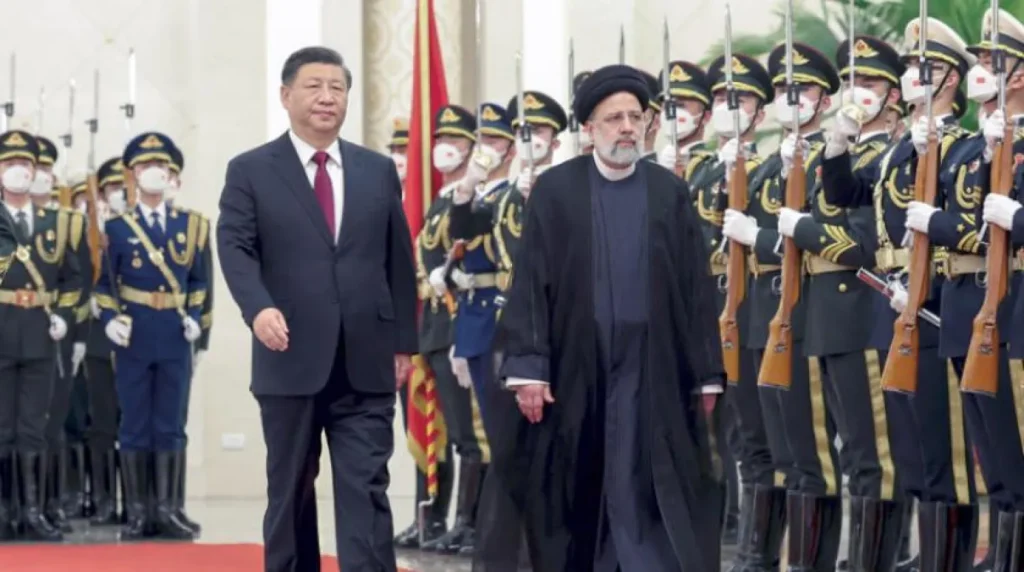
Trump’s desire to become the guardian of the strait and charge for safe passage shows that the United States wants to convert its role as a security provider into direct economic and political influence. Washington is sending a clear message to the Gulf states, Europe and especially Asian oil importers: the continuity of your energy trade depends on American military power.
Trump’s statement, however, does not grant the United States any unilateral authority under international law to administer the strait or collect passage fees. The shores of the strait fall under the sovereignty of Iran and Oman. Washington’s claim that it will “manage” the waterway is therefore less a legally recognised authority than a political display of power based on military superiority.
The struggle surrounding the Strait of Hormuz is not merely a dispute over sovereignty between the United States and Iran. While Iran is seeking to use the waterway to protect the regime and strengthen its negotiating position, the United States wants to transform the same route into a control point for the global energy order.
The long-term consequences of this struggle will be felt most strongly in Beijing. The United States has already placed pressure on China in the fields of technology, semiconductors and trade. Energy routes are now being added to that list. China’s investments in overland pipelines running through Russia and Central Asia, strategic oil reserves and alternative maritime routes are all driven by its determination to reduce this vulnerability.
If Trump succeeds in establishing the United States as the “guardian” of the Strait of Hormuz, the waterway could become one of the most critical fronts in the US-China rivalry, far beyond the conflict between Washington and Tehran. In the great-power competition of the future, the question will not simply be who produces the oil, but also which route it takes and whose permission is required to transport it.