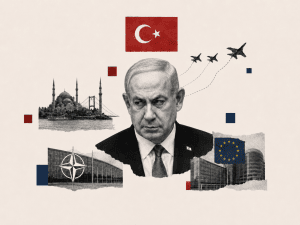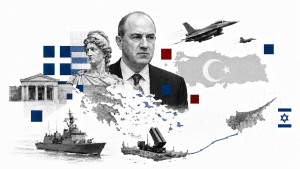

The Israeli government has taken a decision it had long refused to embrace: it has recognized the events of 1915 as “genocide,” precisely at a time when relations between Türkiye and Israel have reached a historic level of tension. The timing is, of course, anything but coincidental. Netanyahu’s government now sees Türkiye as an obstacle to its strategic objectives, even as an enemy.
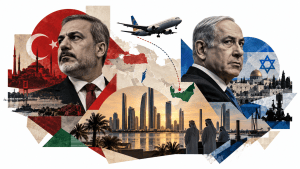
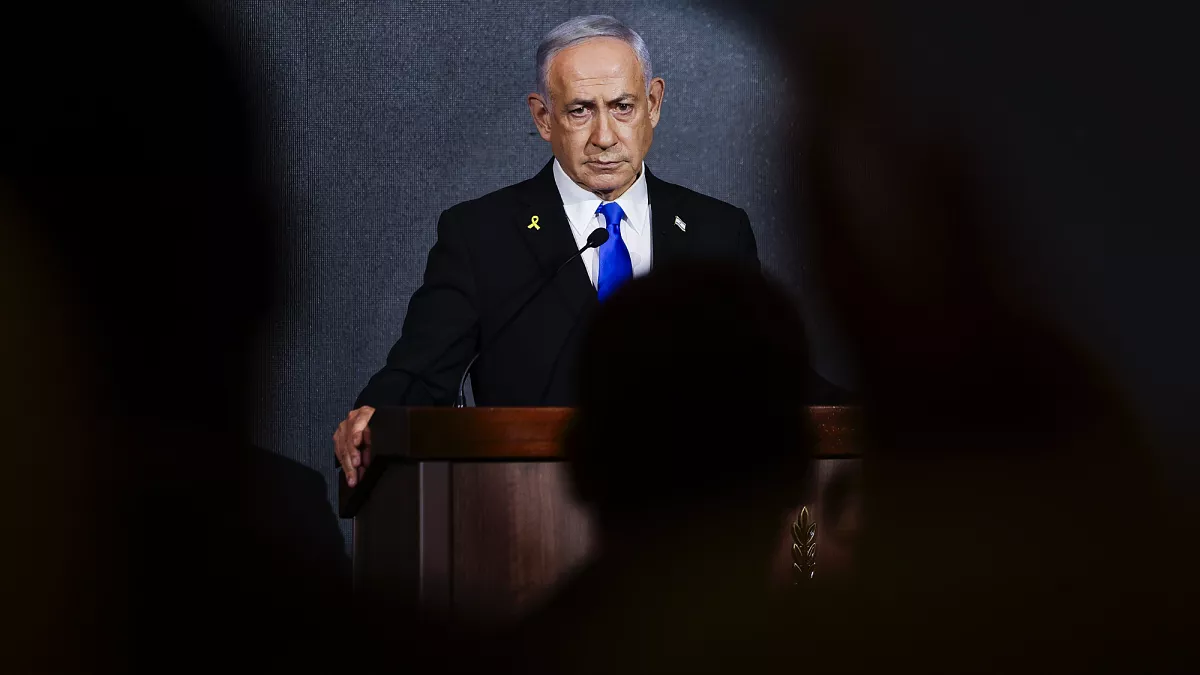
Netanyahu’s recent statements clearly reflect this mindset. The Israeli Prime Minister claimed that “hardly a day goes by without Erdoğan calling for the destruction of the State of Israel,” that Israel takes these remarks “very seriously,” and that it would bring the matter to the attention of its “American friends.”
To understand these remarks, they must be placed in their broader context. The NATO summit in Ankara is now just days away. With U.S. President Donald Trump expected to attend, the summit is already being described as one of the most important in the history of the Alliance. And on the eve of this meeting, Washington has sent extremely positive signals to Ankara.
The Trump administration has notified Congress of a roughly $700 million engine sale for Türkiye’s KAAN fighter jet. At the same time, Türkiye’s possible return to the F-35 fighter jet program is once again on the agenda. This is precisely the backdrop that explains Netanyahu’s anger.
The divergence between Washington and Tel Aviv, which became more visible with the U.S.-Iran agreement, could deepen further if Trump grants Türkiye new strategic advantages. For Israel, the real issue is Türkiye’s growing air power in the region. Tel Aviv does not see the strengthening of Turkish defense capabilities as a mere military development, but as an existential challenge to its own regional superiority.
That is why Netanyahu’s statement, that Israel would bring Erdoğan’s “threats” to the attention of its American friends, is not simply a diplomatic reaction. The implicit message is clear: Israel will do everything in its power, through its lobbying networks in the United States and political circles close to it, to prevent Türkiye’s return to the F-35 program.
The decision to bring the issue of 1915 back to the table is part of the same strategy. At a time when Türkiye and Armenia are experiencing a historic rapprochement, when Nikol Pashinyan is speaking of trade between the two countries, the opening of borders and reciprocal visits between their peoples, Netanyahu’s move is not only aimed at sabotaging the normalization process between Ankara and Yerevan. It also seeks to divert attention from the crimes committed by Israel in Gaza.
Today, the eyes of the entire world are fixed on the human tragedy unfolding in the Gaza Strip. A United Nations-mandated commission of inquiry has stated that Israel deliberately targeted Palestinian children, amounting in the Gaza Strip to genocide, crimes against humanity and war crimes, as well as war crimes in the occupied West Bank.
It is precisely at this moment that Netanyahu is trying, like a magician, to shift attention from the present to the past. While the responsibility of his own government in Gaza is under scrutiny, he turns another historical pain into political ammunition. He is not invoking a tragedy of the past in the name of humanity, but using it as a diplomatic lever against Türkiye.
As for President Erdoğan’s firm statements against Israel, Netanyahu presents them as if they emerged in a vacuum, without context or reason. Yet Türkiye’s reaction must be understood against the backdrop of the destruction that has been unfolding in Gaza for months before the eyes of the world, the targeting of civilians and Israel’s expansionist policies in the region.
Today, the Netanyahu government is trying at once to portray Türkiye as an enemy, instrumentalize the Armenian question and obscure the crimes committed in Gaza. Using one human tragedy to conceal another, while distorting historical facts according to political interests, is not a moral position. It is a desperate and cynical political maneuver.
The real question, therefore, remains unanswered:
When will Israel be held accountable for the crimes committed in Gaza?