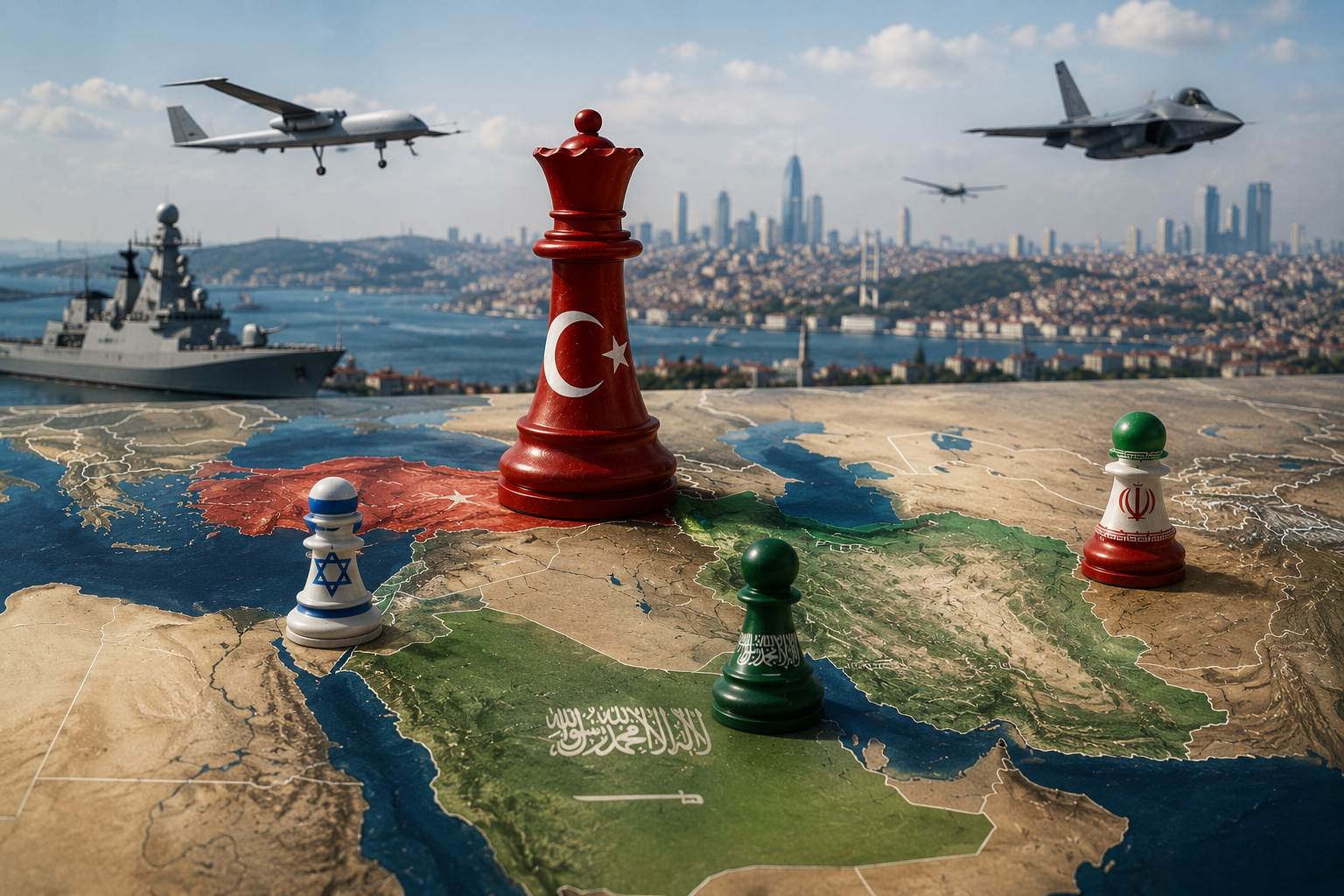
History sometimes changes course with a single agreement. The announcement on June 15, 2026, of a memorandum of understanding between the United States and Iran aimed at ending 107 days of fighting could prove to be one of those turning points. Presented by Pakistani Prime Minister Shehbaz Sharif, the understanding was also confirmed by U.S. President Donald Trump and Iranian officials. The parties are expected to formally sign the agreement on June 19 at a ceremony in Geneva, Switzerland.
This development does not merely bring a war to an end; it also shakes a regional balance of power that has been taking shape for decades. In the aftermath of the conflict, Iran has emerged seriously weakened militarily, politically and economically. Tehran’s spheres of influence, proxy networks and deterrence capacity have been significantly eroded. The resulting vacuum is now opening the door to new actors. Among the countries best prepared for this new phase, Türkiye stands out as one of the leading contenders.
Iran’s Retreat Is Reshaping the Regional Balance
Iran’s influence in the Middle East was not built overnight. It was the result of a strategy patiently developed over more than two decades. Following the 2003 Iraq War, Tehran steadily expanded its regional footprint through an extensive network of allies and armed groups, ranging from Iraqi Shiite militias and Lebanon’s Hezbollah to Hamas and the Houthis in Yemen.
However, this architecture of influence has begun to fracture in recent years. The June 2025 Israel-Iran conflict, often referred to as the “Twelve-Day War,” marked a major turning point. Strikes targeting Iran’s military and nuclear infrastructure, combined with the weakening of several Tehran-backed groups across the region, dealt a severe blow to Iran’s long-standing strategy of forward defense.
Today, Iran finds itself negotiating from a far less advantageous position than in the past. Commitments regarding its nuclear program, restrictions on uranium enrichment, and efforts to secure sanctions relief all point to a new priority: achieving economic breathing room, even at the cost of strategic concessions.
None of this means that Iran will disappear from the regional equation. However, its ability to regain the level of influence it wielded until recently appears increasingly uncertain. This shift is paving the way for a profound reconfiguration of power across the Middle East.
Türkiye Is Emerging as a Leading Contender
Every retreat of Iranian influence creates new opportunities. Whether in Syria, Iraq, the Gulf monarchies, energy corridors, or regional mediation efforts, the need for stable and influential actors remains significant.
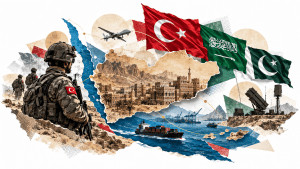
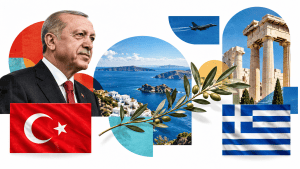
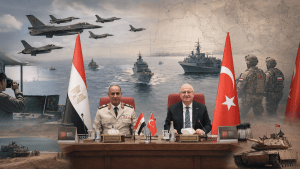
Türkiye has spent the past several years strengthening its position in precisely these areas. President Recep Tayyip Erdoğan’s active diplomacy, the remarkable growth of Türkiye’s defense industry, changing dynamics in Syria, improving relations with Egypt and the Gulf states, and sustained channels of communication with the Trump administration have all contributed to enhancing Ankara’s regional standing.
Türkiye’s advantages extend far beyond diplomacy. Its unique geographic position, NATO membership, historical ties across the region, and ability to engage with actors who are often at odds with one another give Ankara a distinctive role in regional affairs.
Militarily, Türkiye also possesses substantial strengths. According to 2026 rankings, it now has the most powerful military in the Middle East, ahead of both Israel and Iran. The rapid expansion of its defense industry, demonstrated by the success of its drones, missile systems, and advanced aerospace programs, has further reinforced this position.
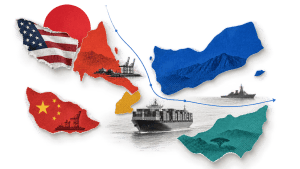
Energy geopolitics is also working in Ankara’s favor. Tensions surrounding the Strait of Hormuz during the conflict highlighted the vulnerability of traditional energy routes. As a result, the Trans-Caspian Corridor, the Baku-Tbilisi-Ceyhan pipeline, and the Turkish Straits have become even more strategically important. This central position provides Türkiye with additional leverage in both economic and geopolitical negotiations.
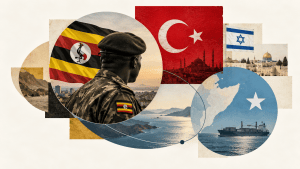
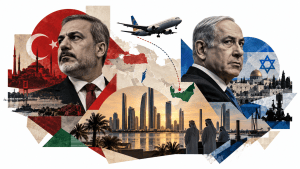
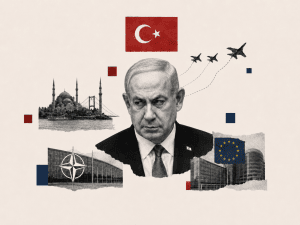
Yet opportunities are accompanied by new challenges. Türkiye is not the only country seeking to capitalize on Iran’s decline. Israel, too, is working to expand and consolidate its regional influence, intensifying competition between Ankara and Tel Aviv.
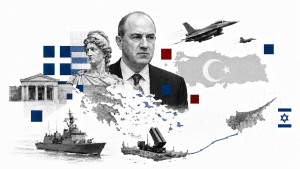
Syria, Gaza, the Eastern Mediterranean, and the future regional security architecture have emerged as key areas of friction between the two countries. From Ankara’s perspective, certain Israeli initiatives in Syria are increasingly viewed as direct threats to Türkiye’s security interests. At the same time, Türkiye’s growing diplomatic and military capabilities are strengthening its determination to play a larger role in shaping the region’s future.
In the years ahead, this rivalry could become one of the principal drivers of the Middle East’s ongoing transformation. The question of who will fill the vacuum left by Iran’s weakening influence will depend not only on Türkiye’s rise, but also on how its strategic competition with Israel evolves.
One thing, however, is already clear: the Middle East is entering a new era of geopolitical realignment, and Türkiye is no longer watching from the sidelines. It is increasingly becoming one of the central players shaping the region’s future.