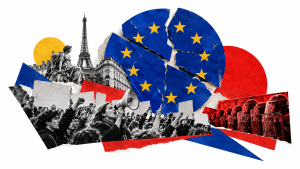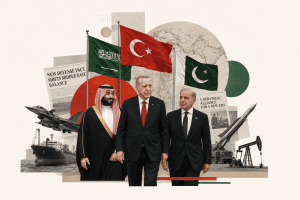

Whenever Türkiye is discussed, Western media rarely miss an opportunity to criticize its democracy. Publications such as The Economist, The Telegraph, and Financial Times have produced countless analyses highlighting what they see as the shortcomings of the Turkish political system.
Yet if the same critical lens is turned toward the United Kingdom today, a rather striking picture begins to emerge.
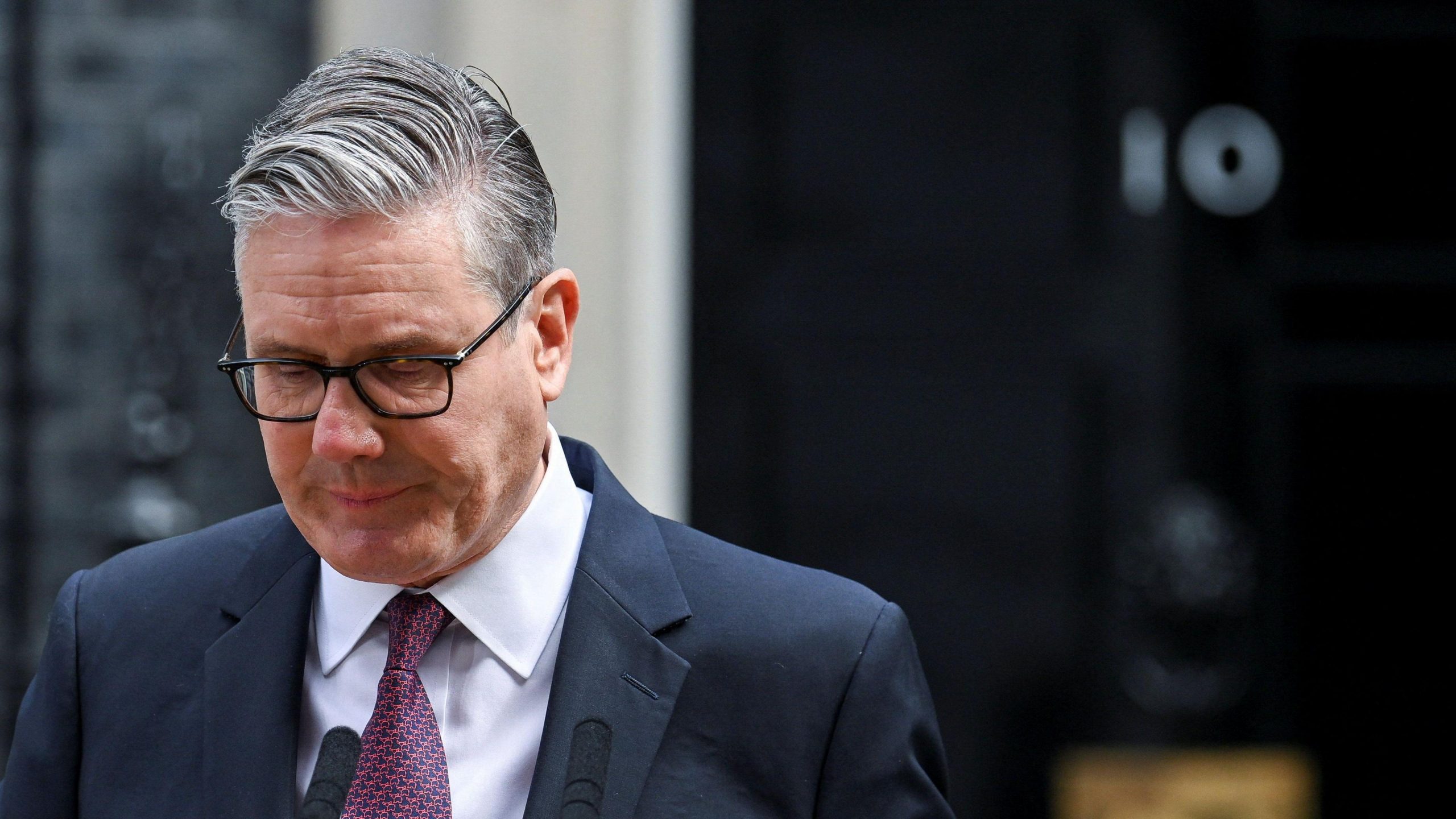
With Keir Starmer’s resignation, Britain is preparing to welcome its seventh Prime Minister in just over a decade. David Cameron, Theresa May, Boris Johnson, Liz Truss, Rishi Sunak, and now Keir Starmer.
Can a country that presents itself as a global model of democratic stability genuinely claim such a reputation while changing its head of government so frequently?
The central promise of democracy is that leaders chosen by the people are able to govern with stability and legitimacy. In recent years, however, British Prime Ministers have increasingly lost office not because voters removed them at the ballot box, but because of internal party struggles and leadership contests. As a result, British citizens have repeatedly found themselves governed by leaders whom they never directly selected for the country’s highest office.
The issue extends beyond political instability alone. The British Prime Minister is still formally appointed by the monarch. After an election, the incoming Prime Minister travels to Buckingham Palace to receive the King’s invitation to form a government.
Legally, this is largely a constitutional formality. Yet even in the twenty first century, the fact that executive authority is still ceremonially completed through royal appointment continues to raise questions. The House of Lords presents another anomaly. A significant proportion of its members are not elected by the public.
Equally concerning is the growing crisis of political representation. Public opinion surveys have consistently shown declining trust in Parliament, political parties, and the government. Confidence in Britain’s democratic institutions has steadily eroded.
Keir Starmer’s resignation can be seen as the latest manifestation of that broader loss of confidence. Reports suggest that internal pressure within the Labour Party, falling approval ratings, Andy Burnham’s growing influence, and concerns over future elections all contributed to weakening his position.
The timing of his resignation has also attracted attention. Before Starmer publicly announced his decision, U.S. President Donald Trump had already disclosed it, surprising political circles in London. Several American media outlets likewise described the episode as highly unusual.
It would be premature to draw definitive conclusions from this sequence of events. Nevertheless, recent differences between Washington and London over Iran, Ukraine, and broader defence policy provide an important geopolitical backdrop that cannot simply be ignored.
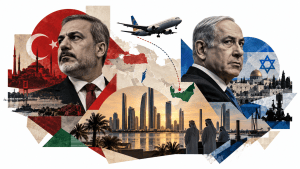
At the same time, strategic cooperation between the United Kingdom and Türkiye has deepened considerably, particularly in the defence industry. As Europe’s security architecture undergoes profound transformation, this partnership has become increasingly significant. It is also widely understood that this growing cooperation has caused concern in Israel. For that reason, any leadership change in London is likely to be closely watched, not only for its impact on UK-Türkiye relations, but also for its broader implications across the region.
Domestically, Starmer faced no shortage of challenges. Britain’s economy continues to struggle in the aftermath of Brexit, while persistent inflation, the energy crisis, mounting pressures on the National Health Service, and increasingly contentious debates over irregular migration have further weakened public confidence in the political system.
The brutal killing of a Northern Irish citizen by a Sudanese migrant, followed by widespread street protests, offered another stark reminder of the social tensions currently affecting the country.
At this point, the issue extends far beyond Keir Starmer’s resignation. The real question is whether the democratic systems that the West holds up as models, while persistently criticizing Türkiye’s democracy, are truly as democratic as they claim to be.
Perhaps the question that now deserves to be asked is this:
In the United Kingdom, is it really the monarchy that has become symbolic, or democracy itself?