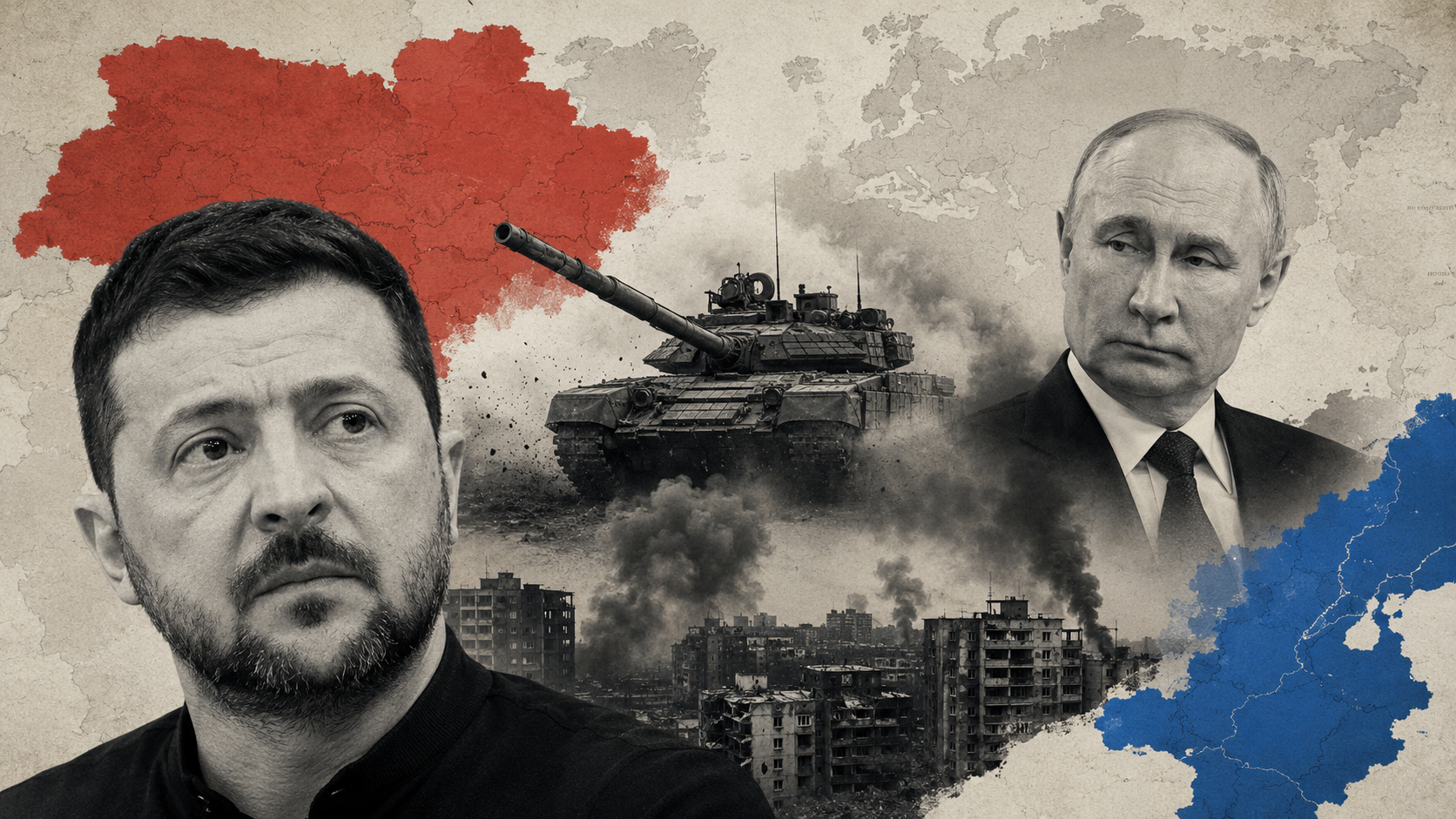
Although Russia’s full-scale invasion of Ukraine began on February 24, 2022, the roots of the war go much further back, to NATO’s post-Cold War expansion toward the east.
For years, Russia has viewed NATO’s approach toward the former Soviet space as a direct threat to its own security sphere. After Poland, the Baltic states, and several Eastern European countries joined NATO, Ukraine’s own movement toward the Western security architecture came to be seen in Moscow as a “red line.”
This unease deepened further with the Orange Revolution of 2004. The strengthening of a pro-Western political line in Ukraine was interpreted by Moscow as a sign that Kyiv was gradually moving out of Russia’s sphere of influence and that the West had arrived “right at its doorstep.” The 2008 NATO summit in Bucharest, where the Alliance declared that Ukraine and Georgia would one day become members, further reinforced the Kremlin’s perception of encirclement.
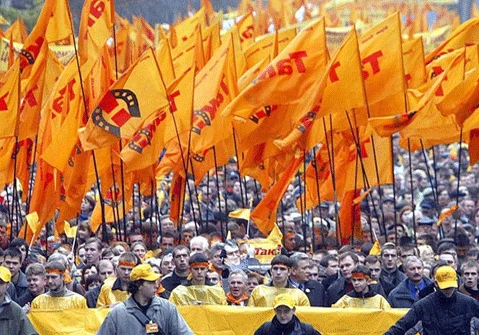
The annexation of Crimea in 2014 and the emergence of separatist movements in the Donbas marked the first concrete eruption of this tension. The full-scale invasion of 2022 was then framed by Moscow as a continuation of this process, while for Kyiv it represented a direct assault on the very existence of the Ukrainian state.
The human and territorial cost of the war has been severe. Although the figures released by the two sides regarding military losses are contradictory, estimates by independent organizations indicate that the number of dead and wounded has reached several hundred thousand on both sides. The United Nations has documented tens of thousands of civilians killed or injured throughout the war. In May 2026 alone, at least 274 civilians were killed and 1,763 people were injured in Ukraine, marking the highest monthly civilian casualty toll since April 2022.
The war has also triggered one of the largest waves of displacement in Europe since the Second World War. Millions of Ukrainians have sought refuge abroad, while millions more have been displaced within the country. Today, Russia controls around one-fifth of Ukrainian territory, including Crimea.
Despite this grim picture, the war continues. Under Türkiye’s mediation, the two sides have met several times in Istanbul since 2022; prisoner exchanges have taken place, a grain corridor was established, and limited progress was achieved on humanitarian files. Yet these contacts have not turned into a lasting ceasefire.
Donald Trump, too, has claimed since his election campaign that he could end the war in a very short period of time. After taking office, he launched an intensive diplomatic effort. But so far, none of these initiatives has been sufficient to resolve the central knot of the war.
Because the issue is not simply a matter of bringing two leaders to the same table. The real problem is that the positions of the two sides on the Donbas, NATO, security guarantees, and Western support remain fundamentally opposed.
The Donbas Knot
The deadlock in this war is concentrated around one central issue: the Donbas.
Russia does not want to end the war without bringing this region formally and effectively under its control. Ukraine, meanwhile, refuses to accept the loss of the Donbas.
The first reason why the Donbas has become such an intractable issue is that the region carries both ideological and strategic significance for Russia. Donetsk and Luhansk are regions bordering Russia, with a large Russian-speaking population. From the very beginning of the war, Putin has described these territories as an inseparable part of the “Russian World” and has repeatedly used the argument that the Russian-speaking population there must be “protected” from Ukrainian nationalist and far-right groups.
For the Kremlin, this discourse is not merely a propaganda tool. It is also one of the pillars of the “historical Russia” narrative on which Putin has built his rule. Giving up the Donbas would therefore mean not only a military withdrawal for Moscow, but also the collapse of this narrative and a serious loss of prestige.
Yet reducing the issue solely to identity politics would also be misleading. The Donbas is also one of Ukraine’s most important industrial and mining basins. Coal, steel, and heavy industry make the region critical for the country’s economy. For Ukraine, therefore, giving up Donetsk and Luhansk would not only amount to symbolic surrender; it would also mean abandoning part of the country’s production capacity, strategic depth, and the principle of territorial integrity.
This is why both sides see the Donbas as non-negotiable. For Russia, victory cannot be declared without taking the Donbas. For Ukraine, abandoning the Donbas would wound the very principle of state sovereignty.
Recent diplomatic contacts clearly illustrate this deadlock. According to Middle East Eye, during his visit to Moscow on June 16-17, Turkish Foreign Minister Hakan Fidan raised the idea of a ceasefire and a return to negotiations in his meetings with Putin, Lavrov, and other Russian officials. Türkiye’s goal was to open at least a diplomatic window that could halt the war and bring the parties back to the negotiating table.
Russia, however, politely rejected this proposal. Moscow sees a temporary ceasefire as an interim formula that would give Ukraine time to regroup. The Kremlin’s priority is to transform its military gains in the Donbas into a political outcome. Russia does not merely want the current front line to be frozen; it wants Ukraine to recognize Russia’s annexation of the Donbas.
For Kyiv, that is an impossible condition to accept.
Ukraine believes that abandoning the Donbas would legitimize the redrawing of borders by force. According to Kyiv, such a concession would not end the war, but could instead pave the way for further Russian demands in the future.
That is why every negotiation, sooner or later, gets stuck at the same point. Without resolving the Donbas issue, a lasting peace does not appear realistic for now.
The Role of External Actors
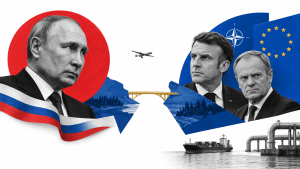
The second reason the war continues is that the conflict is no longer merely a war between Russia and Ukraine. It has gradually turned into an indirect power struggle between Russia and the West.
By imposing heavy sanctions on Russia and providing Ukraine with military, financial, and intelligence support, the United States and European countries have largely sustained Kyiv’s ability to continue the war. Air defense systems, artillery ammunition, armored vehicles, long-range missiles, satellite intelligence, training support, and drone technology have become some of the key factors shaping Ukraine’s resistance on the battlefield.
From Moscow’s perspective, however, this support is not ordinary assistance to Ukraine; it is an indirect NATO war being waged against Russia on Ukrainian territory. The Kremlin believes that the West’s objective is not only to defend Ukraine, but also to wear Russia down, weaken it economically, and encircle it strategically.
This perception further prolongs the war. As long as Western support continues, Ukraine feels less pressure to make concessions at the negotiating table. Russia, in turn, interprets this support as proof that the threat to its own security persists, and views any retreat as a continuation of that strategic danger.
Indeed, the first negotiations held in Istanbul in 2022 were seen as one of the moments when a diplomatic end to the war came closest. The two sides worked on a draft text based on Ukraine renouncing NATO membership, adopting a neutral status, and receiving security guarantees in return. Putin later claimed that this process could have led to peace, but that then British Prime Minister Boris Johnson traveled to Kyiv and persuaded Ukraine to abandon the agreement.
More recently, Ukraine’s large-scale drone attacks deep inside Russian territory have made Western support for Ukraine even more visible. The targeting of oil refineries around Moscow, the difficulties faced by Russian air defenses even near the capital, and fuel shortages caused by Ukrainian strikes on Russian energy infrastructure all show that the war is no longer confined to the Donbas front line.
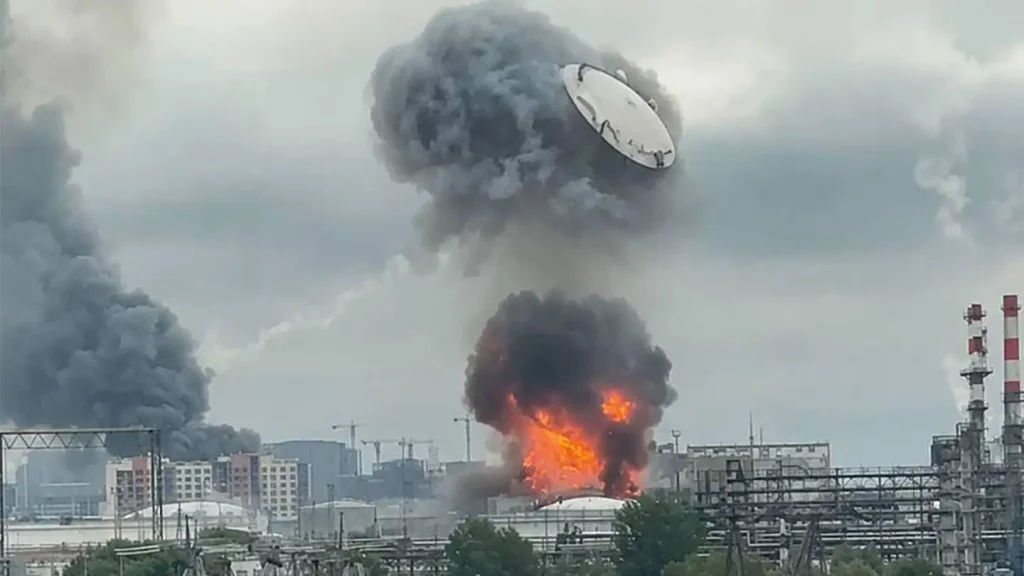
According to Reuters, more than 80 drones heading toward Moscow were shot down in June 2026; the attacks came shortly after Moscow’s only oil refinery was targeted. During the same period, Ukrainian strikes against Russia’s fuel production and supply lines caused fuel shortages stretching from Crimea to southern Russia and even to Moscow.
For Ukraine, these attacks are part of a strategy to make Russian society feel the war and increase pressure on Moscow. But for Russia, this picture reinforces the argument that the West is using Ukraine to bring the war inside Russia itself.
This is where the vicious cycle that makes ending the war so difficult emerges: Western support enables Ukraine to resist; as Ukraine resists, Russia increases its pressure; as Russia intensifies that pressure, the West provides even more support to Ukraine. As long as this cycle remains unbroken, the rapid solution promised by Trump becomes effectively impossible.
Because the issue is no longer simply an agreement between Moscow and Kyiv. It is now a much larger strategic equation in which the security calculations of the United States, Europe, NATO, and Russia are deeply intertwined.
So the question is this: will this war, which has effectively turned into a frozen front line, remain confined within Ukraine’s borders, or does it also carry the risk of spreading toward NATO’s eastern flank?
This is where the real danger begins. As Western support for Ukraine increases, Russia may respond by turning toward hybrid pressure strategies targeting the Baltic states, Poland, Romania, the Black Sea corridor, and Eastern Europe more broadly. Border violations, cyberattacks, sabotage attempts, GPS jamming, operations against energy infrastructure, and airspace provocations are already visible signs of this process.
In this scenario, the war may not turn into a direct NATO-Russia confrontation in the short term. But a low-intensity, permanent, and difficult-to-control line of tension could settle along Europe’s eastern border. That would transform the war in Ukraine from a regional crisis into a much larger issue concerning the entire security architecture of Europe.
This is why the continuation of the war is critical not only for Ukraine’s future, but also for global security balances. Because this war, deadlocked in the Donbas, has become a crisis dangerous enough, if not properly managed, to expand into a much broader front and, with the slightest miscalculation, bring NATO and Russia into direct confrontation.