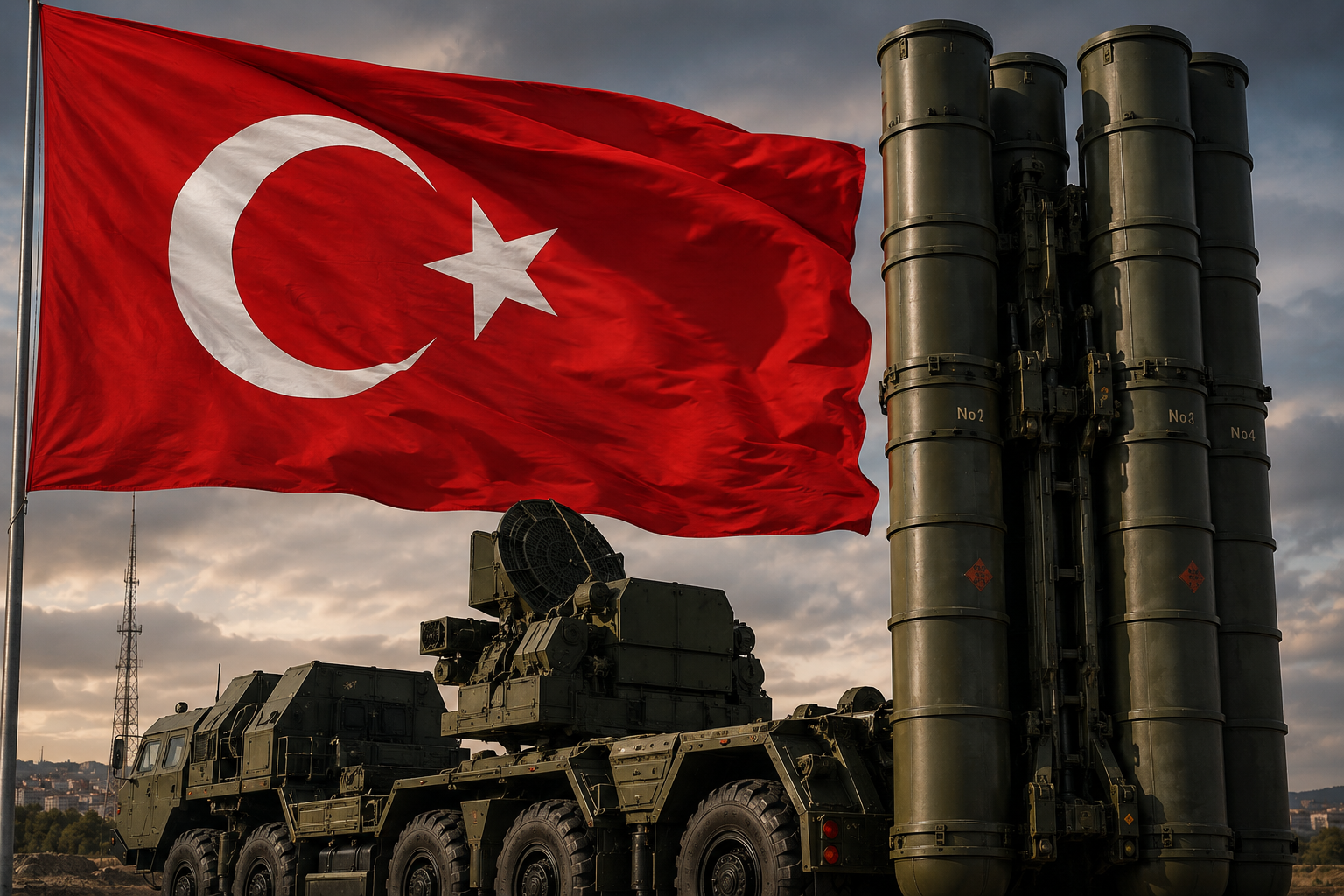

The future of the S-400 air defense systems that Türkiye purchased from Russia—and that ultimately led to its removal from the F-35 fighter jet program—has remained one of the most debated issues in the country for years.
Shortly before Donald Trump returned to the White House for a second term, I argued that Türkiye could rejoin the F-35 program during this new political era.
That assessment was based on my belief that Trump would seek to maintain close ties with Türkiye throughout his second presidency.
Since then, however, the world has changed dramatically. As the war in Ukraine entered its fourth year and conflicts in Gaza, Lebanon, Yemen, and Iran reshaped the regional balance of power, Türkiye also began recalibrating its foreign policy.
The NATO Summit held in Ankara just days ago continues to dominate international headlines. By successfully hosting the summit, Türkiye delivered a clear message to the world: as NATO’s second-largest military power, it remains one of the cornerstones of the Western security architecture.
One of the most widely discussed aspects of the summit was the warm relationship displayed between U.S. President Donald Trump and President Recep Tayyip Erdoğan. Trump announced that the CAATSA sanctions imposed on Türkiye would be lifted, while also signaling that the path toward Ankara’s return to the F-35 program was reopening.
To be honest, the announcement did not come as a surprise to me. In an analysis I published long before these developments, I argued that the F-35 dispute would eventually be resolved and that the Turkish state was already exploring various options to overcome the S-400 impasse.
At this point, it is worth making an important observation. From the very beginning, the S-400 dispute was largely a political pretext rather than a genuine technical problem. Another NATO member, Greece, possesses S-300 systems without ever facing comparable sanctions. One of the principal reasons behind the crisis was the influence exerted by Israel within the U.S. Congress, where many sought to prevent Türkiye from achieving air superiority in the region.
Today, however, the strategic environment has changed fundamentally. Whether in its relations with the United States, its role within NATO, or its position in the regional balance of power, Türkiye has reached an entirely different level.
As I explained in my earlier analysis, three possible scenarios had emerged for resolving the S-400 issue.
The first involved redeploying the systems to another strategically important location for Türkiye, such as Cyprus, Syria, or Nakhchivan.
The second envisaged selling the S-400s to a third country.
The third involved returning the systems to Russia.
Subsequent developments provided further evidence that Türkiye had already begun looking for alternatives to the S-400. Ankara opened negotiations with Italy and France on the joint production of the NATO-compatible SAMP/T air defense system.
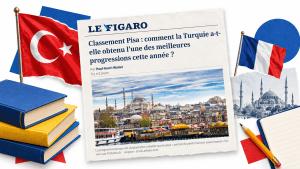
For years, France had been the principal obstacle to such cooperation. Yet, as demonstrated by the growing partnership between Baykar and Safran, relations between Ankara and Paris have softened considerably in recent months. According to reports in the French press, Paris is now prepared to remove the remaining obstacles to supplying SAMP/T systems to Türkiye.
In recent days, new speculation has also emerged regarding the future of the S-400s. The defense publication Meta Defense reported that Türkiye could transfer the systems to South Korea.
Another claim quickly followed. According to Abdulkadir Selvi, a columnist for the Turkish daily Hürriyet, the S-400s could instead be sold to a country seeking to strengthen its air defense capabilities after the war involving Iran, such as the United Arab Emirates or Qatar.
The fate of the S-400s is likely to become clearer in the coming days. Yet it is already possible to identify what has fundamentally changed since Türkiye first acquired them.
Relations between Ankara and Washington have improved significantly since Donald Trump’s return to office. More broadly, tensions between Türkiye and Western countries have begun to ease. Ankara is now engaged in concrete negotiations on the joint production of Western air defense systems such as the SAMP/T. At the same time, it has become increasingly evident that organizations outside NATO, including BRICS, cannot adequately address Türkiye’s security requirements. Meanwhile, the war involving Iran has sharply increased regional demand for advanced air defense systems, as many countries have become more aware of the limits of relying solely on American security guarantees.
Taken together, these developments suggest that Türkiye is reassessing its strategy regarding the S-400s, which were once regarded as indispensable to the country’s national defense.
The remaining question is how Russia will respond.
It would be a mistake to assume that Moscow has not been informed of these developments. Hakan Fidan’s visit to Russia immediately before the NATO Summit is one of the clearest indications that communication between the two sides has remained active.
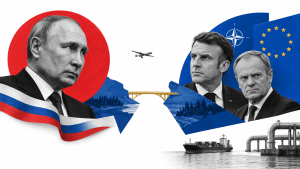
While some foreign analysts argue that relations between Türkiye and Russia are deteriorating, President Vladimir Putin’s decision to highlight his personal relationship with President Erdoğan during his meeting with Hakan Fidan paints a different picture. It suggests that despite shifting geopolitical realities, Ankara and Moscow intend to preserve close dialogue and maintain a pragmatic working relationship in the period ahead.