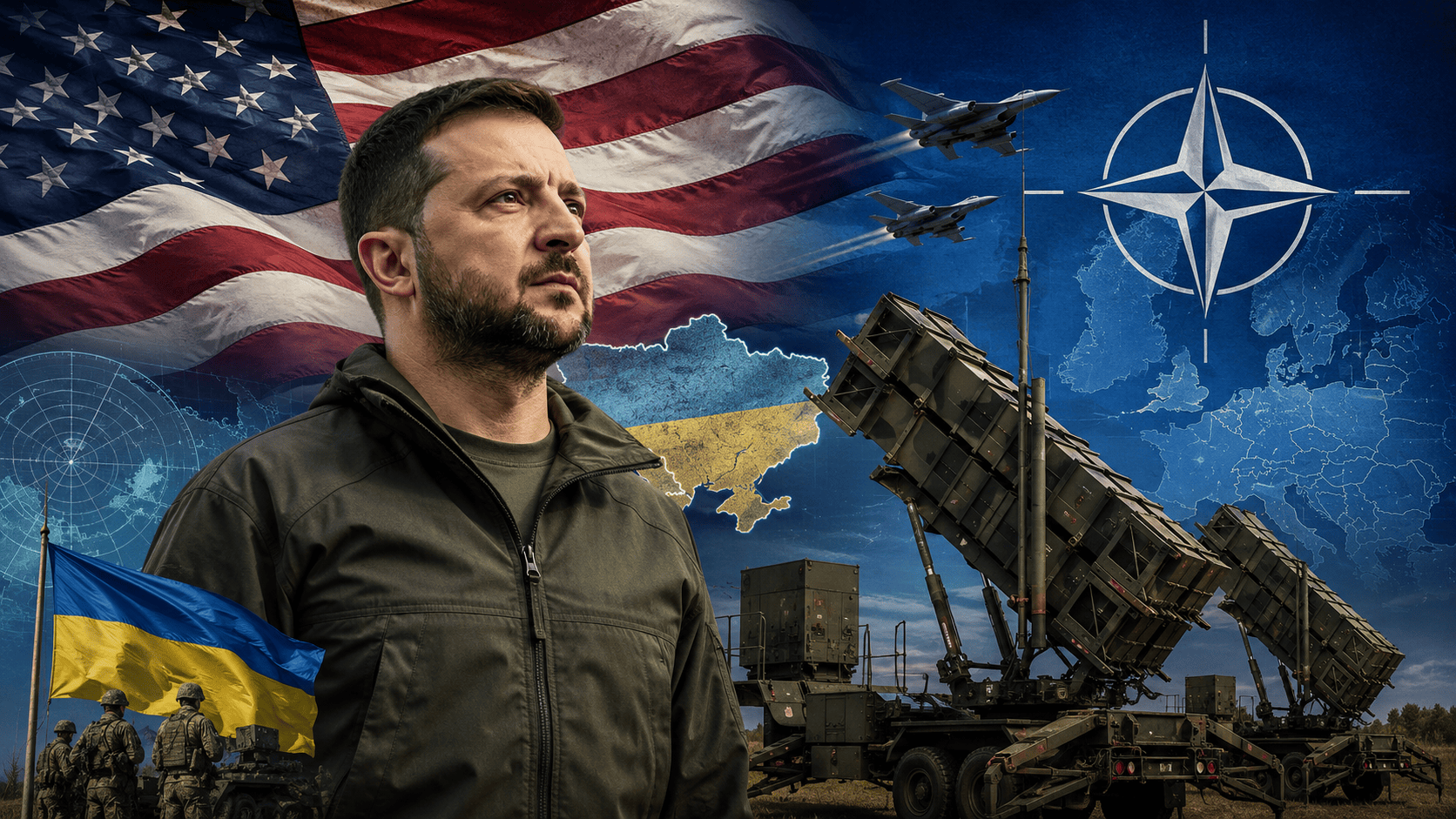

The United States’ decision to open the door to the licensed production of Patriot interceptor missiles in Ukraine has reignited the debate over Türkiye’s exclusion from the F-35 programme. While Ukraine, which is not a NATO member, is preparing to become a production partner in one of the West’s most advanced air defence systems, Türkiye, which has one of the largest armies in the Alliance, is still unable to rejoin an F-35 project to which it contributed.
The two cases are, of course, not technically identical. Washington argues that the Russian-made S-400 systems could collect data on the F-35’s electronic and stealth capabilities. Yet the failure to develop a solution based on mutual trust after so many years shows that the issue is no longer purely technical.
Türkiye was not an ordinary customer in the F-35 programme. It made a financial contribution to the project, Turkish companies manufactured hundreds of components, and Ankara paid for aircraft that were due to be delivered. Despite this, Türkiye was removed from the programme, the aircraft were withheld, and sanctions were imposed on its defence industry.
The purchase of the S-400s had serious consequences for Türkiye. However, the scale and duration of the punishment now create the impression of political exclusion that extends well beyond the technical concerns originally cited.
The Ukrainian example demonstrates that the West can overcome obstacles to technology sharing when it identifies a strategic necessity. Establishing production facilities in a country at war involves serious risks, including the security of the sites, the protection of sensitive technology and the sustainability of supply chains. Nevertheless, Washington is seeking solutions because Ukraine’s air defence is now a priority for the West.
The same political flexibility has not been shown towards Türkiye. Various options have been discussed, including keeping the S-400s inactive, placing them under NATO supervision, storing them in a third country or removing them from service altogether. Yet the issue has ceased to be treated as a security problem requiring a solution and has instead become a permanent political instrument used to exert pressure on Türkiye.
This situation shows that NATO’s rules are not applied equally to every country. New formulas are devised for states considered strategically indispensable, while Türkiye is continually expected to make further concessions. Ankara’s geopolitical importance is acknowledged, and its military and defence industry are praised, yet Türkiye is still not treated as an equal partner in decision-making and technology-sharing processes.
Under these circumstances, Türkiye should return to the F-35 programme not merely as a customer purchasing aircraft, but with its former status as a partner that contributed to production, maintenance and technology. Otherwise, non-NATO countries will continue to gain partnerships in the West’s most advanced defence systems, while one of the Alliance’s oldest members remains excluded from a project to which it made a direct contribution.