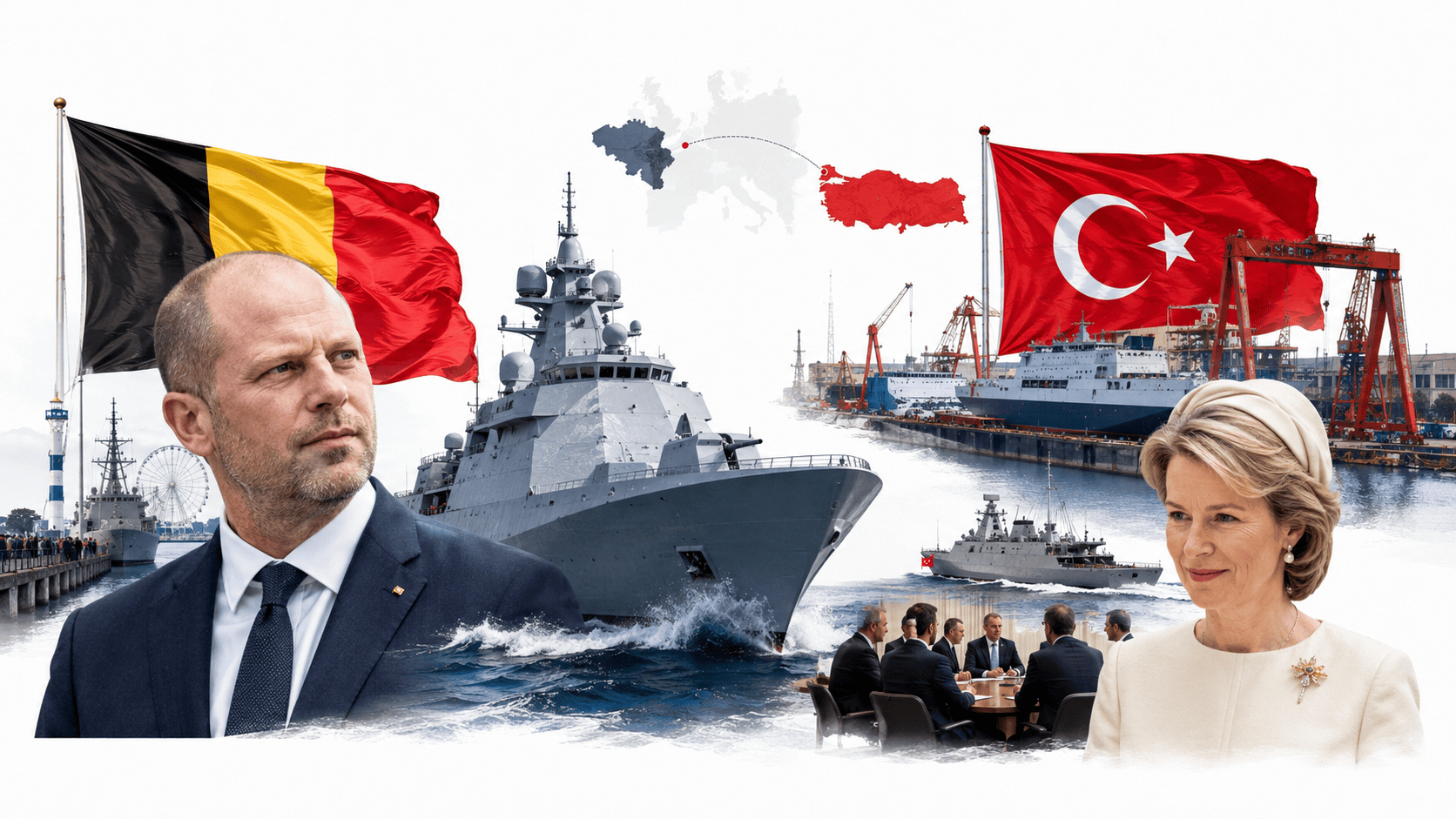

Belgium’s Anti-Submarine Warfare Frigate programme, jointly conducted with the Netherlands, has reached a serious impasse. Cost estimates have risen to more than double their original levels, while the delivery of Belgium’s ships could reportedly be delayed until 2034. With its existing frigates nearing the end of their service lives, Brussels can no longer afford to wait indefinitely.
Belgian Defence Minister Theo Francken is therefore preparing to request information from manufacturers in France, Germany, Italy, Spain and Türkiye regarding prices, delivery schedules and the platforms they could offer. Belgium is expected to decide in October whether it will remain in the programme with the Netherlands. Although no official decision has yet been made in Türkiye’s favour, recent developments suggest that Ankara is not merely one of several options, but one of the strongest contenders.
The recent rapprochement between Belgium and Türkiye did not begin with the search for alternative frigates. From 10 to 14 May 2026, Queen Mathilde led a major economic mission to Türkiye involving more than 400 business representatives. The presence of Belgian Foreign Minister Maxime Prévot and Defence and Foreign Trade Minister Theo Francken demonstrated that the visit went far beyond an ordinary trade mission. Alongside energy, transport and digitalisation, defence and aviation were also central to the talks. The signing of 33 agreements between companies from the two countries provided one of the clearest indications that bilateral relations had entered a new phase.
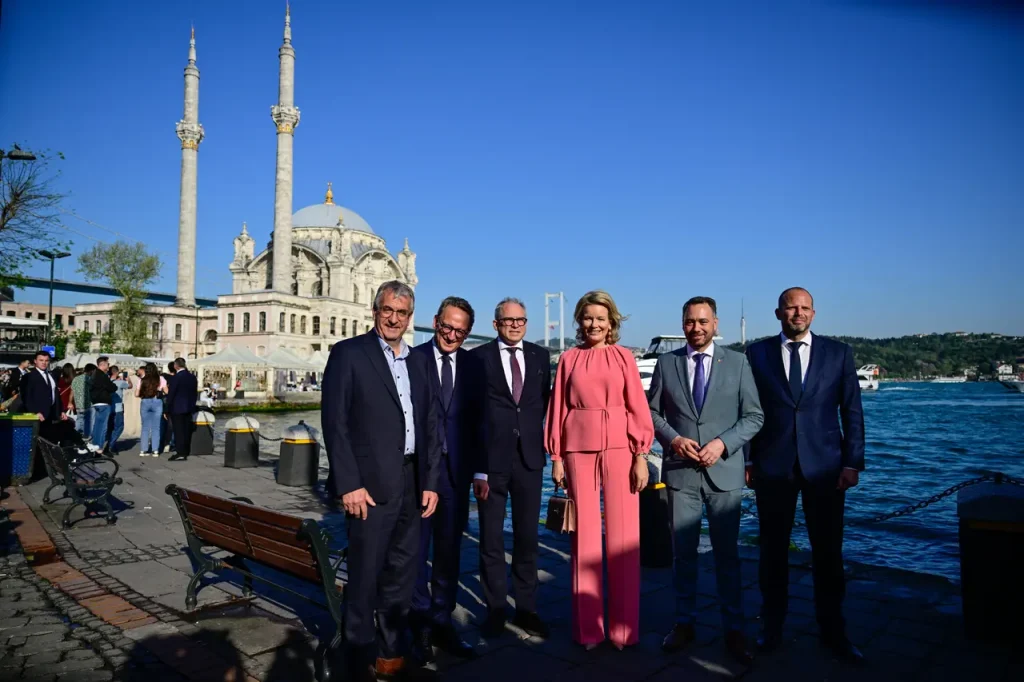
The most significant development, however, was Theo Francken’s visit to the Sedef Shipyard in Istanbul. After inspecting Türkiye’s military shipbuilding capabilities firsthand, Francken said that while the world was focused on the naval rivalry between the United States and China, Türkiye was “quietly emerging as a maritime power.” He emphasised that Turkish shipyards could produce platforms ranging from submarines and corvettes to frigates, destroyers and aircraft carriers quickly, to high standards and at competitive prices. Viewed in retrospect, these remarks can be interpreted not merely as diplomatic praise, but also as part of a preliminary assessment for a potential procurement process.
Belgian officials did not limit their evaluation of Türkiye’s capabilities to shipyard visits. TCG Burgazada, a corvette built under the MİLGEM programme, participated in the Navy Days event held in Zeebrugge in July to mark the 80th anniversary of the Belgian Navy. Having already examined Türkiye’s shipbuilding infrastructure on site, the Belgian side was thus able to inspect an operational warship from the same family in its own port. Taken together, the shipyard visit, defence talks and the presence of TCG Burgazada in Belgium suggest that the Turkish option had already been under detailed consideration for several months.
The political foundations of this rapprochement are also becoming stronger. At a reception marking Belgium’s National Day, Belgian Ambassador to Ankara Hendrik Van de Velde stated that his country openly supported the modernisation of the Türkiye-EU Customs Union. He also said Belgium favoured Türkiye’s full participation in the European Union’s SAFE defence mechanism, arguing that Europe’s collective defence capacity would be weaker without the Turkish defence industry. These remarks indicate that Brussels increasingly sees Türkiye not only as a major NATO military power, but also as an important part of Europe’s defence industrial supply chain.
Türkiye’s strong position in this competition is not based solely on political rapprochement. Through the MİLGEM programme, the country has developed substantial expertise in warship design, construction and systems integration. Following the Ada-class corvettes, Türkiye’s first domestically designed frigate, TCG İstanbul, entered service, while seven additional İstif-class frigates are currently under construction. Turkish companies are also carrying out corvette projects for Pakistan, Ukraine and Malaysia. Meanwhile, the logistics support ships being built for the Portuguese Navy represent Türkiye’s first military vessel export to a country that is both a member of the European Union and NATO. This record shows that Türkiye is no longer a country that builds ships solely for its own navy; it has become an international supplier capable of offering design expertise, technology transfer, local production and after-sales support.
Belgium still has five countries and numerous platforms to consider. It is therefore not yet certain that the country will purchase frigates from Türkiye. Nevertheless, in an environment where costs have spiralled, deliveries have slipped to 2034 and the Belgian Navy urgently needs new ships, Türkiye offers a compelling alternative through its production speed, competitive prices, compliance with NATO standards and flexible cooperation models.
Belgium therefore appears increasingly likely to turn to Türkiye following the difficulties encountered in its frigate programme with the Netherlands. The decision expected in October will determine not only where Belgium’s new warships will be sourced, but also Türkiye’s emerging position in the European defence market.