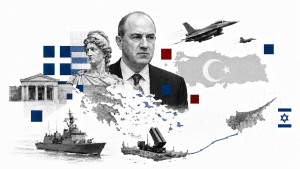
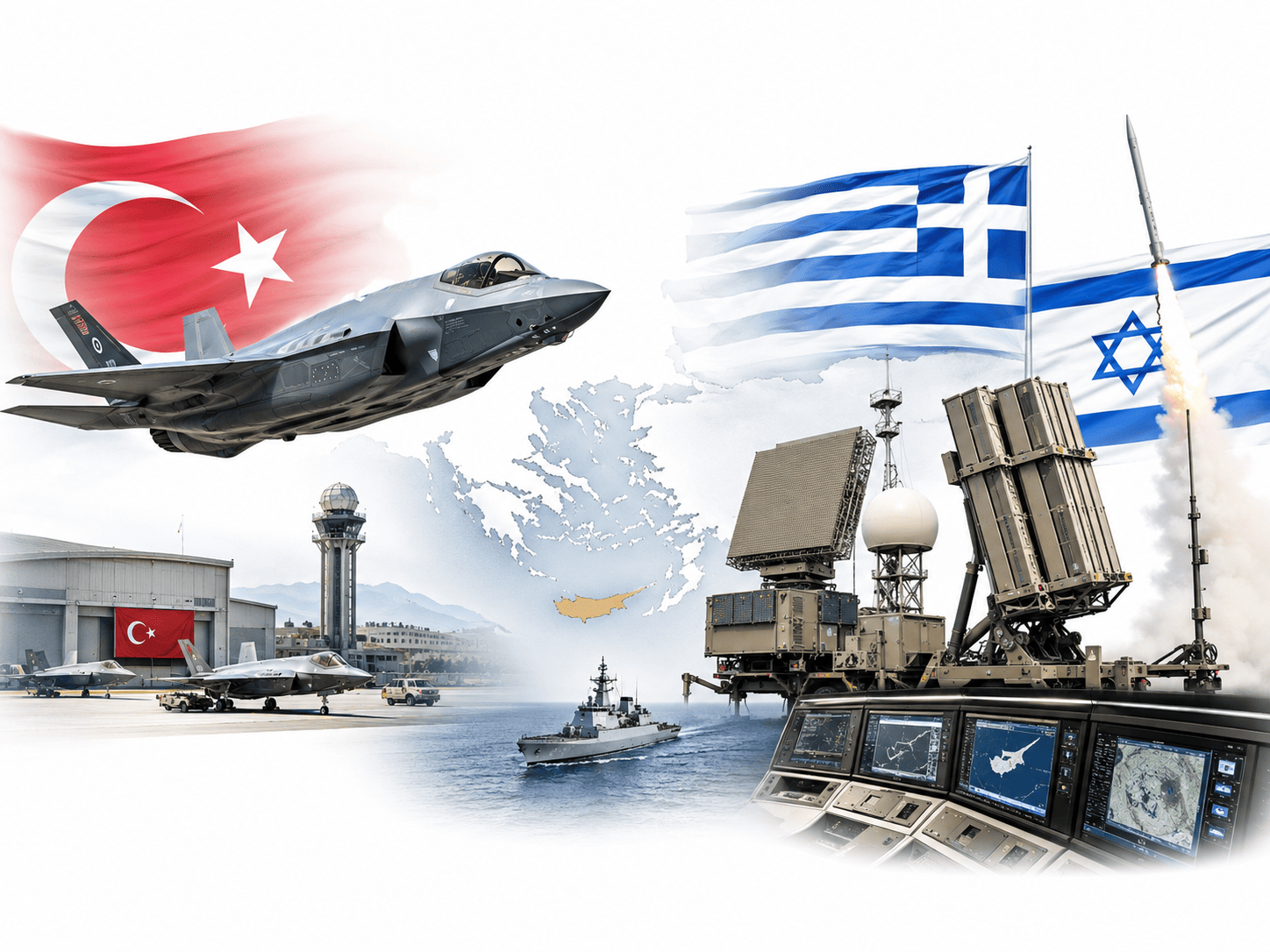

Greece’s decision to purchase a multilayered air defense system from Israel for approximately $4.2 billion represents far more than a routine military modernization effort. The fact that the Israeli news outlet i24NEWS reported the development under a headline directly referring to “Turkish threats” clearly reveals the geopolitical concern associated with the package. While preparing to establish its own F-35 fleet, Athens is also seeking to seal off its airspace with Israeli technology in anticipation of Türkiye potentially regaining access to the same aircraft.
Approved by Greece’s National Security Council, the “Achilles Shield” is a multilayered defense network designed to counter a wide range of threats, from ballistic and cruise missiles to unmanned aerial vehicles and fighter jets. At the heart of the system are Israeli-made radars and missiles developed by the defense companies Rafael and Israel Aerospace Industries. Systems such as David’s Sling and Barak 8 are also expected to be incorporated into the architecture. According to Greek Defense Minister Nikos Dendias, the shield will become fully operational within 35 months, while at least 25 percent of production will be carried out by Greek companies.
The timing is no coincidence. During the NATO Summit in Ankara, Donald Trump announced that the CAATSA sanctions imposed on Türkiye over its purchase of the S-400 system would be lifted, while also leaving the door open to a possible F-35 sale. Türkiye’s return to the program is not yet certain, as US law prohibits the sale of F-35s to Ankara as long as it retains the S-400 system, and strong opposition remains in Congress. Nevertheless, the political message coming from Washington has raised concerns in Athens and Tel Aviv that the military balance they have sought to preserve for years could shift.
For Greece, the issue is not limited to Türkiye purchasing new aircraft. Should Ankara return to the F-35 program, it would once again gain access to fifth-generation fighter technology, advanced sensors and NATO’s integrated operational networks. This would mean that the air superiority Greece has sought to secure through Rafale jets, upgraded F-16s and its ordered F-35s may not be permanent. Athens is therefore not simply buying more aircraft. It is constructing a defense architecture capable of detecting and intercepting Türkiye’s aircraft, missiles and unmanned aerial vehicles from the greatest possible distance.
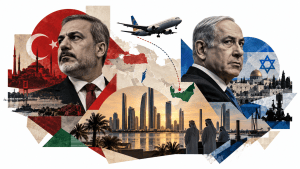
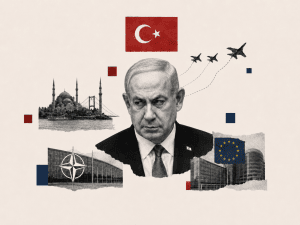
Israel’s role in this equation is not limited to that of a weapons supplier. While openly opposing the sale of F-35s to Türkiye, Tel Aviv is strengthening Greece’s air defenses with Israeli technology. Israeli Prime Minister Benjamin Netanyahu reportedly conveyed his objections directly to the Trump administration, arguing that supplying F-35s to Türkiye would alter the military balance in the Middle East. Israel is therefore attempting to block Türkiye’s path in Washington while simultaneously becoming the leading supplier of weapons to countries seeking to counterbalance Ankara in the Eastern Mediterranean.
However, the latest development also suggests that Greece and Israel are no longer confident that diplomatic pressure alone will be enough to keep Türkiye outside the F-35 program. Had Türkiye’s potential return not been regarded as a realistic possibility, Athens would not have needed to move so rapidly toward a new multibillion-dollar air defense network. The Achilles Shield is not an alternative to preventing Türkiye from acquiring F-35 fighter jets. Rather, it serves as an insurance policy against the possibility that those efforts may ultimately fail.
It would nevertheless be misleading to assume that this arms race will grant Greece absolute superiority. Türkiye’s advantage does not stem solely from the number of platforms it possesses, but from its ability to develop unmanned aerial vehicles, missiles, air defense systems, electronic warfare capabilities and fighter aircraft within its own defense industry. Greece, by contrast, is increasingly tying its security to expensive systems purchased from the United States, France and Israel. Athens’ decision to allocate approximately €28 billion to military modernization by 2036 also demonstrates how costly this externally dependent balancing strategy has become.
The emerging picture is clear: Türkiye has not yet returned to the F-35 program, but the possibility alone has pushed Greece toward purchasing a multibillion-dollar defense shield from Israel. While Athens and Tel Aviv are trying to prevent Ankara from gaining strength through their influence in Washington, they are also preparing militarily for the possibility that those efforts may fail.