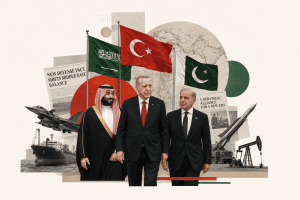
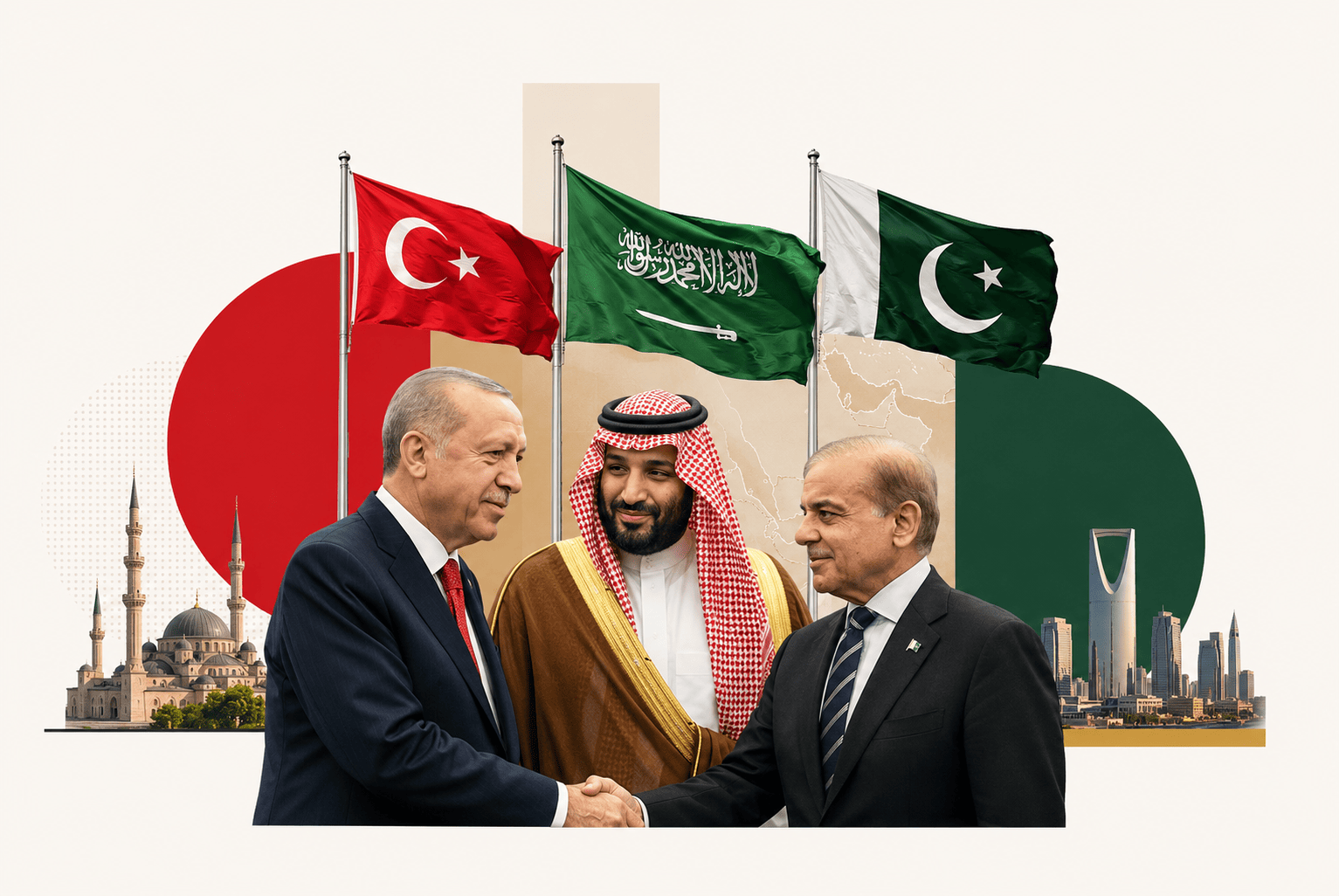

August 7, 2026, may well be remembered as a turning point in the Middle East’s security architecture. Today, Türkiye, Saudi Arabia, and Pakistan signed a trilateral mutual defense pact known as the Mecca Agreement. Its most significant provision is unequivocal: an armed attack against any one of the three countries will be regarded as an attack against all. With this commitment, the steadily growing military and strategic partnership between Ankara, Riyadh, and Islamabad has, for the first time, been institutionalized under the principle of collective defense.
This development did not emerge overnight. The Strategic Mutual Defense Agreement signed between Saudi Arabia and Pakistan in 2025 marked the first major step. The rapidly expanding defense-industrial cooperation between Türkiye and Saudi Arabia, together with the long-standing military partnership between Ankara and Islamabad, constituted the other pillars of this trilateral convergence. The signatures placed in Mecca today have transformed these previously separate bilateral relationships into a unified regional security framework.
For this reason, the Mecca Agreement should not be viewed merely as another defense cooperation treaty. Rather, it brings together three complementary strategic assets within a single framework: Pakistan’s nuclear deterrent, Saudi Arabia’s financial power, and Türkiye’s NATO-standard military, operational experience, and rapidly expanding defense industry.
Taken together, these capabilities could lay the foundation for an independent deterrence architecture on a scale the Middle East has not witnessed for decades.
The Mecca Agreement Could Reshape the Middle East’s Security Architecture
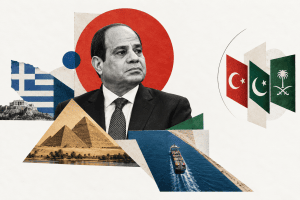
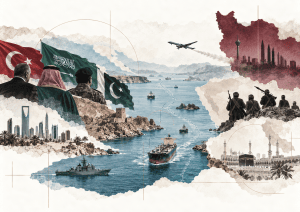
The agreement’s true significance lies not simply in the combined military capabilities of its members, but in its ability to connect three strategically vital geopolitical regions. Türkiye provides access to the Eastern Mediterranean, the Black Sea, the Balkans, and the Caucasus. Saudi Arabia anchors the Gulf, the Red Sea, and the Arabian Peninsula. Pakistan extends the alliance’s strategic reach into the Indian Ocean, South Asia, and toward China.
Consequently, the emerging framework is likely to exert influence well beyond the Middle East itself. It has the potential to establish a continuous strategic security belt stretching from the Mediterranean to the Indian Ocean.
Equally important, the three countries possess complementary strengths. Saudi Arabia commands immense financial resources but has historically relied heavily on the United States’ security umbrella. Pakistan possesses one of the world’s largest and most experienced armed forces, along with nuclear weapons, yet faces significant economic constraints. Türkiye, meanwhile, has emerged as one of the region’s leading defense producers, developing advanced capabilities ranging from unmanned aerial systems and missile technologies to electronic warfare and naval platforms.
The Mecca Agreement creates the institutional framework through which these complementary capabilities can be integrated.
Should the agreement evolve to include joint military exercises, integrated command structures, intelligence sharing, air and missile defense cooperation, joint weapons production, and defense technology transfers, the document signed today could become the cornerstone of a far more comprehensive regional security architecture.
This is precisely why the term “Islamic NATO,” which has circulated for months, no longer appears purely theoretical. Certainly, the current framework is not yet a NATO-style alliance with a fully institutionalized command structure, integrated military planning, and a broad membership base. Nevertheless, the inclusion of the principle of collective defense demonstrates that relations among the three countries are moving well beyond conventional defense cooperation toward a more structured and institutionalized security partnership.
The decision to name the pact the “Mecca Agreement” rather than the “Riyadh Agreement” is also symbolically significant. Mecca is not merely a Saudi city; it is the spiritual heart of the Islamic world and one of its most powerful unifying symbols. The choice of name may therefore reflect a broader strategic vision extending beyond the three founding members.
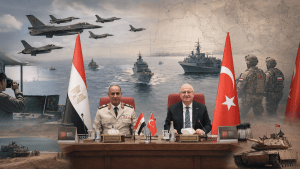
Indeed, in recent years Türkiye and Saudi Arabia have significantly expanded their defense partnerships with Qatar, Azerbaijan, Libya, and Syria, while Pakistan maintains close military ties with countries such as Malaysia, Indonesia, and Bangladesh. It would therefore not be surprising if these states sought to participate in this emerging security framework in various capacities in the years ahead.
From this perspective, the Mecca Agreement should not be seen solely as a trilateral defense pact. It may represent the first step toward a broader Islamic security platform with the potential to evolve into a more comprehensive regional institution over time.
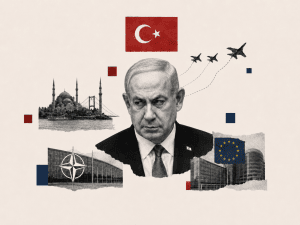
The Mecca Agreement Could Disrupt Israel’s Regional Strategy
One of the agreement’s most consequential implications may be for Israel.
For decades, one of Israel’s principal strategic advantages has rested not only on its military and technological superiority but also on the absence of a comparable, institutionalized regional military bloc among Arab and Muslim states. The fragmented nature of regional security policies has provided Israel with considerable strategic flexibility.
The Mecca Agreement has the potential to alter that equation.
For the first time, it brings together within a single security framework Türkiye’s military and technological capabilities, Saudi Arabia’s financial resources, and Pakistan’s nuclear deterrent.
The Pakistani dimension is particularly significant. Pakistan remains the only Muslim-majority country possessing nuclear weapons. Its participation alone fundamentally changes the strategic calculations surrounding regional deterrence.
From Israel’s perspective, the more important issue is not the prospect of a direct military confrontation with Türkiye, Saudi Arabia, and Pakistan. Rather, it is the possibility that the political and military costs of using force in the region could increase substantially.
In recent years, one of the defining questions in Middle Eastern security has been the extent to which regional states can continue relying on American security guarantees. Gulf countries, in particular, have increasingly diversified their strategic partnerships rather than depending exclusively on Washington. The Mecca Agreement may represent the clearest manifestation of this ongoing transformation.
Viewed in this context, the document signed in Mecca today is more than a mutual defense commitment among three states. It is also a declaration of intent by regional powers to establish their own indigenous deterrence architecture.
If Türkiye, Saudi Arabia, and Pakistan succeed in transforming their collective defense commitment into genuine military integration, August 7, 2026, may be remembered not merely as the day a new defense agreement was signed, but as the moment when the regional balance of power in the Middle East began to shift against Israel.