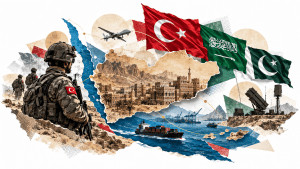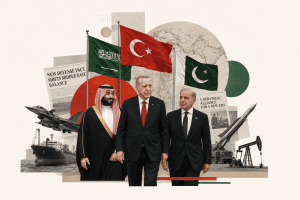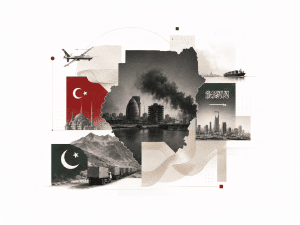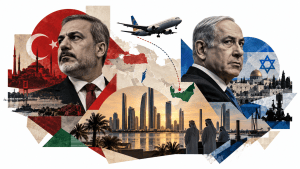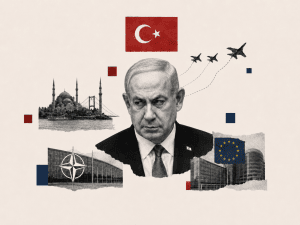
What began months ago as speculation has steadily evolved into a tangible geopolitical reality. The prospect of an Islamic NATO is no longer merely hypothetical. Reports by Bloomberg revealed that Türkiye is engaged in high-level discussions to join the defense pact established by Saudi Arabia and Pakistan in September 2025. Modeled on NATO’s Article 5, the agreement stipulates that an attack against one member would be considered an attack against all.
Pakistani Defense Minister Khawaja Asif has publicly confirmed that a trilateral draft agreement has been prepared following nearly a year of negotiations. While the process remains unfinished, what is already taking shape appears far more consequential than a routine regional realignment.
A Partnership Built on Complementary Strengths
What makes this emerging framework distinctive is the way its members naturally complement one another. Türkiye contributes a battle-tested military and diplomatic flexibility. Pakistan brings nuclear deterrence and deep strategic influence across South Asia. Saudi Arabia provides immense financial resources and significant political leverage throughout the Islamic world.
Taken together, the partnership resembles far more than a conventional military alliance. It increasingly appears to be a new architecture of regional coordination built around shared strategic interests and growing demands for security autonomy.
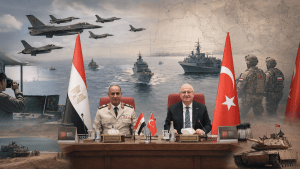
This convergence did not emerge overnight. It reflects a carefully cultivated process that unfolded steadily throughout 2025. President Erdoğan visited Pakistan in February. Defense Minister Yaşar Güler held high-level meetings in Riyadh in March. Pakistani Prime Minister Shehbaz Sharif traveled to Ankara in April. Foreign Minister Hakan Fidan returned to Riyadh in May for another round of discussions. Each visit added another layer to a relationship being constructed with patience, consistency and strategic intent.
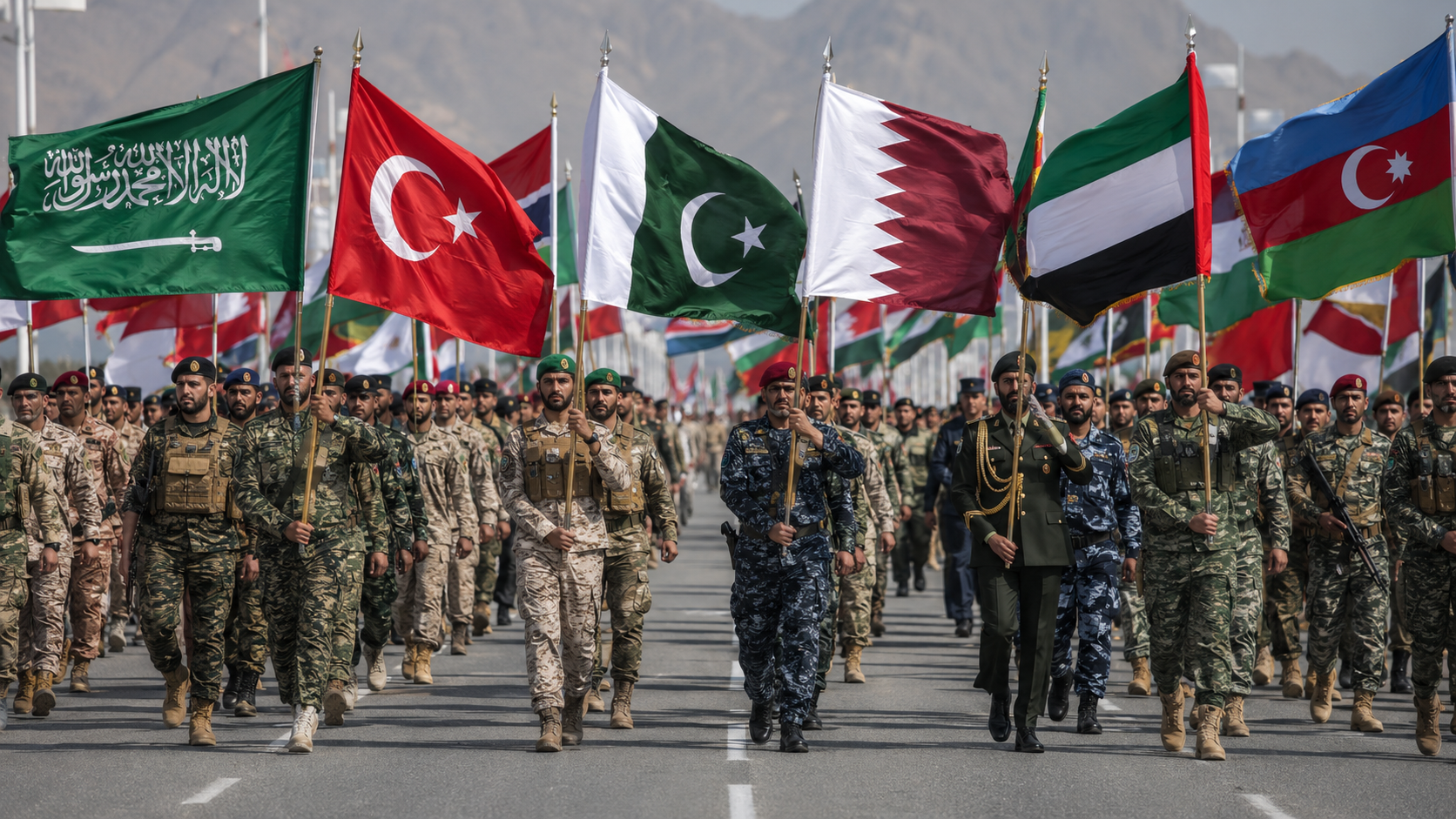
The momentum extended well beyond diplomatic meetings. The EFES-2026 military exercise brought together military personnel from fifty countries, including Azerbaijan, Qatar, Pakistan, Syria and Libya. During the exercise, Defense Minister Güler emphasized that the emerging cooperation framework among Türkiye, Pakistan, Saudi Arabia and Qatar could contribute not only to regional security but also to global peace and economic stability.
Türkiye’s attractiveness as a strategic partner is reinforced by the growing international influence of its defense industry. During the military confrontation between India and Pakistan in April 2026, reports suggested that Türkiye supplied Islamabad with military equipment, including armed drones. New Delhi responded with a formal diplomatic protest. More importantly, the episode illustrated how Turkish defense exports have increasingly evolved beyond commercial transactions into instruments of geopolitical influence.
A Common Search for Strategic Autonomy
The timing of this convergence is no coincidence. Analysts point to two major sources of disillusionment: the increasingly unpredictable nature of American foreign policy and growing concerns regarding NATO’s long-term cohesion.
Two episodes proved particularly influential. When Iran launched attacks against Saudi oil facilities in 2019, Washington’s response remained limited. Years later, following the Israeli strike on Qatari territory in 2025, the United States again refrained from direct involvement. For both Riyadh and Islamabad, these events reinforced a sobering conclusion: security guarantees that depend entirely on a single external power may prove unreliable when they are needed most.
More broadly, the region is witnessing a gradual shift away from dependence on a single external guarantor and toward a more autonomous security architecture anchored by regional powers. The inclusion of Pakistan’s nuclear deterrent gives this transformation an importance that extends far beyond the Middle East itself.
The implications will be felt not only by India and Israel but also across the wider international security landscape.
The potential inclusion of Qatar would expand the alliance’s reach even further. Minister Asif’s suggestion that the original bilateral arrangement could evolve into a broader framework including both Türkiye and Qatar indicates that something larger is underway than a traditional balance-of-power calculation. It points toward a deliberate effort to consolidate and redefine the Sunni strategic axis across the broader Middle East.
The draft texts are on the table in all three capitals, and negotiations are ongoing. If political will and strategic patience can be translated into an institutional framework, this structure will not so much constitute an alternative to the current security architecture dominated by external powers, but rather signal the emergence of a new balance that strengthens regional autonomy. The Middle East’s new security architecture will no longer be shaped solely from Washington, but increasingly and on an equal footing from Ankara, Riyadh and Islamabad.