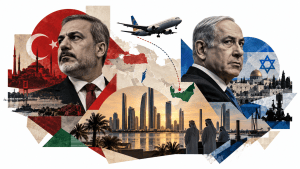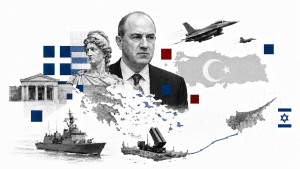
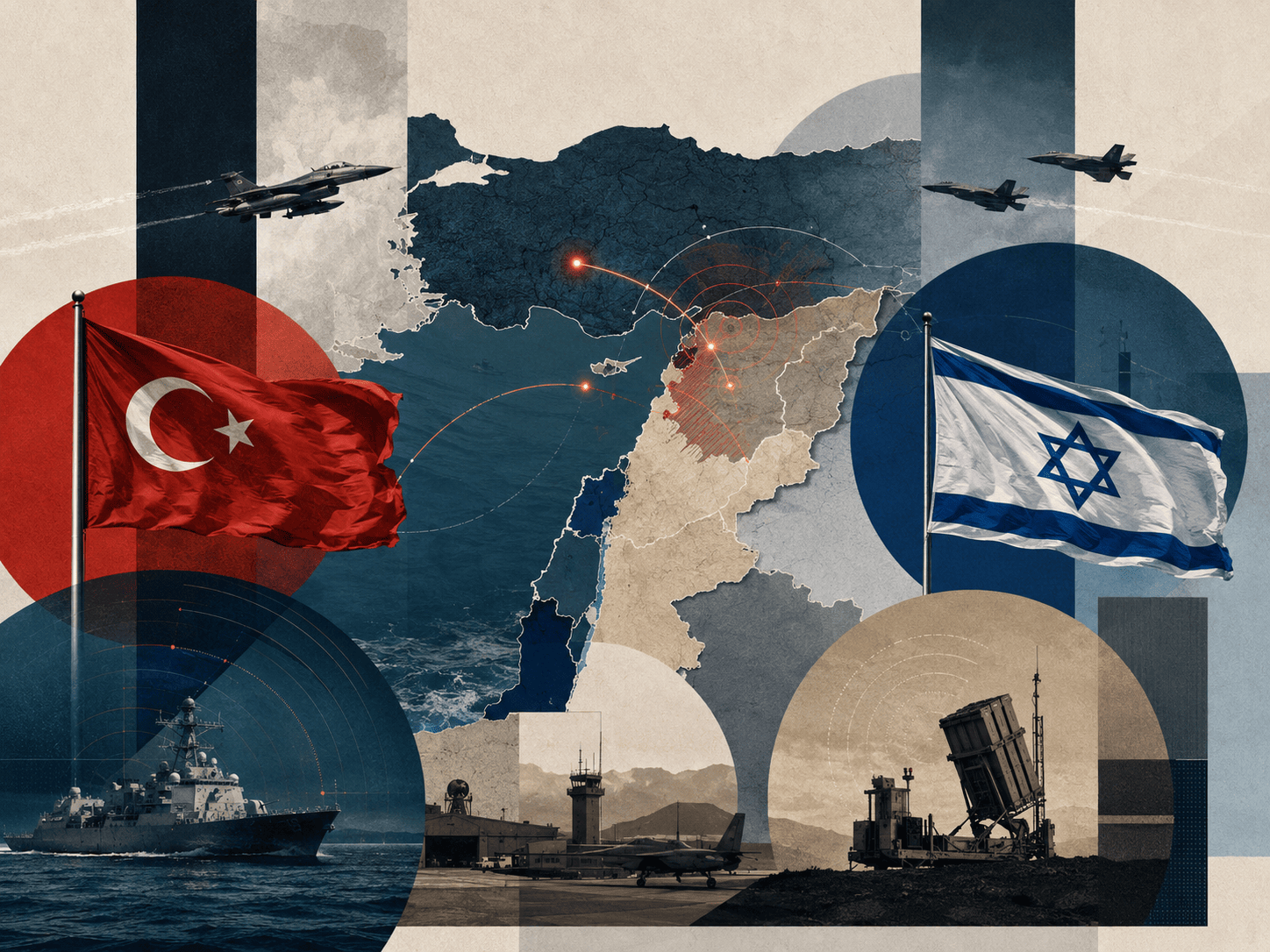

Israel’s strike on the Abu al-Duhur airbase in northern Syria points to a new phase in Turkish-Israeli tensions. The Israeli government linked the attack to claims that Türkiye might establish a military presence in the area, presenting the operation as a clear message to Ankara about the limits Israel is prepared to tolerate regarding Turkish military influence in Syria.
From the outset, however, the stated rationale for the strike was contested. Türkiye denied that it had deployed troops to Abu al-Duhur, while the Syrian government also rejected reports that a permanent Turkish base was being established there. Moreover, the facility was largely empty, and the strike caused no casualties.
The more important question therefore goes well beyond the airbase itself: why is Israel becoming increasingly willing to confront Türkiye so openly?
The first part of the answer lies in Syria.
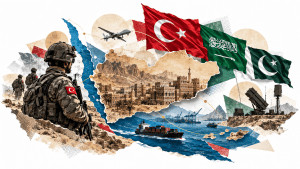
Since the fall of the Assad regime, Türkiye has emerged as one of the principal actors filling the resulting power vacuum. Ankara is now among Damascus’s most important political and security partners. Turkish influence is expanding across a wide range of areas, from the restructuring and training of the Syrian armed forces to economic integration and infrastructure development.
This is precisely where Israel’s concerns begin. Having operated with considerable freedom in Syrian airspace for years, Israel fears that Türkiye’s role in strengthening Syria’s military capabilities could gradually constrain that freedom of action. A more permanent Turkish presence involving radar systems, air defences or other military assets would create a significantly more complex strategic environment for Israel.
Seen in this light, the Abu al-Duhur strike can be interpreted as an attempt by Israel to establish a red line regarding how far Turkish military influence in Syria should be allowed to extend.
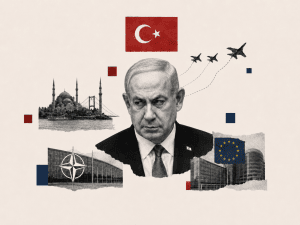
There is also an important domestic political dimension. Israel is heading towards elections in the autumn, and Benjamin Netanyahu is under intense political pressure. Security has long been one of Netanyahu’s strongest political assets. Yet the wars that followed 7 October, the hostage issue and growing polarisation within Israeli society have significantly eroded that image.
This is what makes former Israeli prime minister Ehud Barak’s remarks particularly noteworthy. Barak described Netanyahu’s escalation with Ankara as “irresponsible, reckless and stupid”, stressing that Türkiye cannot be placed in the same category as Iran or the former Syrian regime. In his view, there is no strategic dispute between Türkiye and Israel that is inherently impossible to resolve.
Presenting Türkiye as a new security threat may therefore offer Netanyahu some political advantage ahead of the elections. But reducing the issue to electoral calculations would also be misleading, because Israel is facing a genuinely changing regional balance of power.
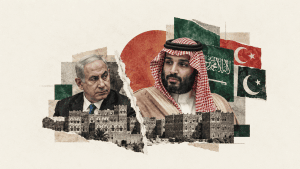
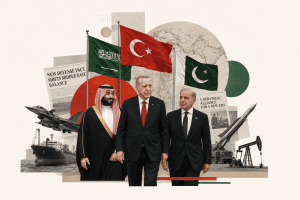
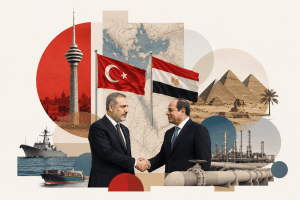
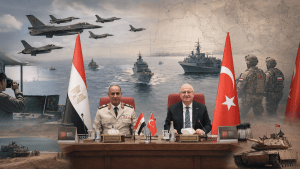
Over recent years, Türkiye has expanded its influence across a broad geography stretching from Syria and Gaza to the Gulf, Libya and the Horn of Africa. It is one of the principal mediators in the Gaza negotiations alongside Egypt and Qatar. In Syria, it has become the new government’s most important external partner. Its security and defence cooperation with Saudi Arabia and Pakistan has deepened through the Mecca Joint Defence Agreement, while diplomatic efforts are also under way to bring Egypt into this emerging framework. In Libya, Ankara is now able to engage simultaneously with both the eastern and western authorities. In Somalia, where Türkiye has maintained a military presence for years, cooperation is expanding further into defence and energy.
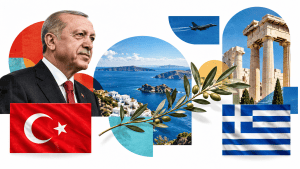
A similar dynamic is visible in the Eastern Mediterranean. While Israel has strengthened its military and energy cooperation with Greece and the Greek Cypriot administration, Türkiye is placing its Blue Homeland policy on a more concrete footing through maritime spatial planning, marine national parks and the proposed Turkish Maritime Jurisdictions Law.
The Turkish-Israeli rivalry has therefore moved well beyond hostile rhetoric over Gaza. In Syria, the Eastern Mediterranean and the Horn of Africa, the strategic interests of the two countries are increasingly intersecting — and, in some cases, directly colliding.
A Direct War Is Unlikely; the Greater Risk Is Military Escalation in a Third Country
Despite the growing tensions, a direct war between Israel and Türkiye remains highly unlikely under current conditions.
The first reason is Türkiye’s military and political weight. Türkiye cannot be treated as another Iran, Lebanon or Syria. It possesses one of NATO’s largest armed forces, an increasingly sophisticated defence industry, substantial air and naval capabilities, and a broad diplomatic footprint.
NATO membership is also an important deterrent that Israel must take into account. A direct attack on Turkish territory would not remain a bilateral crisis between Ankara and Tel Aviv. It could trigger NATO’s collective defence mechanisms and inevitably draw Washington into an extremely serious confrontation.
Türkiye’s military deployments in third countries such as Syria, however, do not automatically enjoy the same legal protection. This is why the more realistic danger is not a war beginning on Turkish soil, but an unintended confrontation between Turkish and Israeli forces in Syria.
If Israel were to strike a Syrian facility hosting Turkish personnel or Turkish military systems, and Ankara chose to retaliate, escalation could quickly become difficult to contain. Likewise, a direct encounter between Turkish air-defence systems and Israeli aircraft could produce precisely the kind of chain reaction neither side may actually want.
This is exactly why Washington has been working to establish a deconfliction mechanism between Türkiye, Israel and Syria.
There are other constraints on Israel’s ability to embark on a major new war. The country has already paid substantial military and economic costs on the Gaza, Lebanon and Iran fronts. The Israeli military is facing manpower shortages, defence expenditure is placing considerable strain on the budget, and the Netanyahu government is under mounting international political pressure.
Against this backdrop, a direct confrontation with Türkiye would carry extraordinarily high military, political and diplomatic costs. The more plausible scenario for the coming period is therefore not an open Turkish-Israeli war, but an intensifying contest for influence — and potentially limited military escalation — in third theatres such as Syria, the Eastern Mediterranean, Cyprus and the Horn of Africa.
Israel may seek to constrain Türkiye’s growing military and political role in Syria while building a counterweight in the Eastern Mediterranean through closer cooperation with Greece and the Greek Cypriot administration. For Ankara, the more rational course would be to avoid allowing this competition to move onto the military terrain that Netanyahu may hope to create.
Türkiye’s current advantage does not derive solely from the strength of its armed forces. Ankara is able to engage simultaneously with Damascus, the Gulf states, Egypt, its partners in Africa and Western actors, while combining military power with diplomacy, economic ties and regional partnerships. At a time when Israel is becoming increasingly isolated on the international stage, limiting Türkiye’s expanding regional influence through military pressure alone is therefore unlikely to be straightforward.
The central question for the coming period is consequently this: can Israel contain Türkiye’s growing regional influence through symbolic displays of military force, or will such an approach ultimately strengthen Ankara’s position even further?
The current balance of power suggests that the second outcome may be the more likely one.